
Recipe · Weeknight · Serves 2–3
It's Okay — You Can Make Doenjang-jjigae, Korea's Soybean Paste Stew, at Home
Doenjang-jjigae is the humble, savory stew that sits on many Korean tables every day: fermented soybean paste, tofu and vegetables simmered in a small pot, ready in about 30 minutes. If you don't have every ingredient on this list, that's fine — keep reading before you decide to skip it.
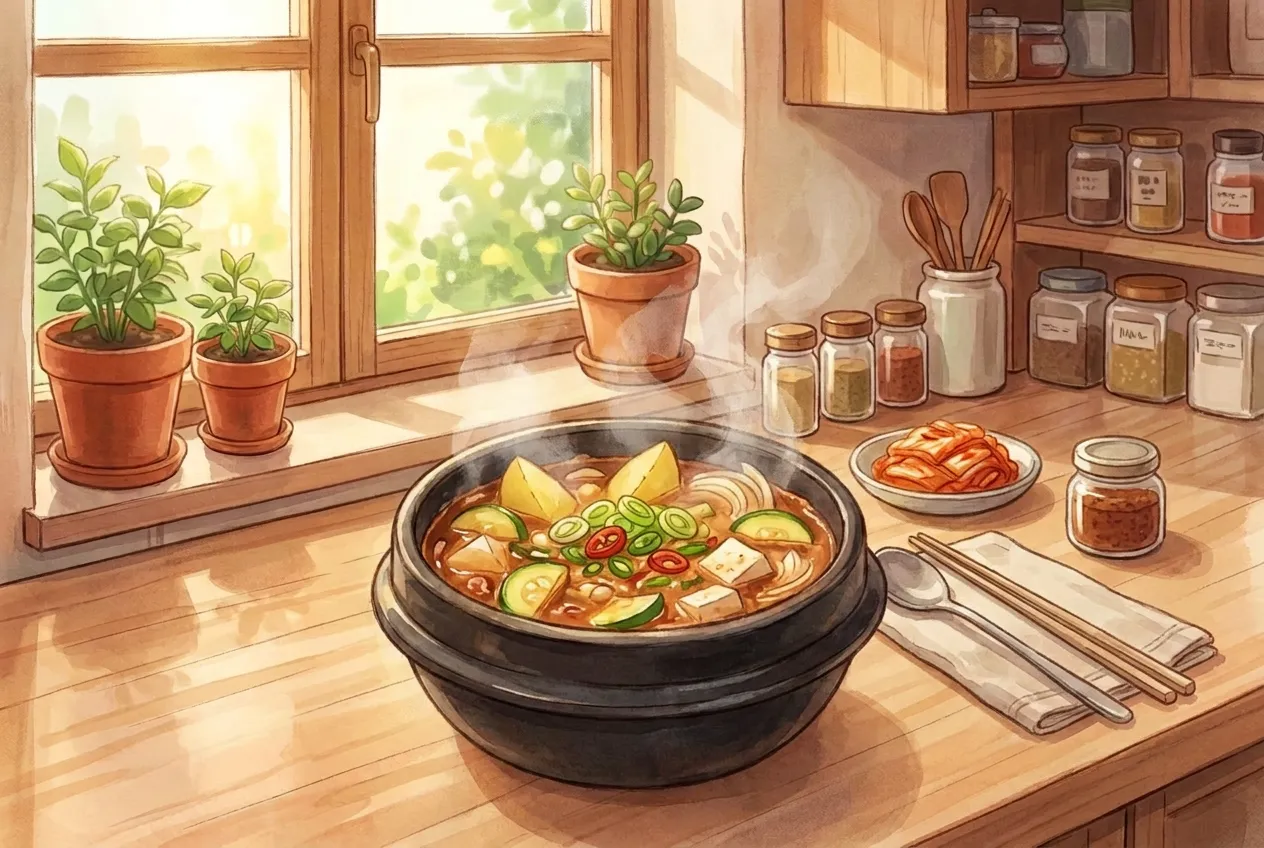
Before You Shop: Quick Ingredient Check
- Doenjang (Korean soybean paste)substitute below
- Anchovy stocksubstitute below
- Firm tofu, zucchini, potato, onion, green onion, garliceasy anywhere
- Gochugaru (Korean chili flakes)optional
Nothing here is a dealbreaker. Let's cook.
Ingredients (serves 2–3)
 2 cups (480ml) anchovy stock, or water
 2 tbsp doenjang (Korean soybean paste)
- 1 small potato, peeled and cut into thin wedges
- ½ zucchini, cut into half-moons
- ½ onion, sliced
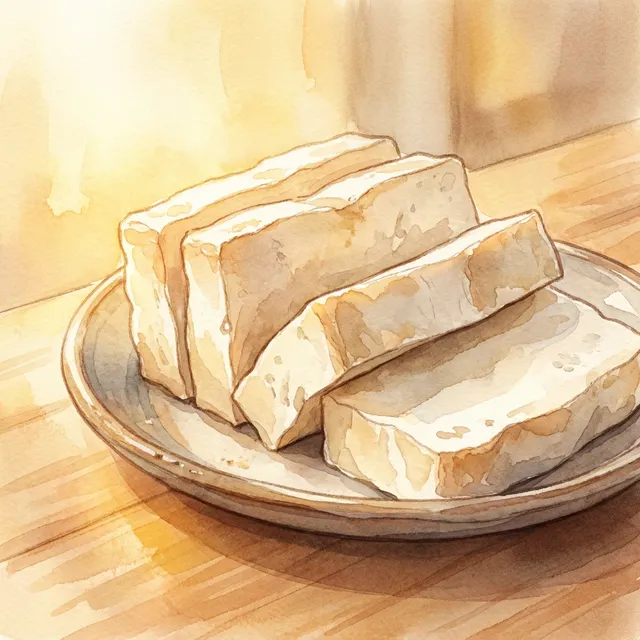 ½ block (about 150g / 5 oz) firm tofu, cut into cubes
- 2 cloves garlic, minced
 1 green onion, sliced
- 1 chili pepper, sliced (optional, for heat)
 1 tsp gochugaru (Korean chili flakes) (optional)
Steps
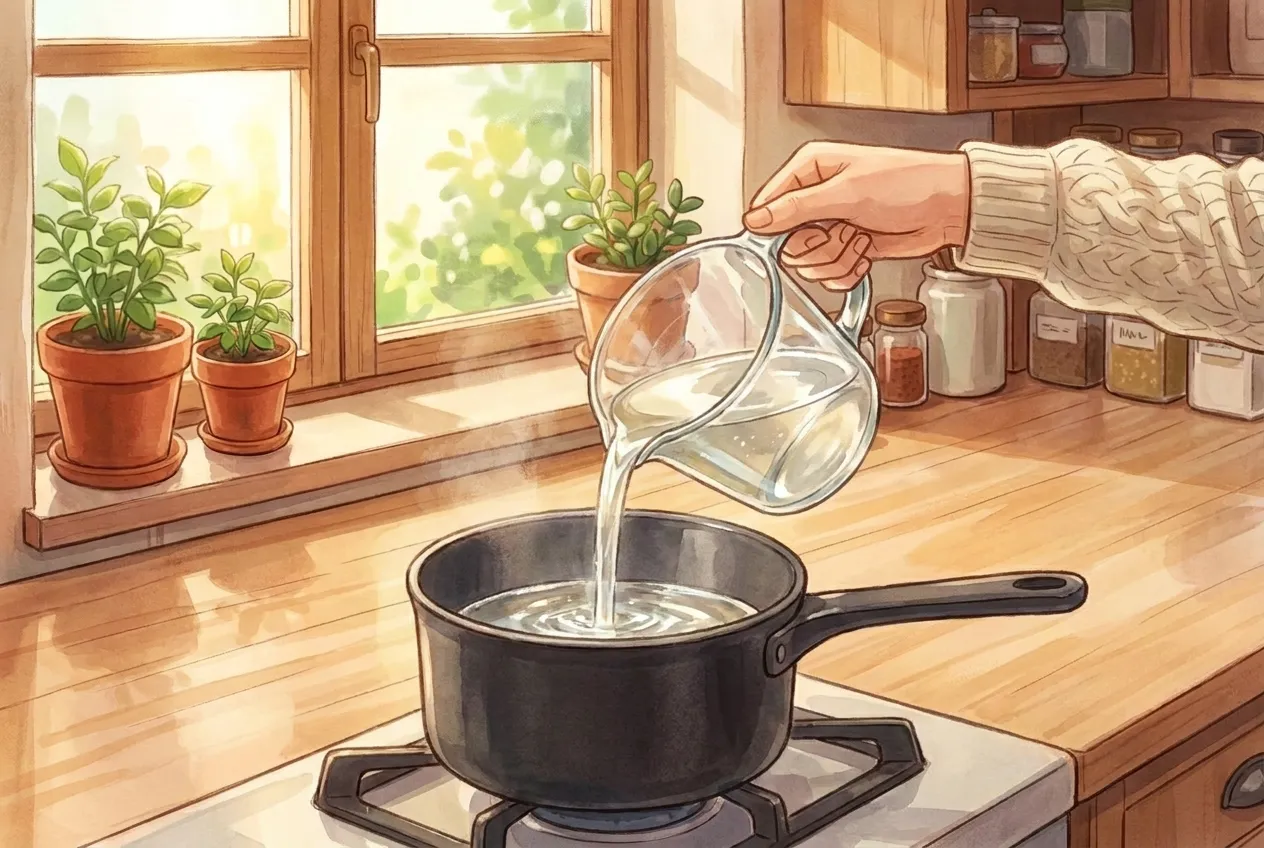
- 1 Pour the stock into a small pot and bring it to a boil. If you only have water, add a small handful of dried anchovies and a piece of kelp now and simmer for 5 minutes, then take them out.
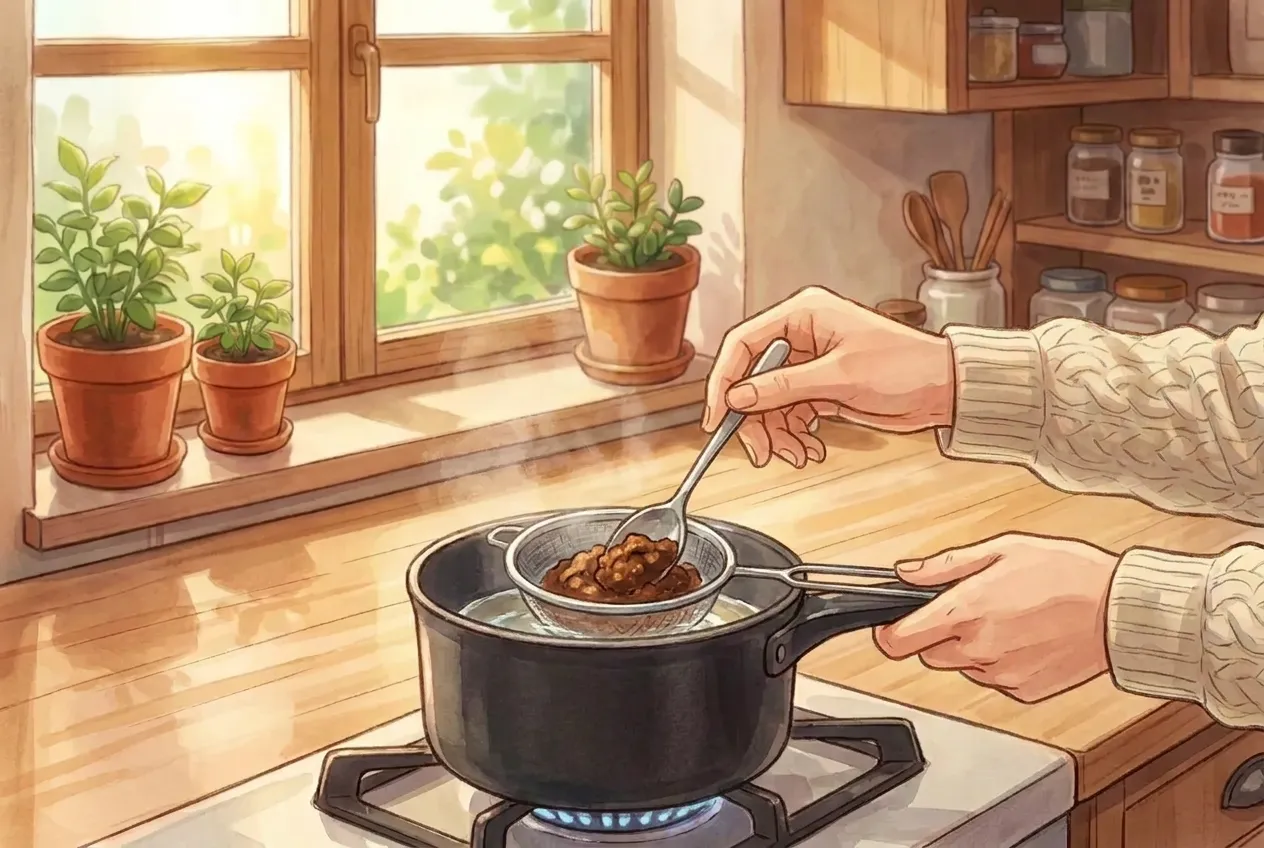
- 2 Put the doenjang in a small strainer, rest it in the stock and stir it through with a spoon until it has dissolved and only the solids are left behind.
- 3 Add the potato and onion and simmer over medium heat for about 8 minutes, until the potato is almost tender.
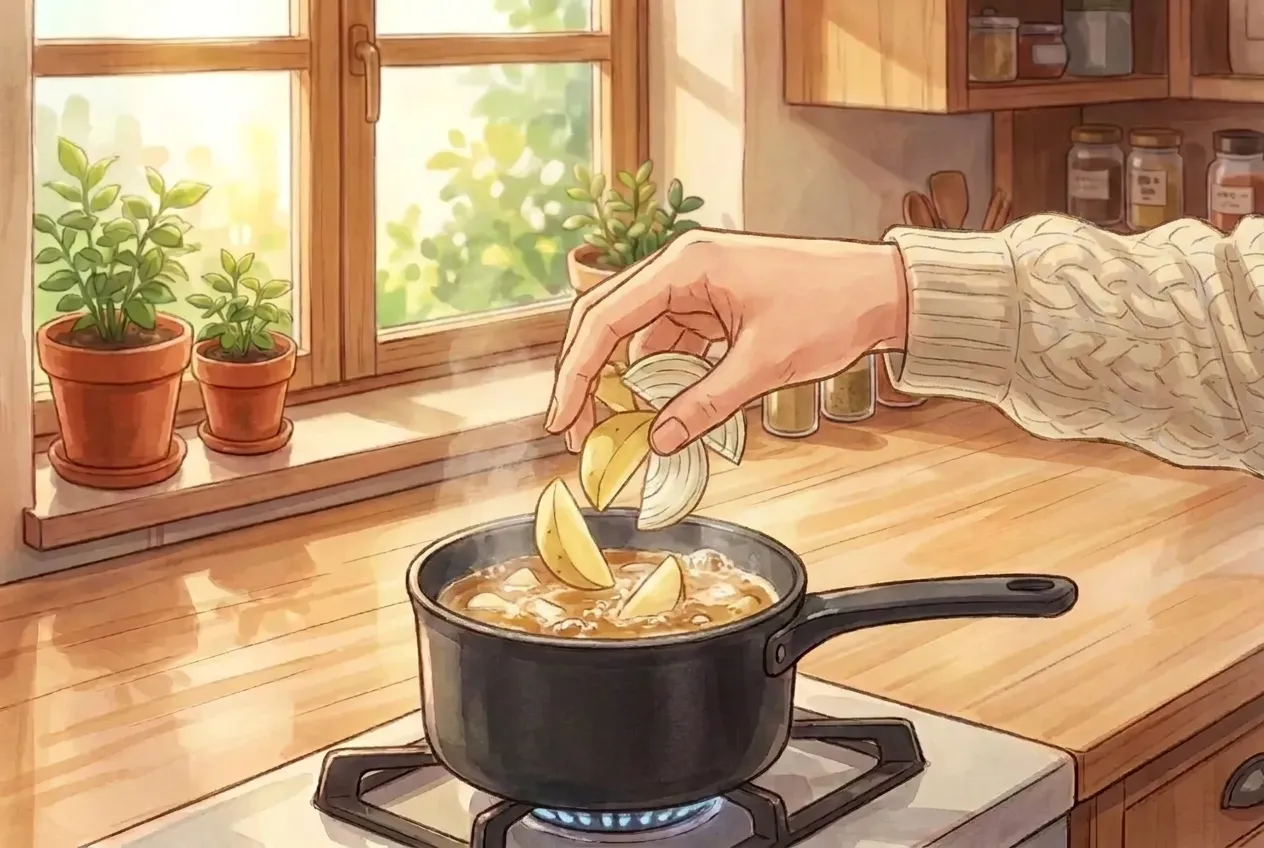
- 4 Add the zucchini and tofu and simmer for another 3 minutes.
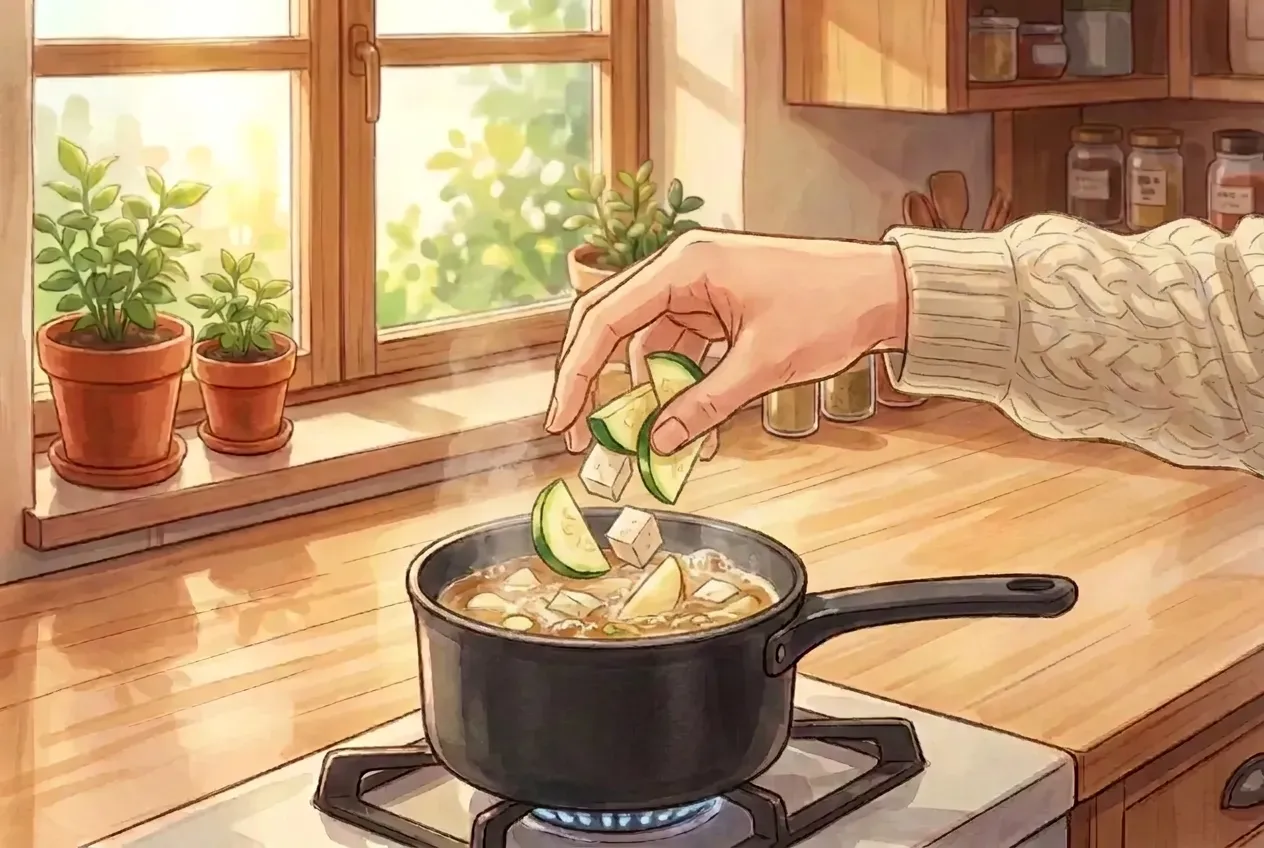
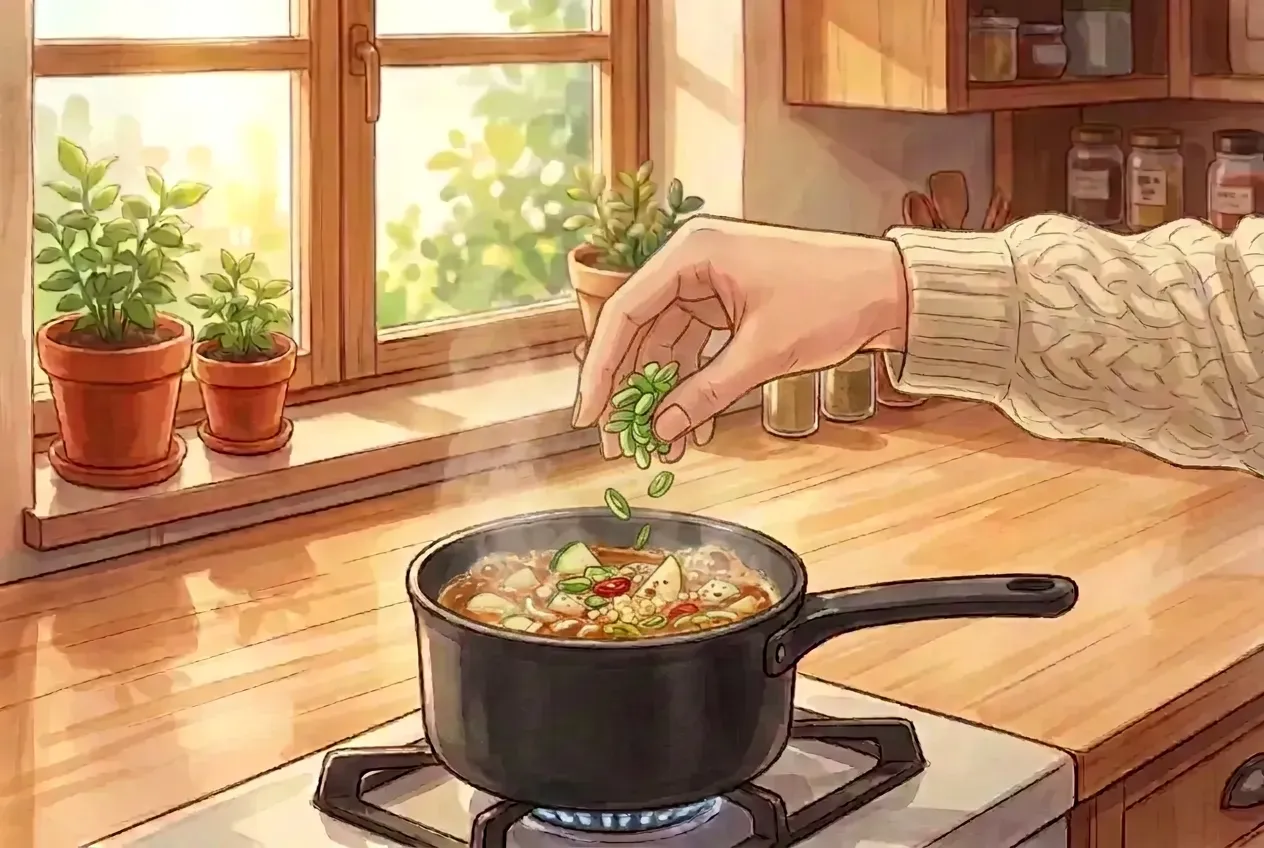
- 5 Add the garlic, chili pepper and gochugaru if you like, and simmer for 1–2 minutes more.

- 6 Taste, and add a little more doenjang if it needs more depth. Scatter the green onion on top and serve bubbling hot with rice.
국룰Dissolve the doenjang through a strainer — it keeps the broth smooth, with no clumps.
Substitution Guide
About the Doenjang and the Stock — Here's What to Do
Two things trip people up: finding doenjang and making anchovy stock. Here's the good news: you can make a very good stew with a jar of miso and plain water.
Use this — no need to look further
Red or brown miso is the closest stand-in. For each tablespoon of doenjang use 1 tablespoon of miso, plus a small pinch of salt. With white miso, add about a teaspoon of soy sauce for every tablespoon.
If you don't have anchovy stock
- Dashi (kombu or instant dashi) — use it 1:1 as the liquid
- Low-sodium chicken or vegetable stock — also 1:1, and taste before adding more salt
- Plain water — the paste and vegetables still give a comforting stew
If you can't find Korean zucchini
Ordinary zucchini or courgette works well. You can also add mushrooms, spinach or radish. The stew is meant to use whatever vegetables are in the fridge.
Why it matters (so you're not just guessing next time)
Doenjang-jjigae is built from three jobs: a savory fermented paste for depth, a light stock to carry it, and vegetables and tofu to soak up the flavor. As long as those three jobs get done, you can swap individual ingredients with confidence.
A Couple More Notes
Adding Protein
Many cooks add thin slices of beef, clams or a few shrimp. Add beef at the start and clams or shrimp with the zucchini.
About the Saltiness
Different brands of doenjang and miso vary a lot in saltiness, so add the paste in two steps and taste before you add more.
Want to Go Further?
This stew uses mostly everyday ingredients. Once you're ready to stock two or three Korean pantry staples, a much wider range of Korean dishes opens up with very little extra effort.
Getting Started with Korean Cooking: The 3 Sauces You Need →Watch It Made
These cooks speak Korean. Press CC in the player, then the gear icon → Subtitles → Auto-translate to read along in your language.

Cooks' versions
Made it your way? Show us.
Swapped an ingredient, changed the heat, plated it differently? Add a photo and a few words — we'll turn it into a pretty card right here on the Doenjang-jjigae page, so the next cook can follow your lead.
Spotted a mistake, or have an idea?
Tell us what to fix or improve in this recipe. This is not a public comment — it goes straight to the K-food team.
Made this with a different swap that worked well? Let us know in the comments — it helps the next person who gets stuck on this step.