
Recipe · Street snack · Serves 4
It's Okay — You Can Make Eomuk Kkochi, Korea's Fish Cake Skewers in Hot Broth, at Home
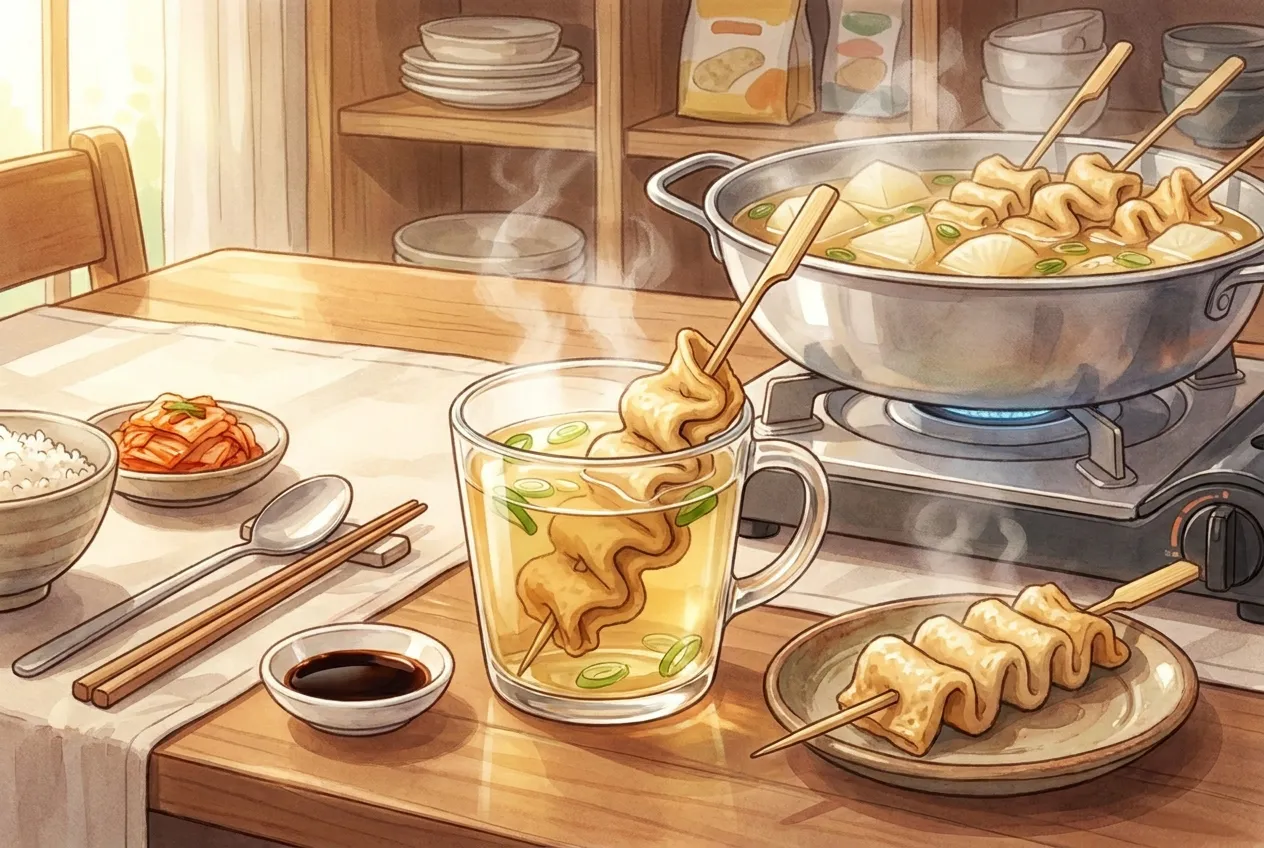
Eomuk kkochi is a skewer of folded fish cake simmered in a clear, savory broth of radish, anchovies and kelp. It is the steaming street-stall snack you see on cold days, served in a paper cup with a ladle of hot broth to sip. At home it comes together in about 40 minutes and is great for a snack, a light meal, or a party. If you don't have every ingredient on this list, that's fine — keep reading before you decide to skip it.
Before You Shop: Quick Ingredient Check
- Flat fish cake sheets (eomuk)substitute below
- Dried anchovies and kelp (for broth)substitute below
- Guk-ganjang (Korean soup soy sauce)substitute below
- Korean radish, onion, green onions, garlic, black peppereasy anywhere
Nothing here is a dealbreaker. Let's cook.
Ingredients (serves 4)
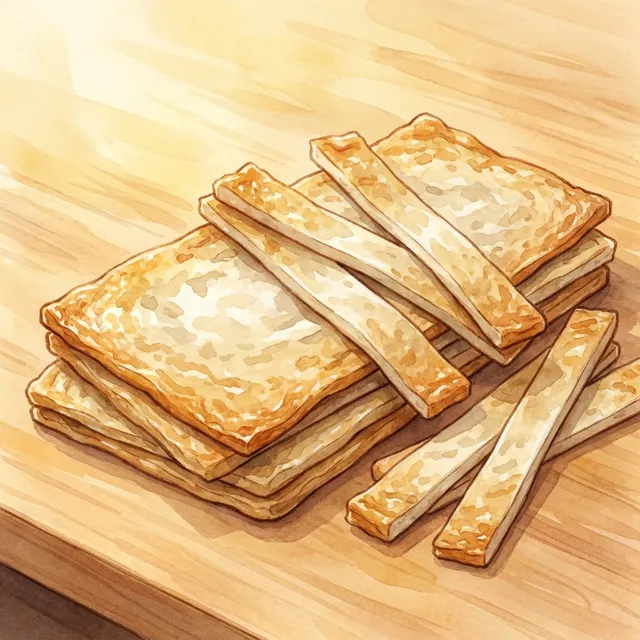 400g (14 oz) flat fish cake sheets (eomuk)
- 8 bamboo skewers, 20cm (8 in) long
- 8 cups (1.9 liters) water
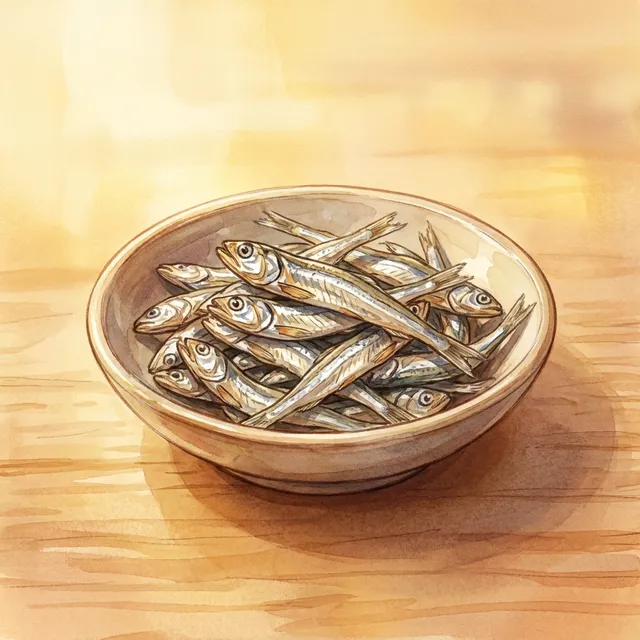 15g (½ oz, about 10) large dried anchovies, heads and guts removed
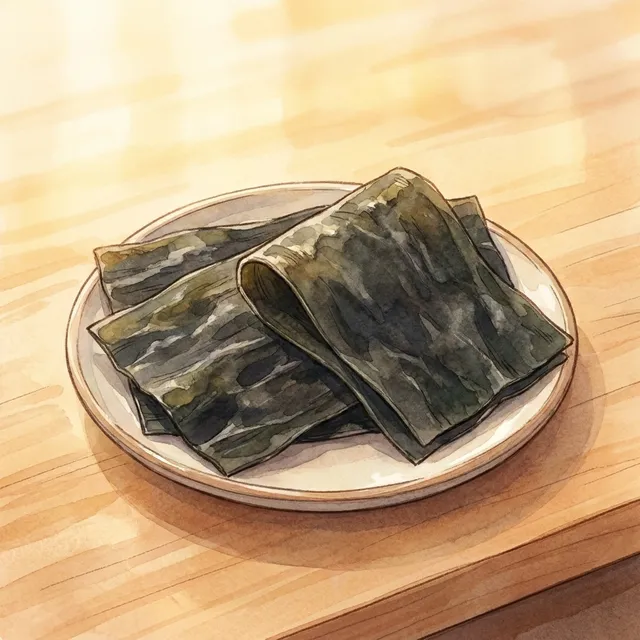 1 piece dried kelp (dashima), about 10 × 10 cm (4 × 4 in)
 200g (7 oz) Korean radish or daikon, cut into 3 chunks
- ½ onion
 3 green onions, white parts left whole and green parts sliced
 2 tbsp Korean soup soy sauce (guk-ganjang)
- 1 tsp minced garlic
- ½ tsp salt, plus more to taste
- ¼ tsp black pepper
Steps
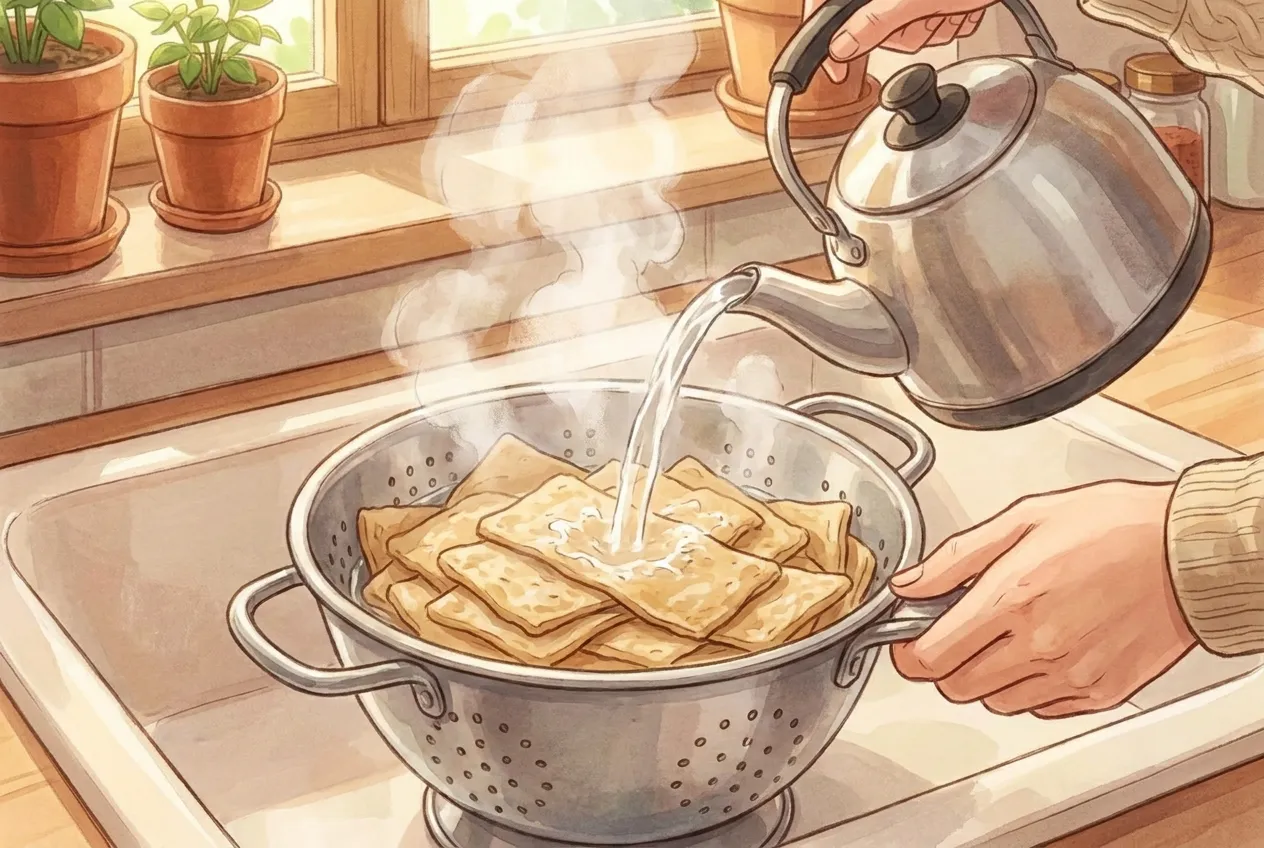
- 1 Place the fish cake sheets in a colander and pour boiling water over them. This washes off surface oil. Let cool a minute.
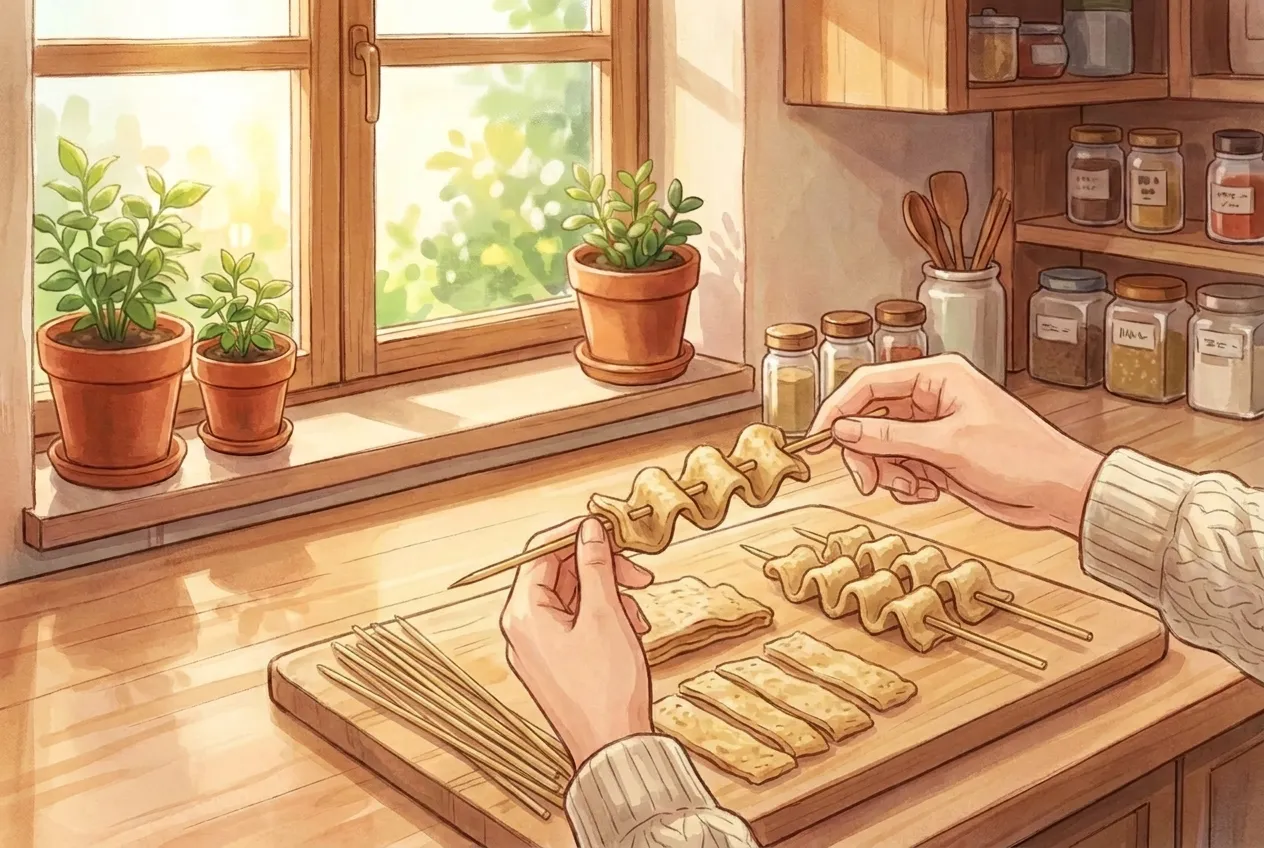
- 2 Cut the sheets into strips about 2.5cm (1 in) wide. Fold each strip in a zigzag and thread onto a skewer, about 3 folds per skewer.
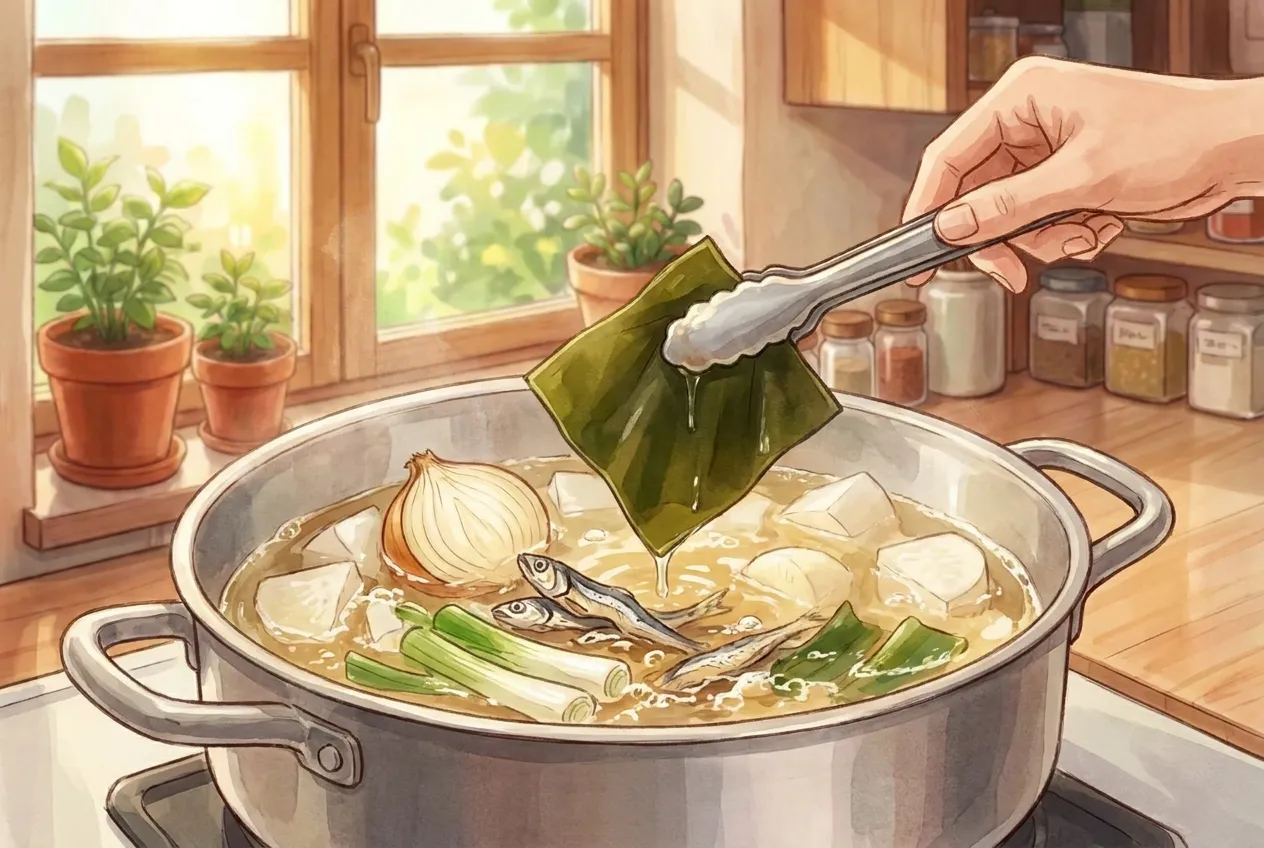
- 3 Bring the water, anchovies, kelp, radish, onion and green onion whites to a boil in a wide pot. Remove the kelp after 10 minutes, simmer 5 minutes more, then lift out the anchovies and other solids.
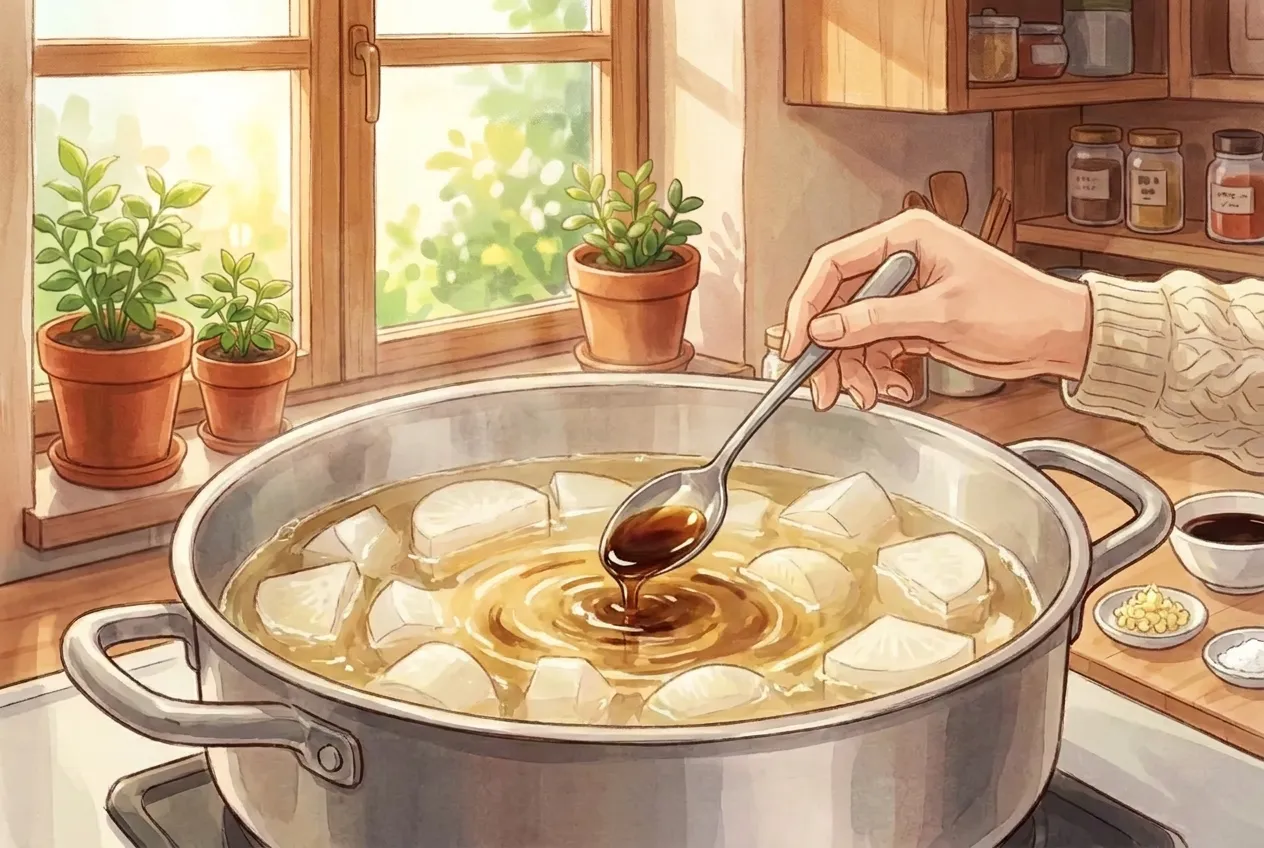
- 4 Season the broth with the soup soy sauce, garlic and salt. Taste, and add a little more salt if needed.
- 5 Lay the skewers in the broth and simmer over medium heat for 5–7 minutes, until the fish cake swells and soaks up the broth.
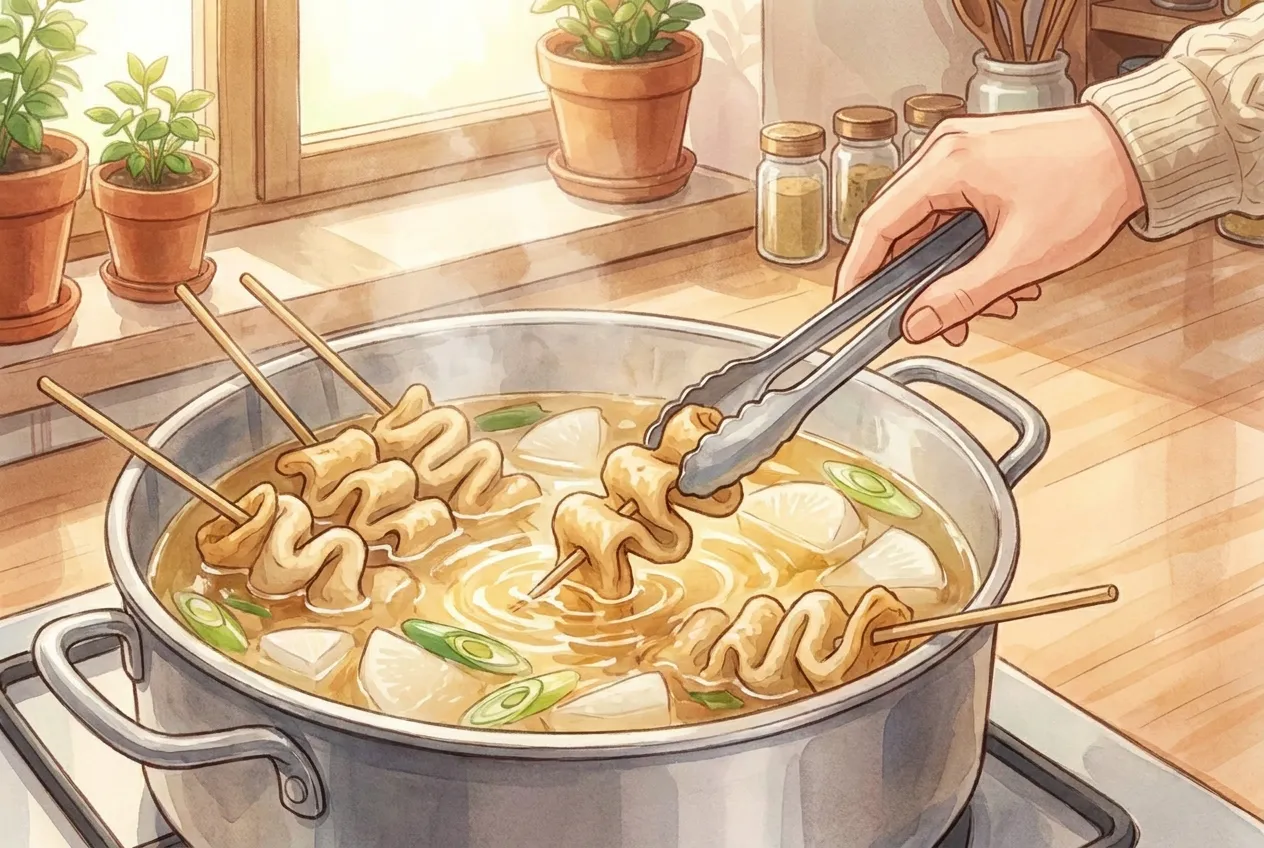
- 6 Scatter the green onion greens and black pepper over the pot and turn off the heat.
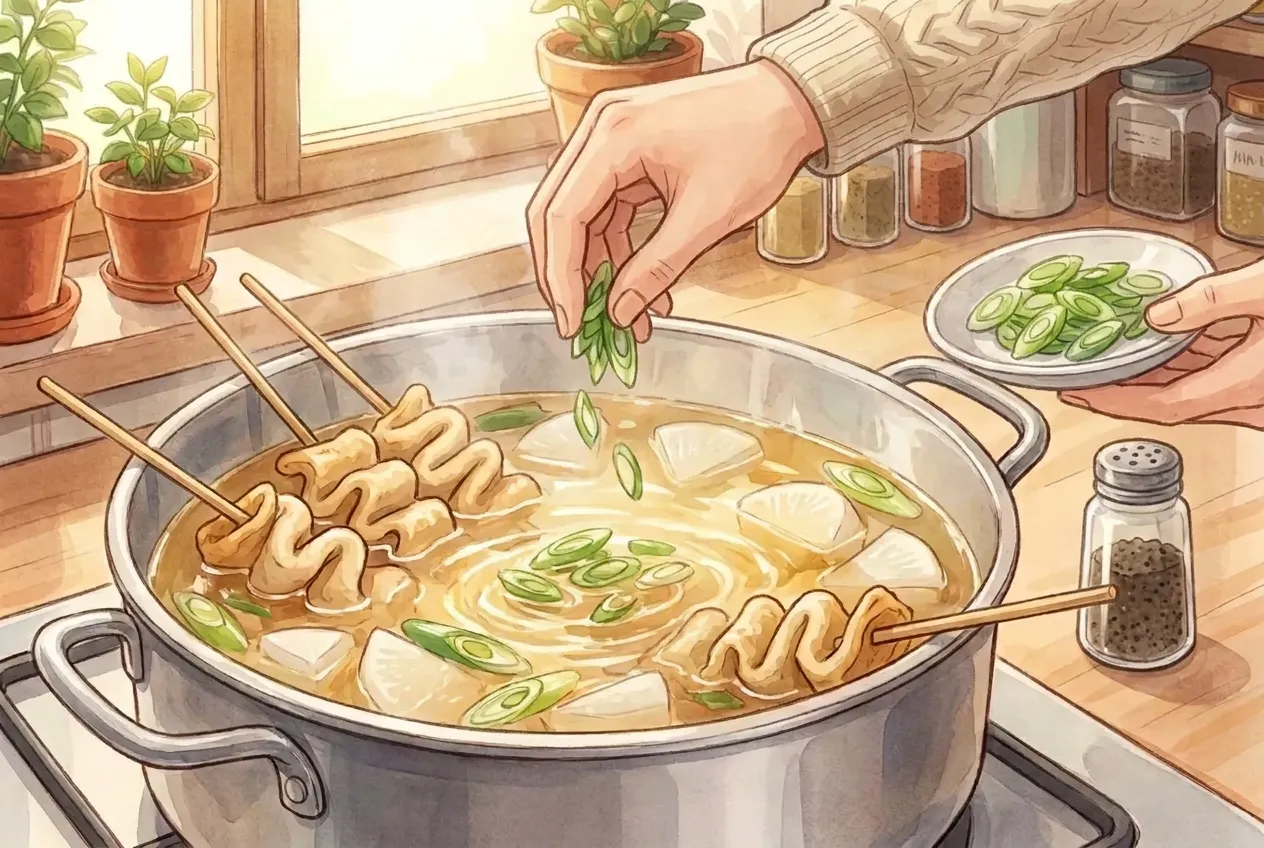
- 7 Serve the skewers in cups or bowls with a ladle of hot broth. Sip the broth as you eat, and dip the fish cake in soy sauce if you like.
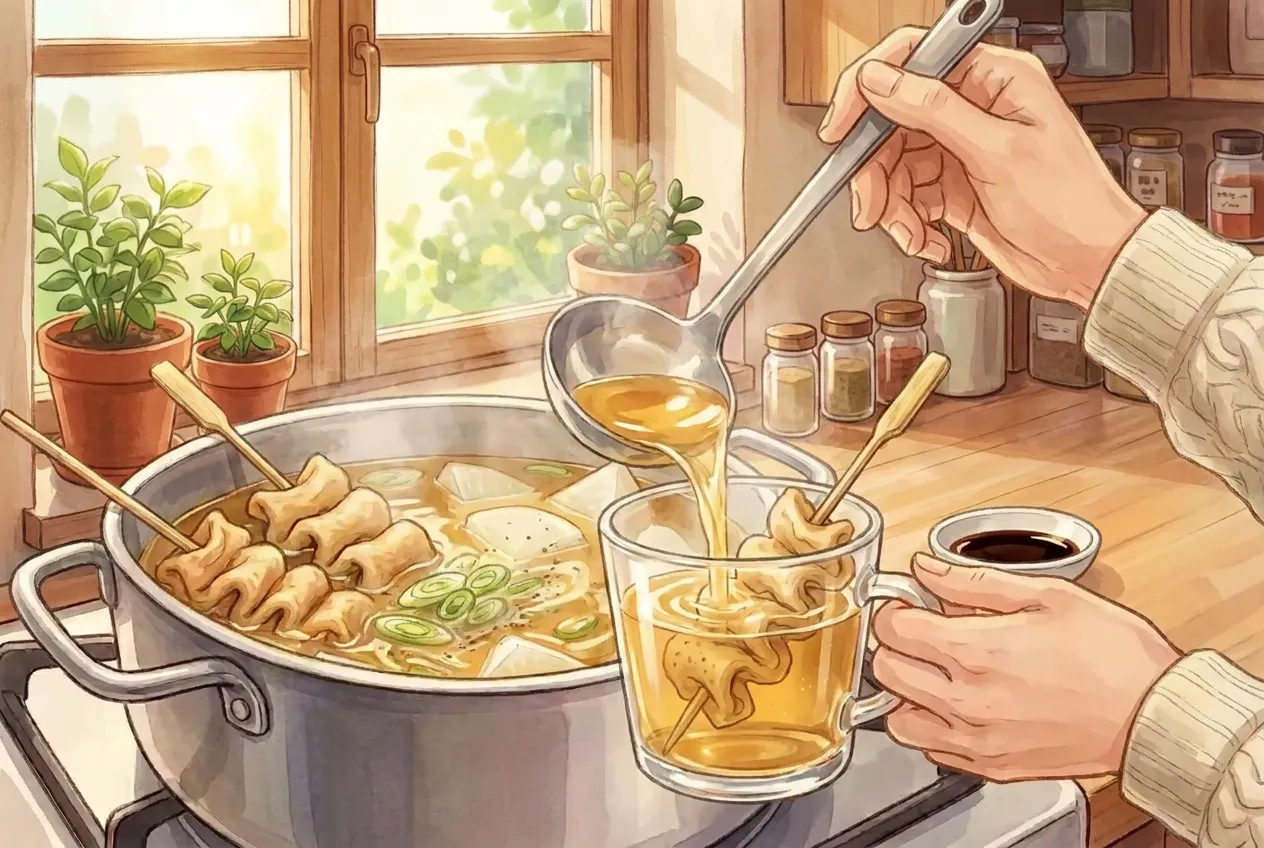
국룰Pour boiling water over the fish cake before cooking. It rinses off the frying oil, so the broth stays clear and tastes clean instead of greasy.
Substitution Guide
About the Fish Cake and the Broth — Here's What to Do
Two things might send you shopping: fish cake sheets and the anchovy-kelp broth. Here's the good news: the dish is just fish cake in a light broth, so the shortcuts below work well.
Use this — no need to look further
Flat fish cake sheets (sajo-eomuk) from a Korean grocery store, sold in the refrigerated or freezer section, plus a bag of dried anchovies and a piece of dashima (dried kelp).
If you can't find them
- Fish balls or kamaboko (Japanese fish cake) from the Asian grocery store: slice and thread onto skewers
- Store-bought anchovy broth packs or dashi in place of homemade broth: use 8 cups (1.9 liters) of prepared broth
- Regular soy sauce in place of soup soy sauce: use 1½ tbsp and add salt to taste
- Frozen fish cake works fine: thaw it in the fridge first
If you don't have skewers
Skip the skewers and simmer the folded fish cake strips loose in the broth, then ladle it all into a bowl. It tastes the same and becomes a simple eomuk-tang.
Why it matters (so you're not just guessing next time)
Eomuk kkochi is built from three jobs: a rinsed fish cake so the broth stays clean, a light savory broth built from anchovies, kelp and radish, and a short simmer so the fish cake soaks up flavor but stays springy. As long as those three jobs get done, you can swap individual ingredients with confidence.
A Couple More Notes
Keep It Warm
For a party, keep the pot on very low heat and serve from it, so the fish cake keeps absorbing flavor. Add water if the broth reduces too much.
Soy Dip
Mix 1 tbsp soy sauce, 1 tsp vinegar and a pinch of gochugaru for a quick dip. Many street stalls also serve a little mustard on the side.
Want to Go Further?
Once you're ready to stock two or three Korean pantry staples, a much wider range of Korean dishes opens up with very little extra effort.
Getting Started with Korean Cooking: The 3 Sauces You Need →Watch It Made
These cooks speak Korean. Press CC in the player, then the gear icon → Subtitles → Auto-translate to read along in your language.
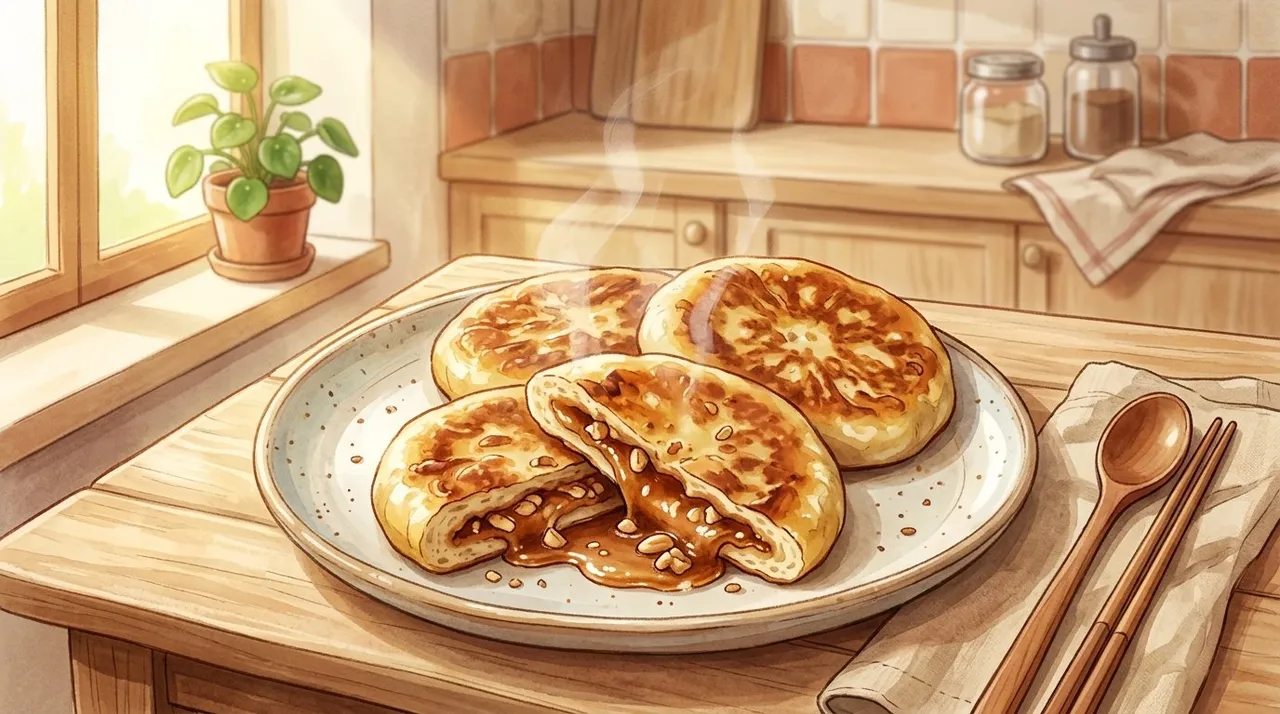

Cooks' versions
Made it your way? Show us.
Swapped an ingredient, changed the heat, plated it differently? Add a photo and a few words — we'll turn it into a pretty card right here on the Eomuk Kkochi page, so the next cook can follow your lead.
Spotted a mistake, or have an idea?
Tell us what to fix or improve in this recipe. This is not a public comment — it goes straight to the K-food team.
Made this with a different swap that worked well? Let us know in the comments — it helps the next person who gets stuck on this step.