
Recipe · Rainy day · Serves 2–3
It's Okay — You Can Make Haemul-pajeon, Korea's Crispy Seafood Scallion Pancake, at Home
Haemul-pajeon is a crisp-edged, tender-centered pancake packed with scallions and seafood, served with a tangy soy dipping sauce. Koreans often crave it on a rainy day. It comes together in about 30 minutes. If you don't have every ingredient on this list, that's fine — keep reading before you decide to skip it.
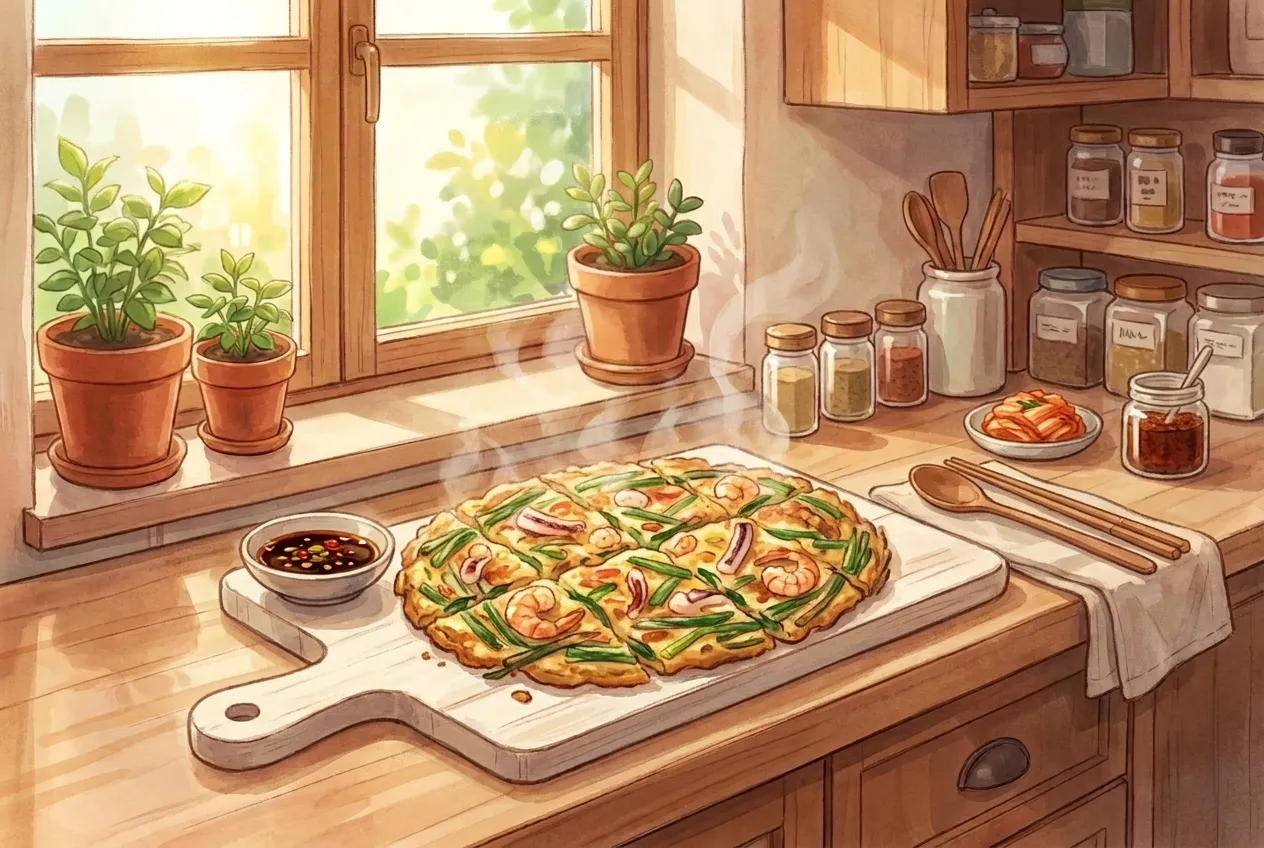
Before You Shop: Quick Ingredient Check
- Scallions (green onions)easy anywhere, swaps below
- Seafood (squid, shrimp or a frozen mix)substitute below
- Flour, cornstarch, egg, oil, soy sauce, vinegareasy anywhere
- Korean pancake mix (buchim-garu)optional, substitute below
Nothing here is a dealbreaker. Let's cook.
Ingredients (serves 2–3)
 10 green onions (scallions), cut into 10cm (4 in) lengths (about 200g / 7 oz)
- 150g (5 oz) seafood, such as squid, shrimp or a frozen mix, thawed and chopped
- 1 cup (about 120g) all-purpose flour (or 1 cup Korean pancake mix)
- 3 tbsp cornstarch
- 1 cup (240ml) ice-cold water
- 1 egg for the batter, plus 1 egg, beaten, for the top
- ½ tsp salt
- 3 tbsp neutral oil, for frying
 Dipping sauce: 2 tbsp soy sauce, 1 tbsp rice vinegar, 1 tsp sugar, a pinch of chili flakes (optional)
Steps
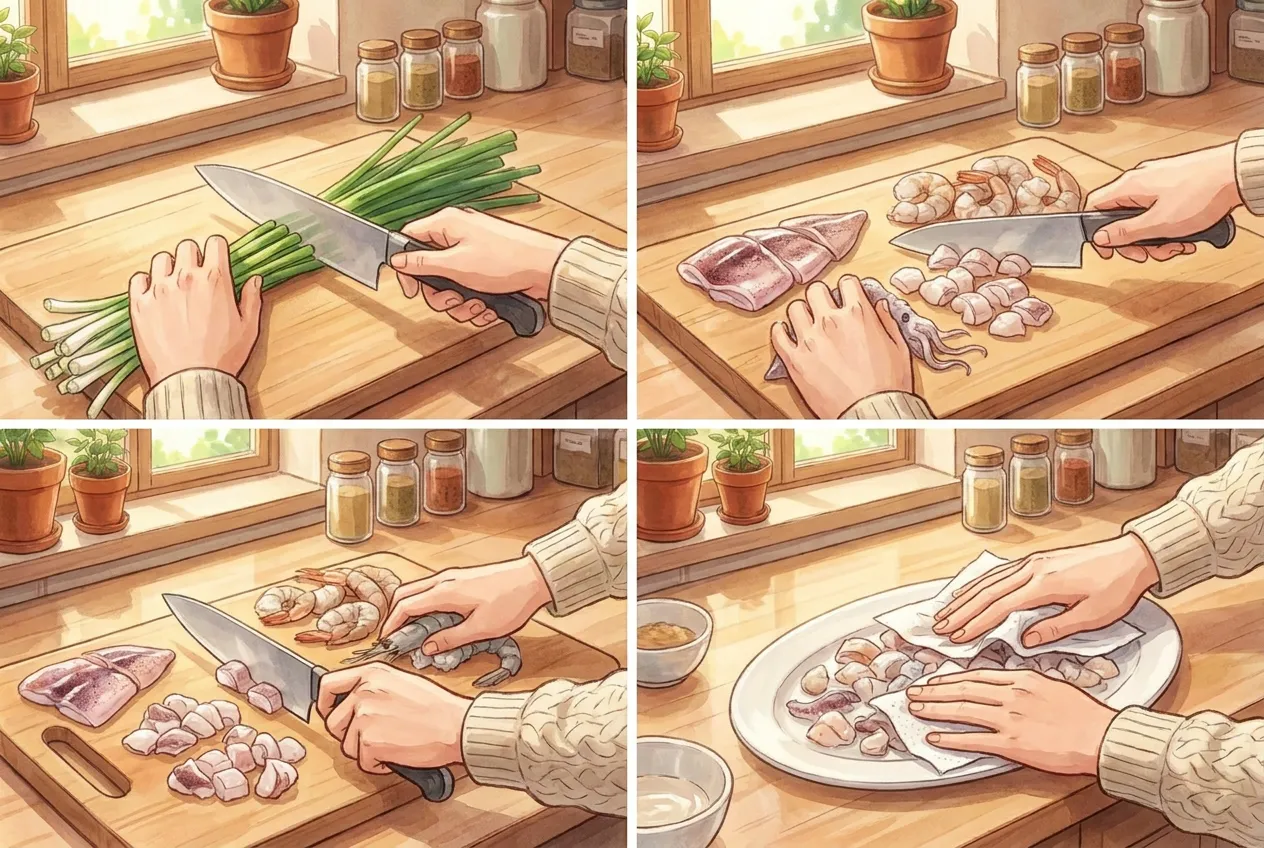
- 1 Cut the green onions to the length of your pan and chop the seafood into bite-size pieces. Pat the seafood dry with a paper towel.
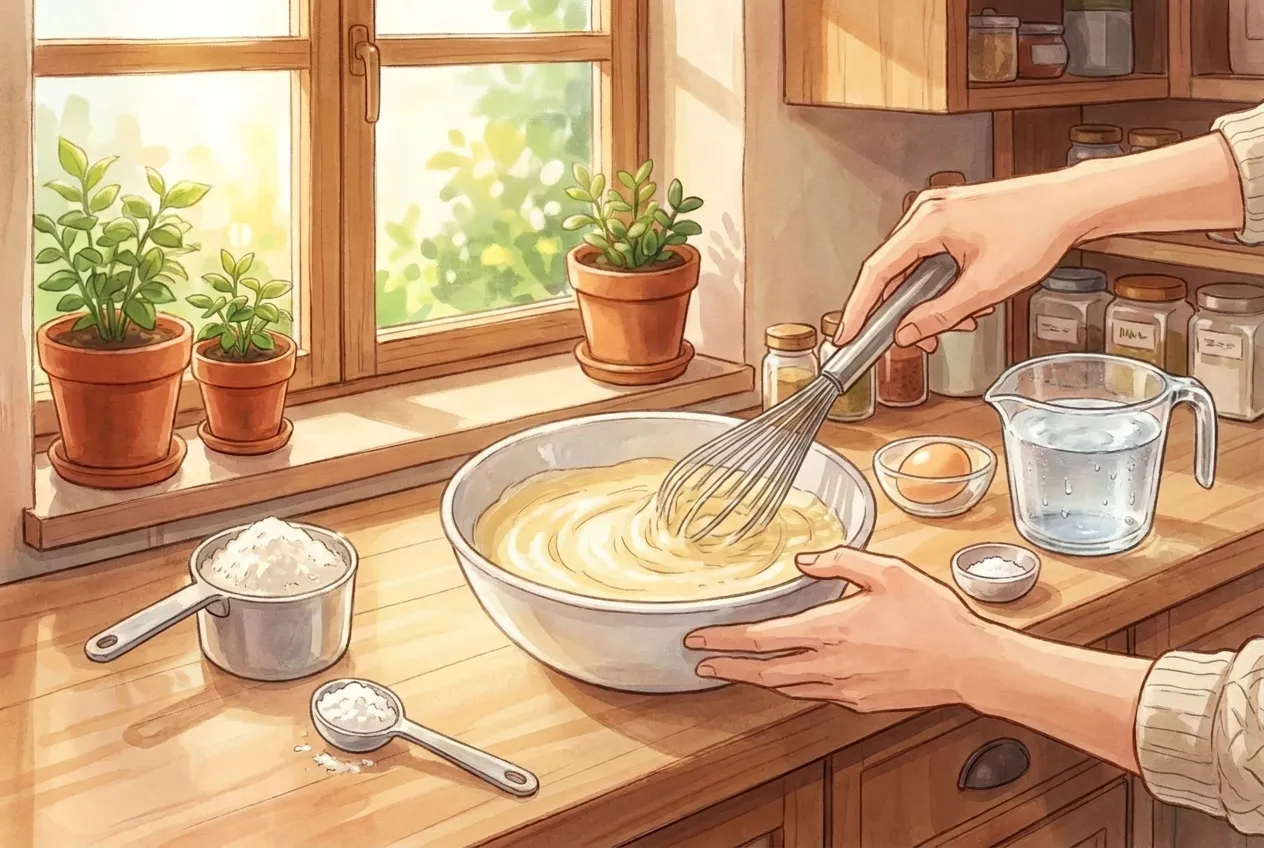
- 2 Whisk the flour, cornstarch, salt, 1 egg and the ice-cold water into a thin batter, about the thickness of heavy cream. Cold water is what keeps the pancake crisp.
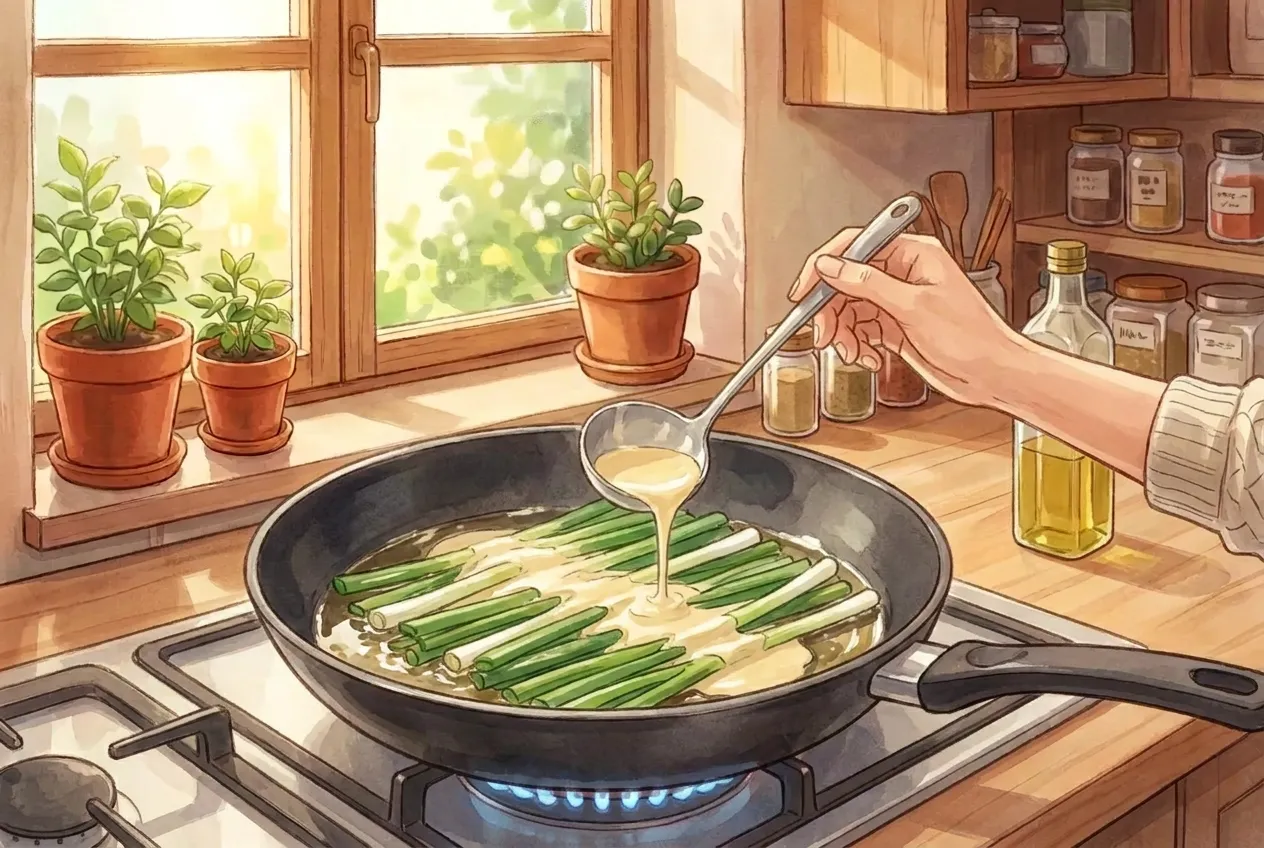
- 3 Heat 2 tbsp oil in a large non-stick pan over medium-high heat. Arrange the green onions in a tight layer, all pointing the same way, and pour the batter over them so it just covers them.
- 4 Scatter the seafood on top, pour the beaten egg over, and cook for 3–4 minutes, until the underside is golden and the edges are crisp.
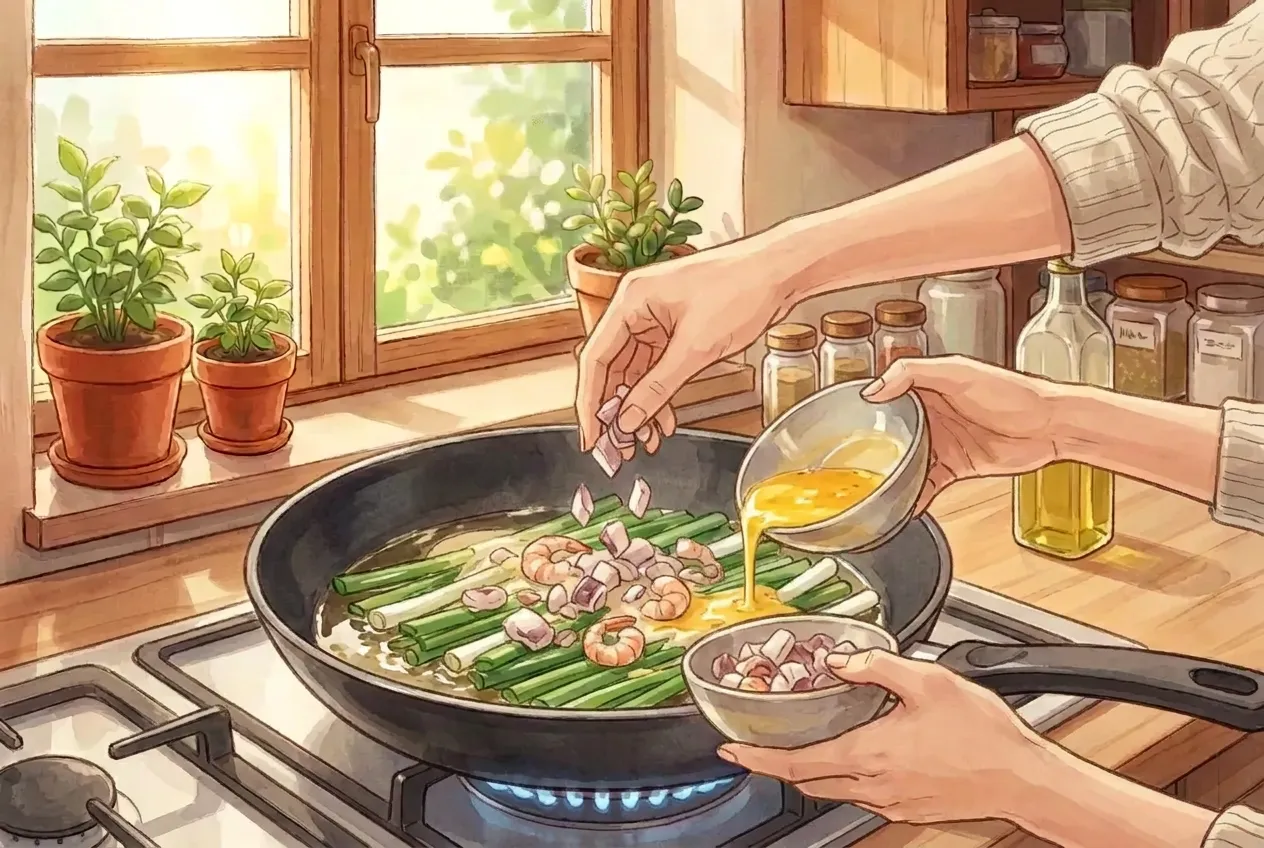
- 5 Flip the pancake with a wide spatula, add the remaining oil around the edges and press down. Cook for another 3–4 minutes until golden.
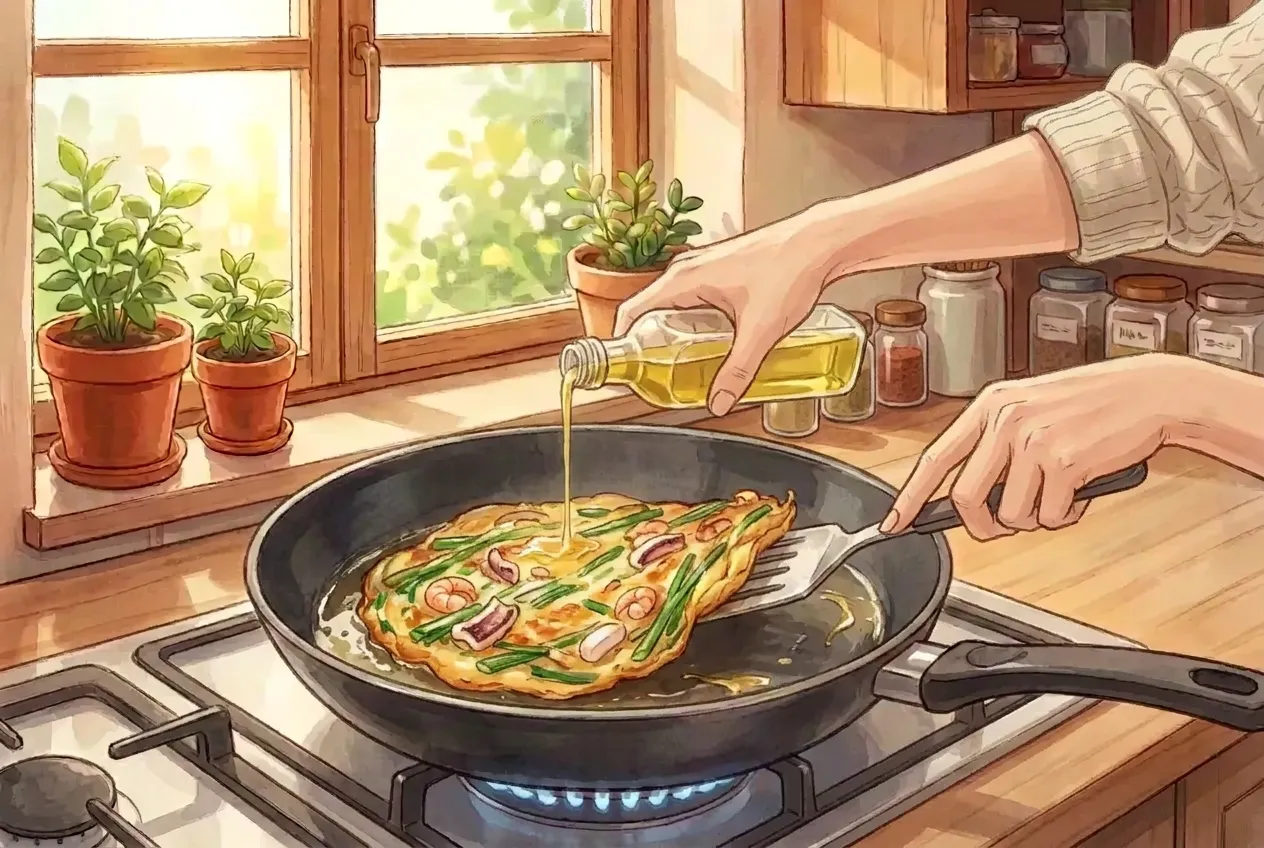
- 6 Slide it onto a board, cut into squares and serve right away with the dipping sauce.
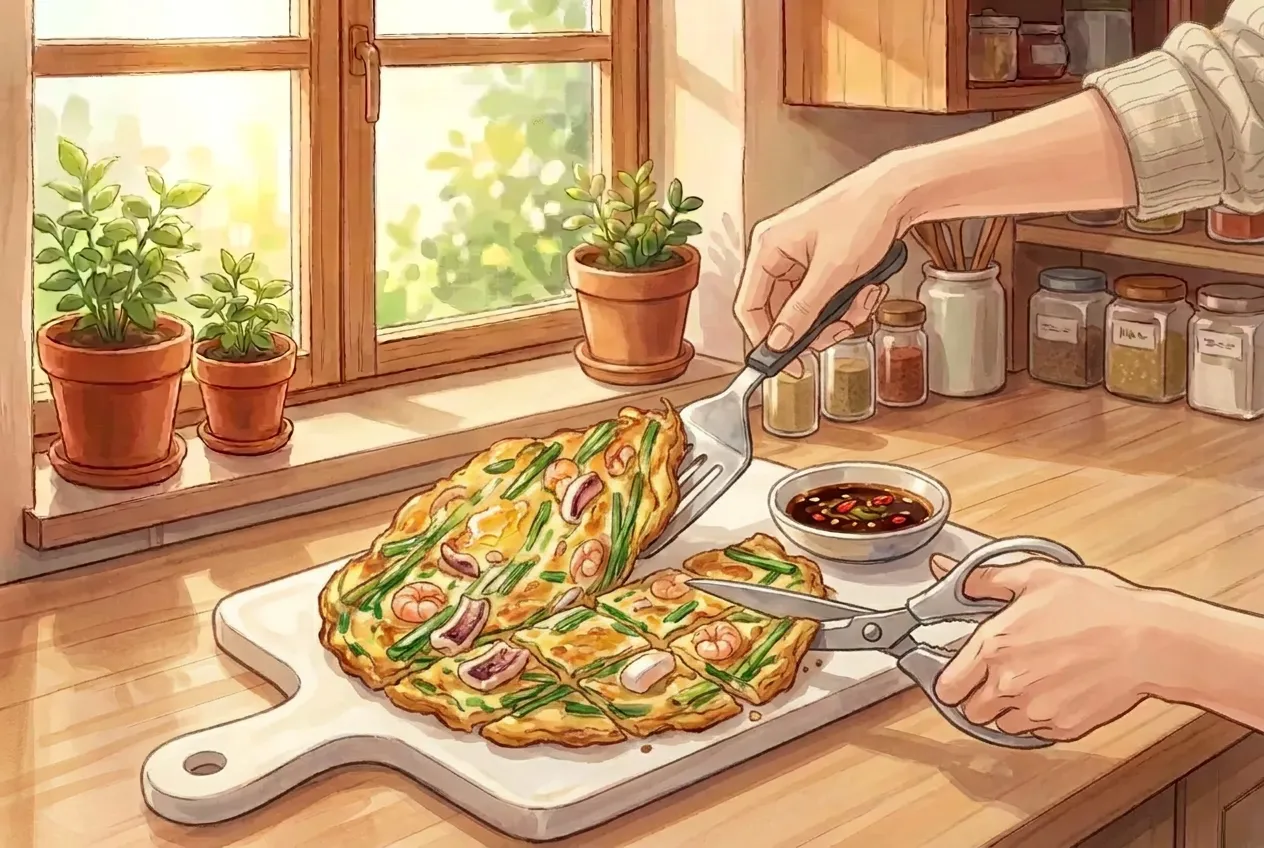
국룰Use ice-cold water and don't over-mix the batter — it is the secret to a crisp edge and a tender middle.
Substitution Guide
About the Pancake Mix and the Seafood — Here's What to Do
Two things trip people up: Korean pancake mix and the seafood. Here's the good news: you can make a great pancake from flour, cornstarch and whatever seafood you have.
Use this — no need to look further
All-purpose flour plus cornstarch (about 3 tablespoons of starch for each cup of flour). The starch gives the crisp texture that Korean pancake mix is made for.
If you can't find fresh seafood
- A frozen seafood mix — thaw it and pat it very dry
- Shrimp only, chopped
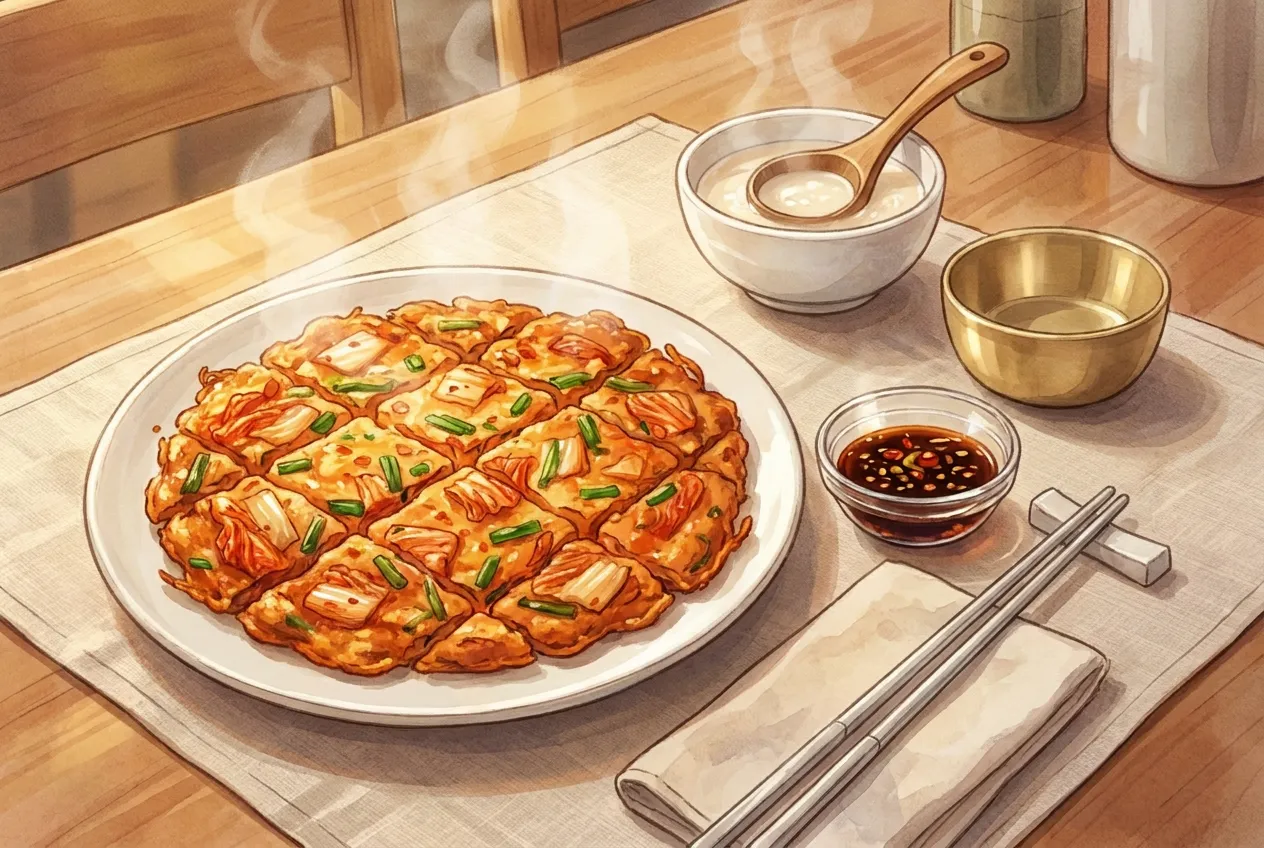
- No seafood at all — make a plain pajeon, or add kimchi for a kimchi pancake
If you can't find Korean green onions
Ordinary scallions or spring onions work well; use about 2 to 3 for each Korean green onion, and cut them to fit your pan. Garlic chives are a good addition too.
Why it matters (so you're not just guessing next time)
Haemul-pajeon is built from three jobs: a thin, cold batter that fries crisp, a thick layer of scallions that gives it sweetness and structure, and hot oil. As long as those three jobs get done, you can swap individual ingredients with confidence.
A Couple More Notes
About the Pan
A non-stick or well-seasoned pan lets you flip it in one piece. If it is difficult, cook two smaller pancakes instead of one large one.
Serving It
Pajeon is often eaten with makgeolli (rice wine), but it is just as good as a snack or a light meal with rice. Eat it while the edge is crisp.
Want to Go Further?
This dish uses mostly everyday ingredients. Once you're ready to stock two or three Korean pantry staples, a much wider range of Korean dishes opens up with very little extra effort.
Getting Started with Korean Cooking: The 3 Sauces You Need →Watch It Made
These cooks speak Korean. Press CC in the player, then the gear icon → Subtitles → Auto-translate to read along in your language.
Cooks' versions
Made it your way? Show us.
Swapped an ingredient, changed the heat, plated it differently? Add a photo and a few words — we'll turn it into a pretty card right here on the Haemul-pajeon page, so the next cook can follow your lead.
Spotted a mistake, or have an idea?
Tell us what to fix or improve in this recipe. This is not a public comment — it goes straight to the K-food team.
Made this with a different swap that worked well? Let us know in the comments — it helps the next person who gets stuck on this step.