
Recipe · Side dish · Serves 3–4
It's Okay — You Can Make Sigeumchi-namul, Korea's Seasoned Spinach Side Dish, at Home
Sigeumchi-namul is blanched spinach gently squeezed and tossed with sesame oil, garlic and soy sauce, one of the most common Korean side dishes. It takes about 10 minutes and uses a single bunch of spinach. If you don't have every ingredient on this list, that's fine — keep reading before you decide to skip it.
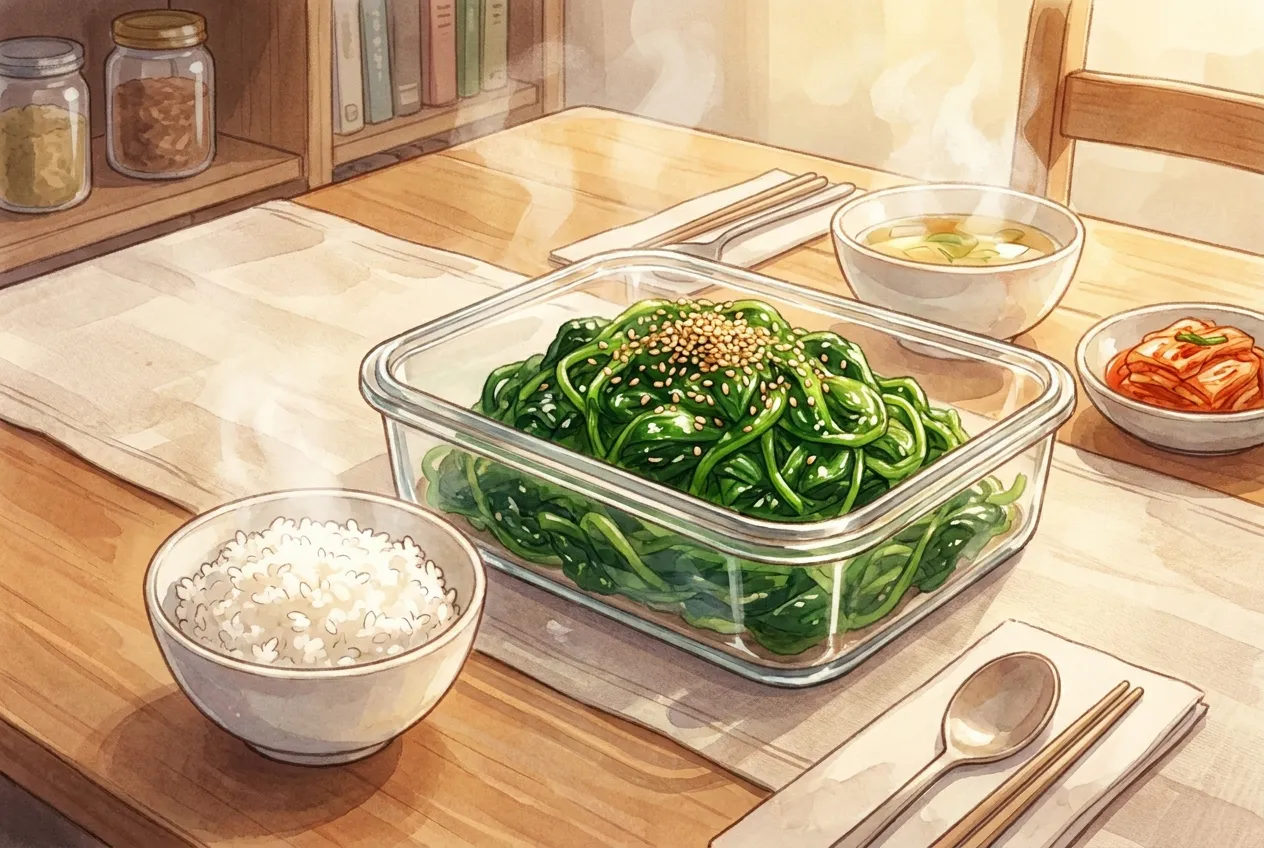
Before You Shop: Quick Ingredient Check
- Soup soy sauce (guk-ganjang)substitute below
- Toasted sesame oil and seedssubstitute below
- Spinach, garlic, green onion, salteasy anywhere
Nothing here is a dealbreaker. Let's cook.
Ingredients (serves 3–4 as a side)
- 300g (10 oz) spinach
- 1 clove garlic, minced
 1 green onion, finely chopped
 1 tbsp soup soy sauce (guk-ganjang), or 1½ tsp regular soy sauce plus a pinch of salt
 1 tbsp toasted sesame oil
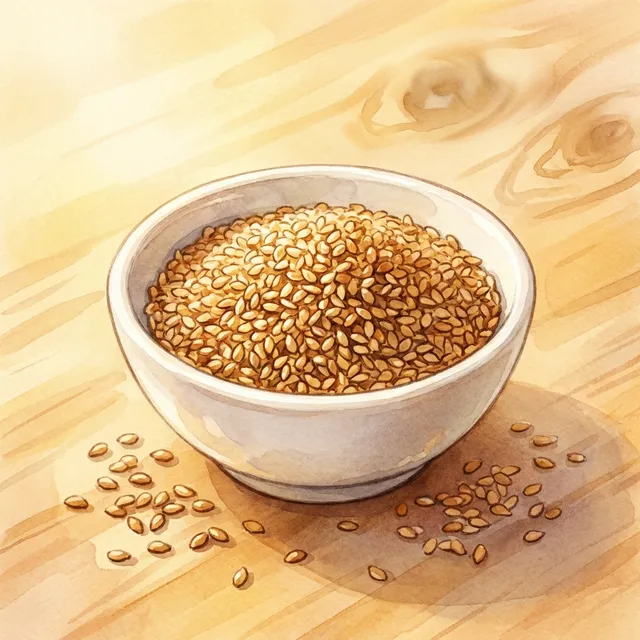 1 tsp toasted sesame seeds
- A pinch of salt
Steps
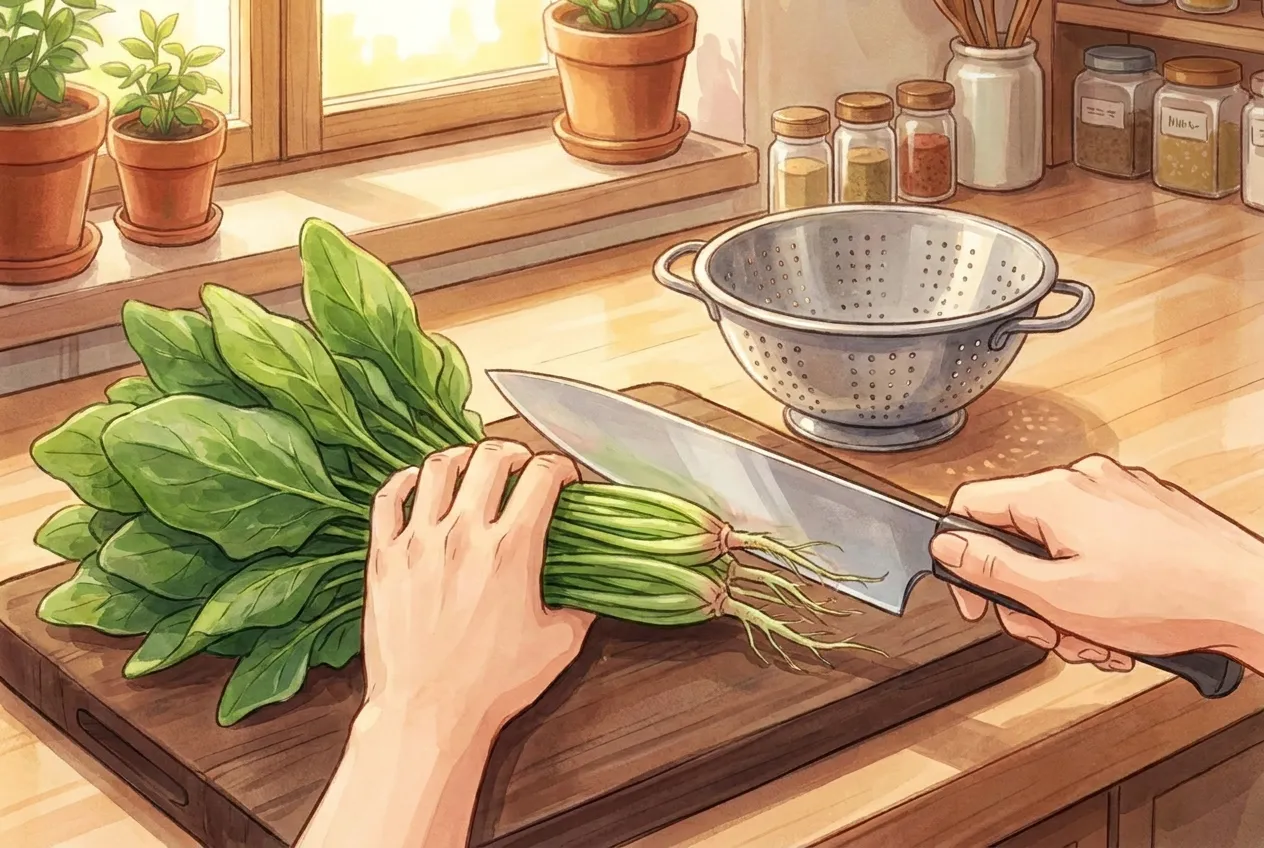
- 1 Trim the roots from the spinach, rinse it well in cold water and shake off the water.
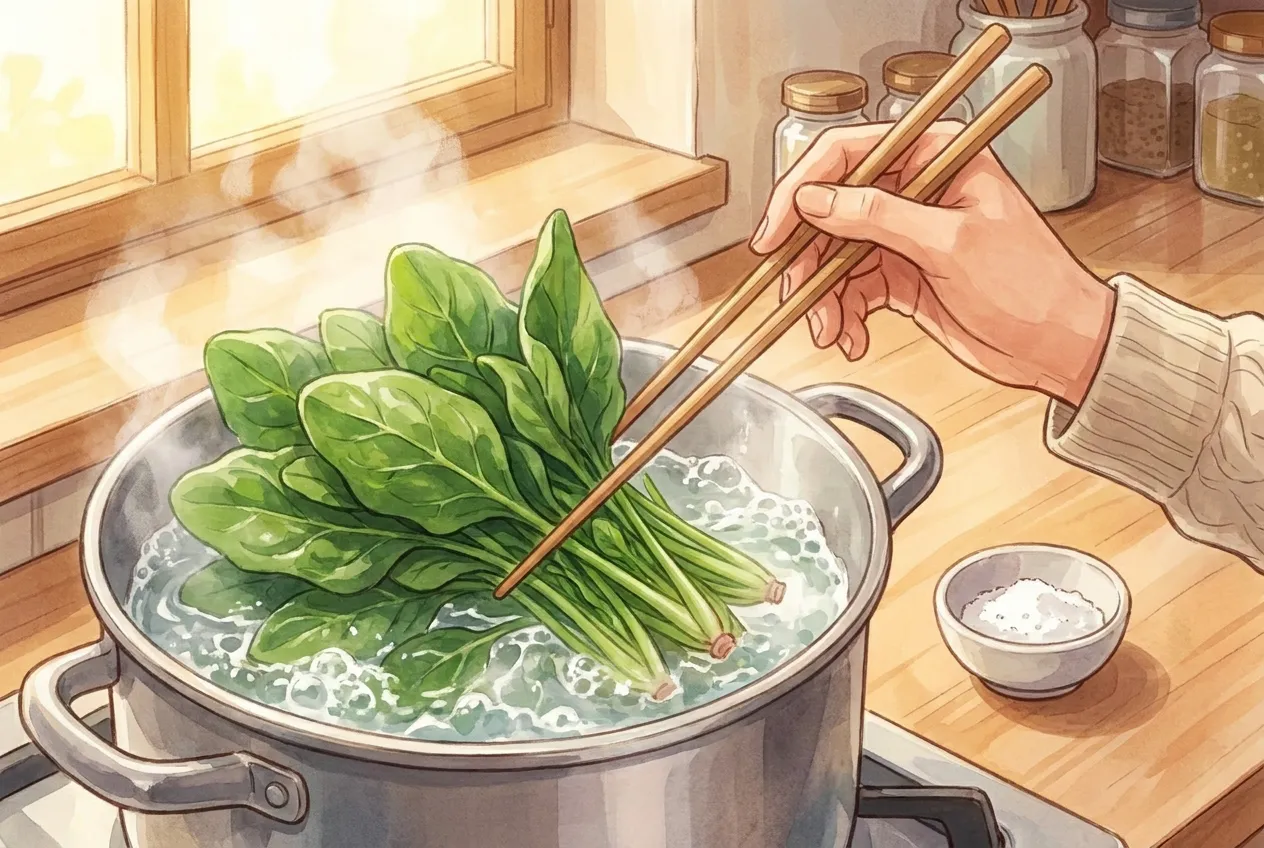
- 2 Bring a pot of water to a boil, add a pinch of salt, and blanch the spinach for 30–40 seconds, until bright green and just wilted.
- 3 Move it to a bowl of cold water right away to stop the cooking, then drain.
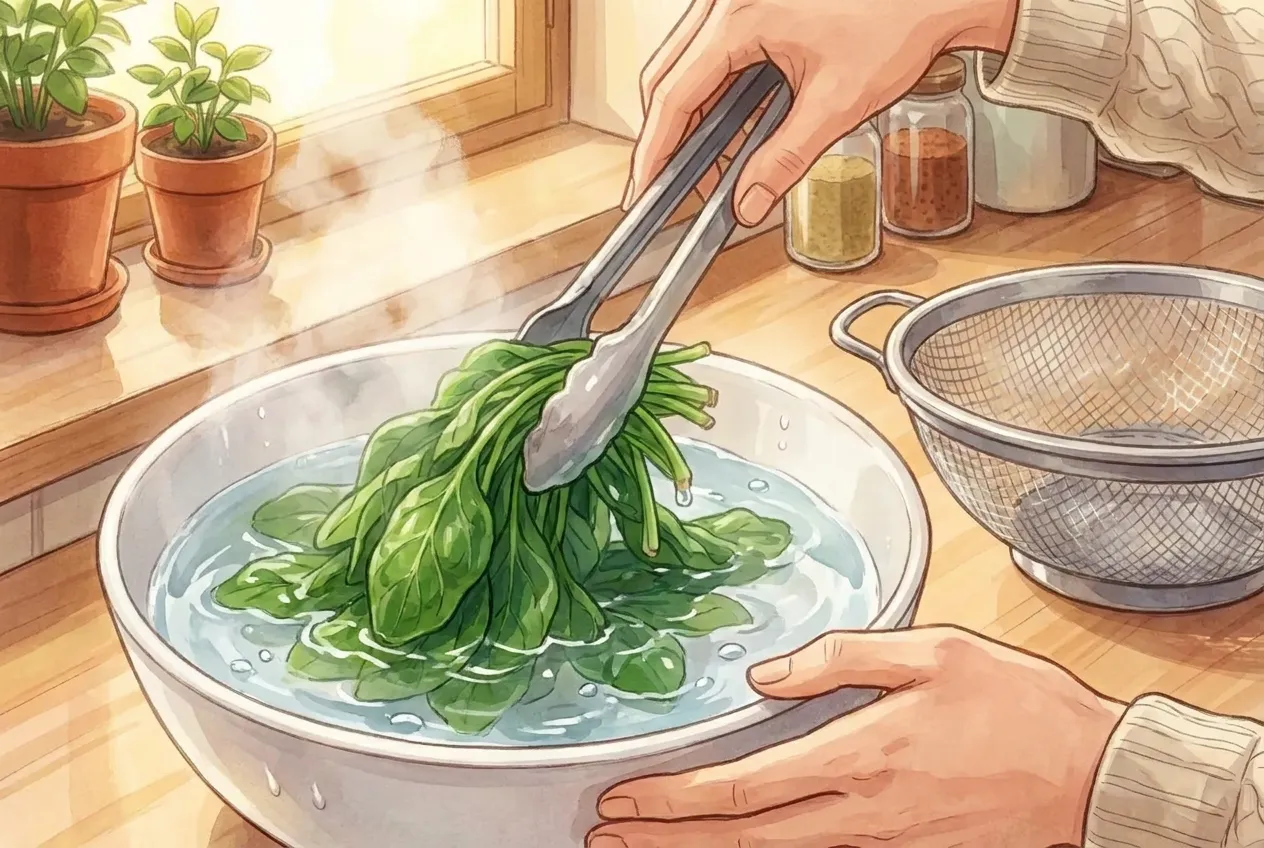
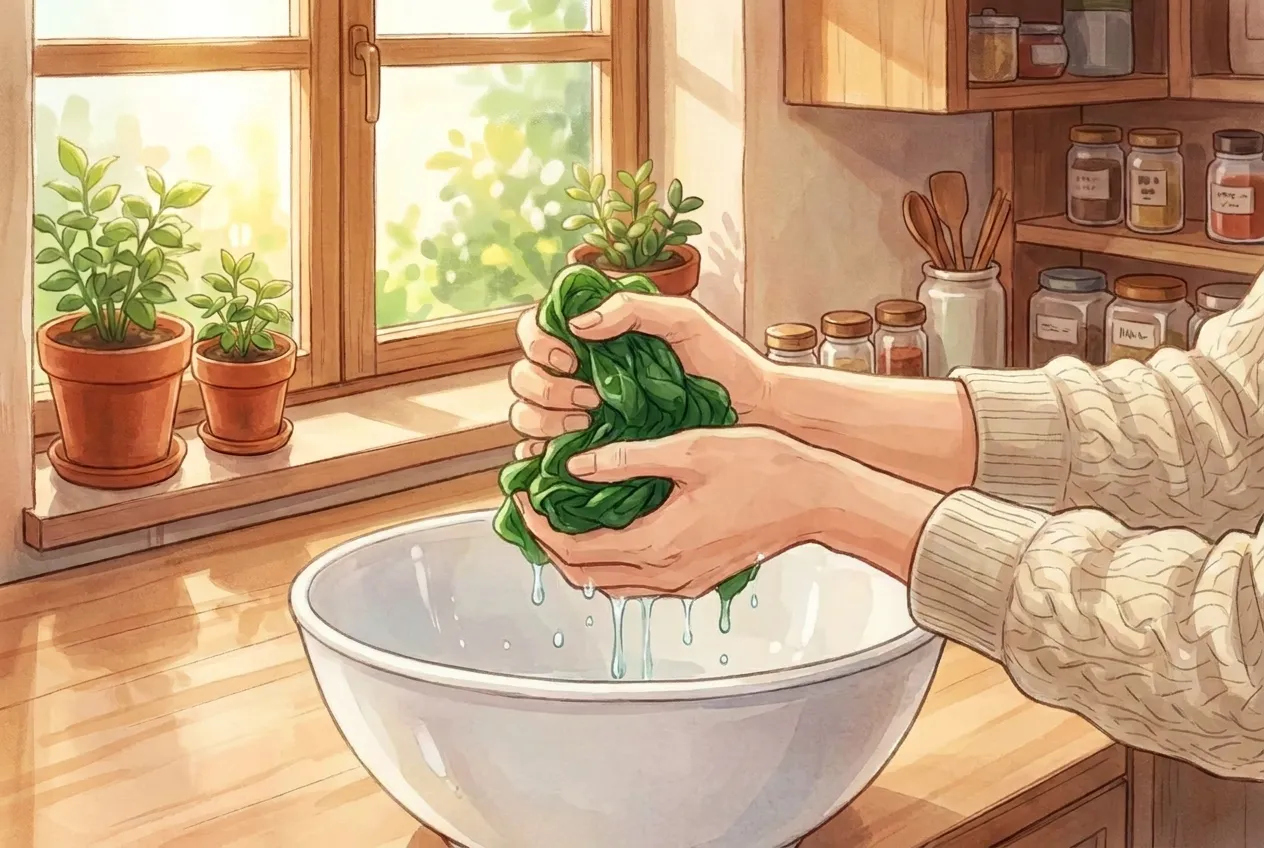
- 4 Squeeze the spinach gently with both hands, a handful at a time, to remove the water. Loosen the clumps and cut into 5cm (2 inch) lengths.
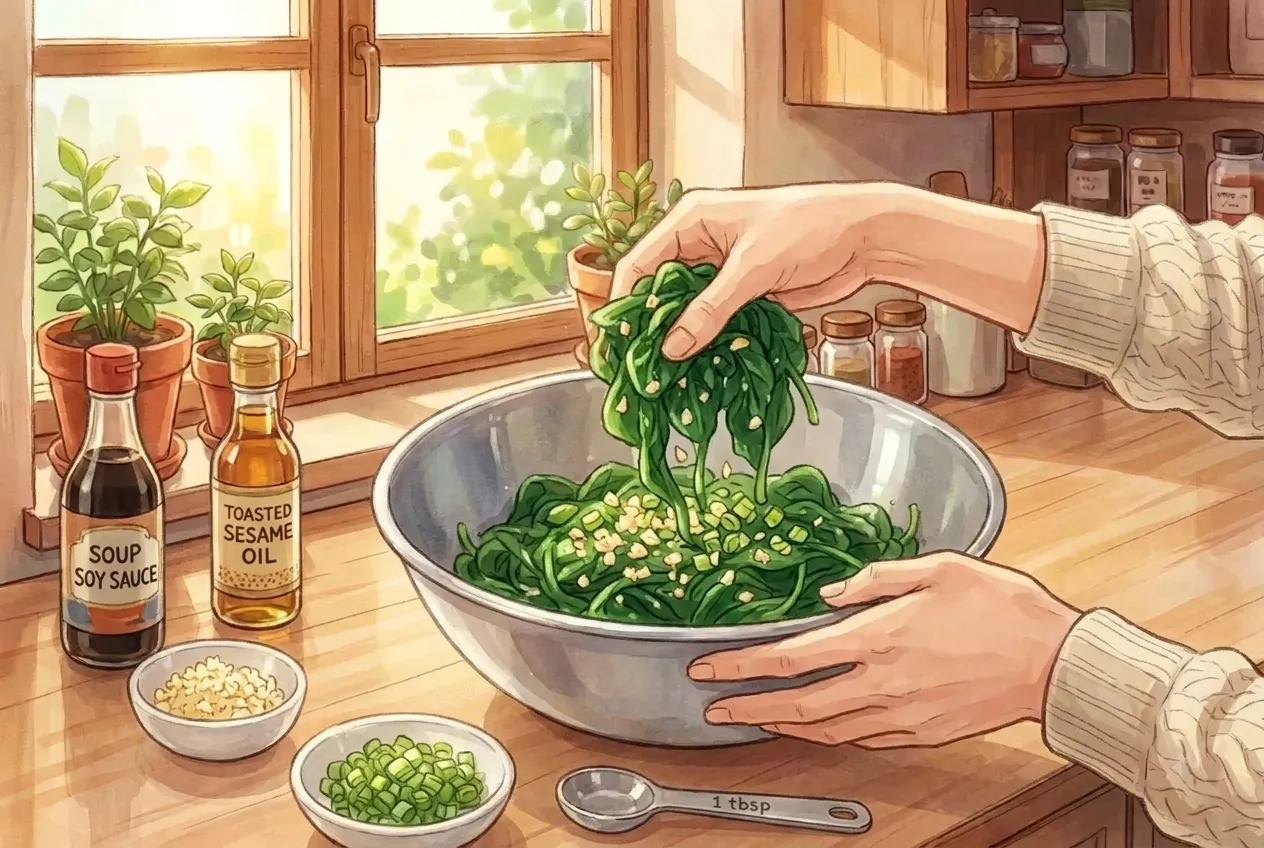
- 5 Add the garlic, green onion, soy sauce and sesame oil, and toss with your fingers until evenly coated.
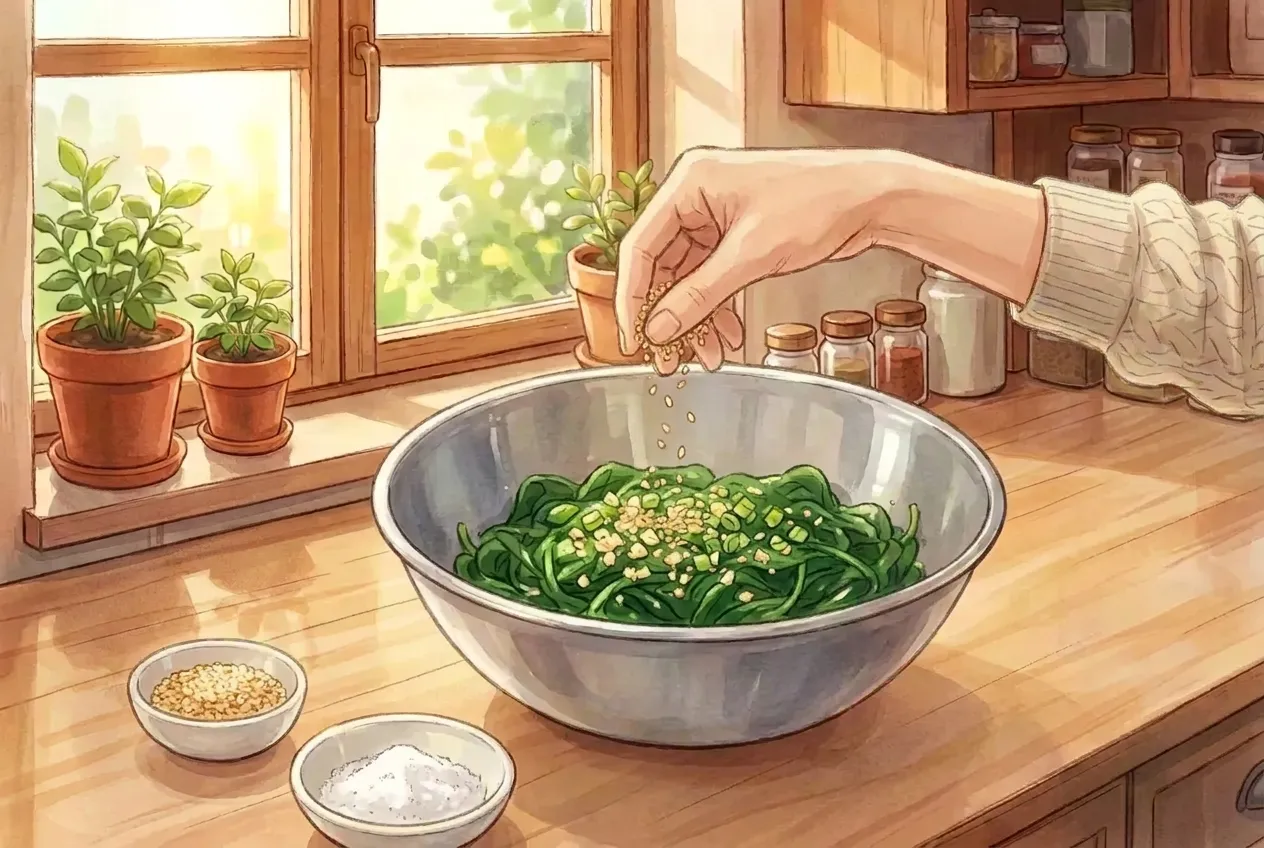
- 6 Taste and add a pinch of salt if needed, sprinkle with the sesame seeds and serve at room temperature.
국룰Blanch for under a minute and squeeze gently — over-cooked or over-squeezed spinach turns limp and bitter.
Substitution Guide
About the Soy Sauce and the Sesame — Here's What to Do
Two things trip people up: soup soy sauce and the toasted sesame. Here's the good news: you can make this with soy sauce, sesame oil and a pinch of salt.
Use this — no need to look further
Regular soy sauce plus a pinch of salt. Use about 1½ times as much regular soy sauce as soup soy sauce, then taste before you add more salt.
If you don't have toasted sesame oil or seeds
- Plain sesame seeds, toasted in a dry pan for 2 minutes
- A little neutral oil with a few drops of toasted sesame oil — it is strong, so start with a small amount
- No seeds at all — the dish is still delicious
If you can't find Korean spinach
Ordinary baby spinach or mature spinach both work; baby leaves need only 15–20 seconds of blanching. Water spinach (ong choy) and chard are also used in similar side dishes.
Why it matters (so you're not just guessing next time)
Sigeumchi-namul is built from three jobs: a quick blanch that keeps the color and sweetness, a gentle squeeze that removes water, and a seasoning of soy sauce, garlic and sesame oil. As long as those three jobs get done, you can swap individual ingredients with confidence. As long as those three jobs get done, you can swap individual ingredients with confidence.
A Couple More Notes
Make It Ahead
It keeps for 2–3 days in the refrigerator in a closed container; drain off any water before you serve it.
Other Greens
The same method works for bean sprouts, kale and radish greens. Change the blanching time to suit each vegetable.
Want to Go Further?
Once you're ready to stock two or three Korean pantry staples, a much wider range of Korean dishes opens up with very little extra effort.
Getting Started with Korean Cooking: The 3 Sauces You Need →Watch It Made
These cooks speak Korean. Press CC in the player, then the gear icon → Subtitles → Auto-translate to read along in your language.

Cooks' versions
Made it your way? Show us.
Swapped an ingredient, changed the heat, plated it differently? Add a photo and a few words — we'll turn it into a pretty card right here on the Sigeumchi-namul page, so the next cook can follow your lead.
Spotted a mistake, or have an idea?
Tell us what to fix or improve in this recipe. This is not a public comment — it goes straight to the K-food team.
Made this with a different swap that worked well? Let us know in the comments — it helps the next person who gets stuck on this step.