
Recipe · One pan · Serves 2–3
It's Okay — You Can Make Dakgalbi, Korea's Spicy Stir-Fried Chicken, at Home
Dakgalbi is chicken, cabbage, sweet potato and rice cakes stir-fried in a glossy red gochujang sauce, a one-pan favorite from the city of Chuncheon. It takes about 40 minutes, including marinating. If you don't have every ingredient on this list, that's fine — keep reading before you decide to skip it.
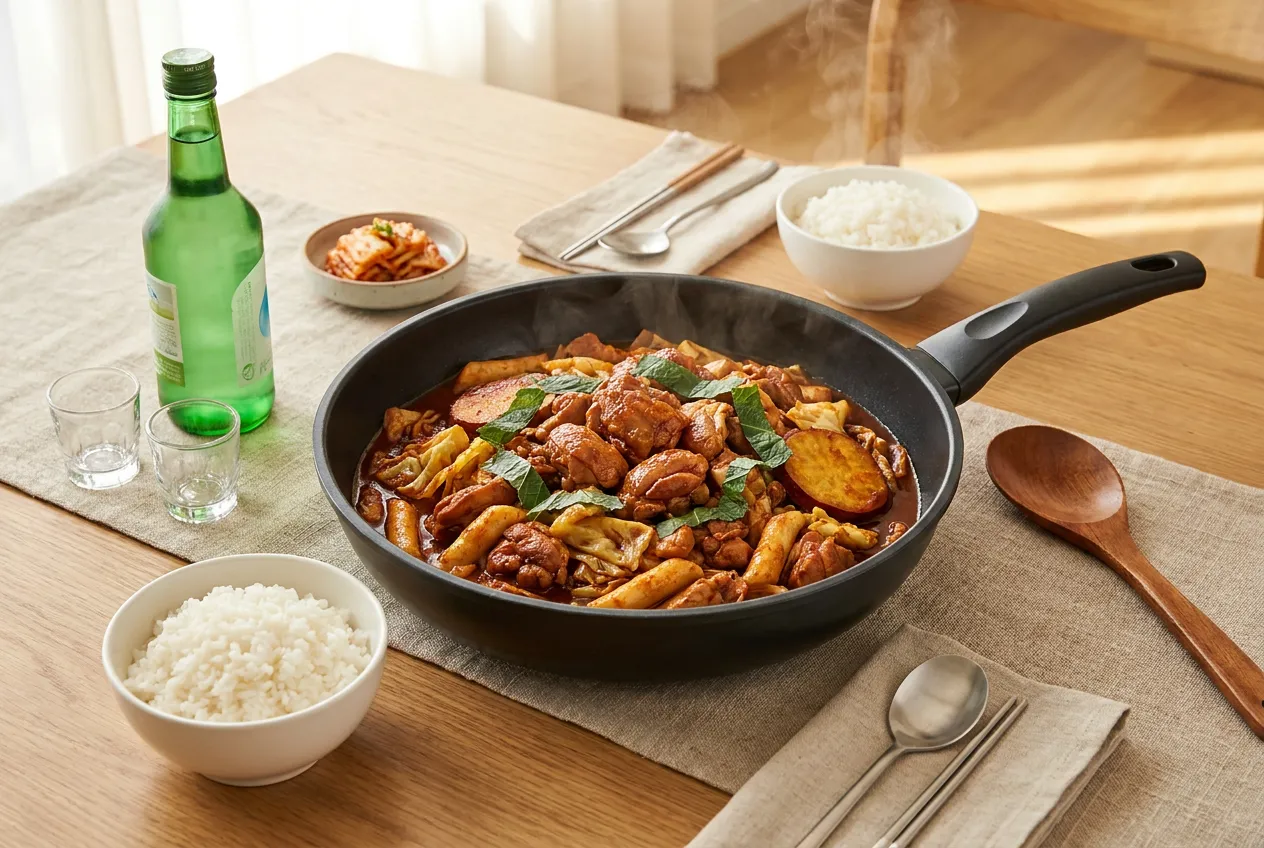
Before You Shop: Quick Ingredient Check
- Gochujang (Korean chili paste)substitute below
- Gochugaru (Korean chili flakes)substitute below
- Rice cakes (tteok)optional, substitute below
- Chicken thighs, cabbage, sweet potato, onion, garlic, soy sauce, sugareasy anywhere
Nothing here is a dealbreaker. Let's cook.
Ingredients (serves 2–3)
- 600g (1.3 lb) boneless chicken thighs, cut into bite-size pieces
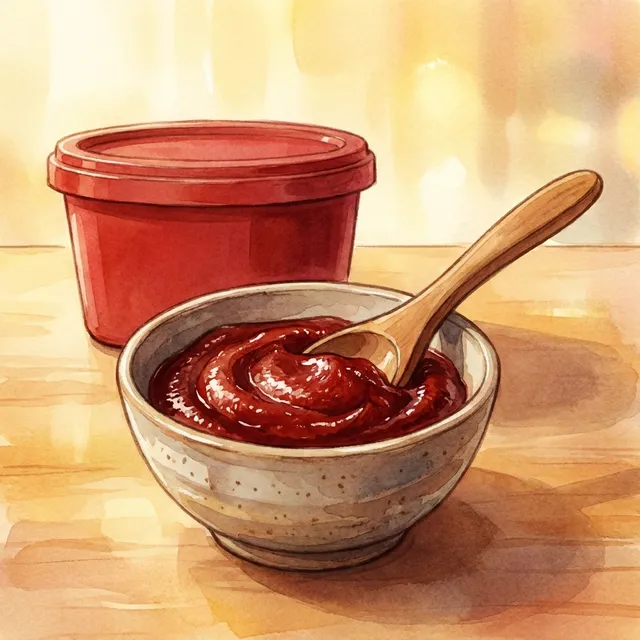 3 tbsp gochujang (Korean chili paste)
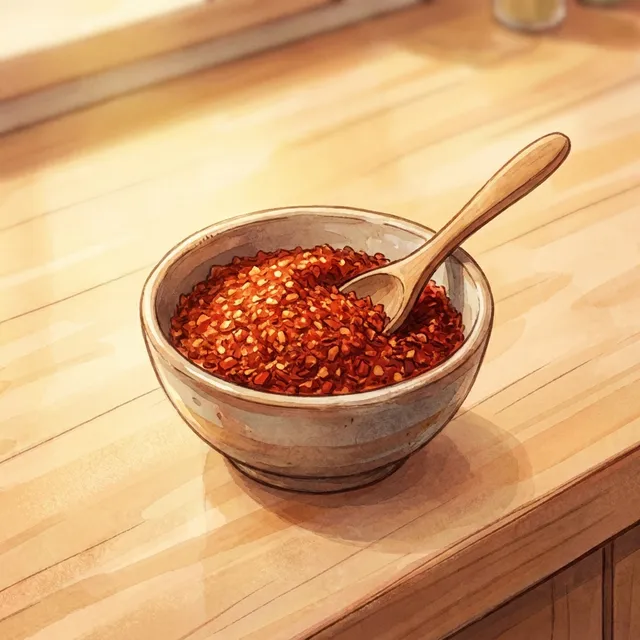 1 tbsp gochugaru (Korean chili flakes)
 2 tbsp soy sauce
- 1 tbsp sugar
 1 tbsp mirin or rice wine
- 1 tbsp minced garlic
- 1 tsp grated ginger
- ¼ small cabbage, cut into chunks
- 1 small sweet potato, sliced into thin half-moons
- 1 onion, sliced
 150g (5 oz) rice cakes (optional)
- 2 tbsp neutral oil
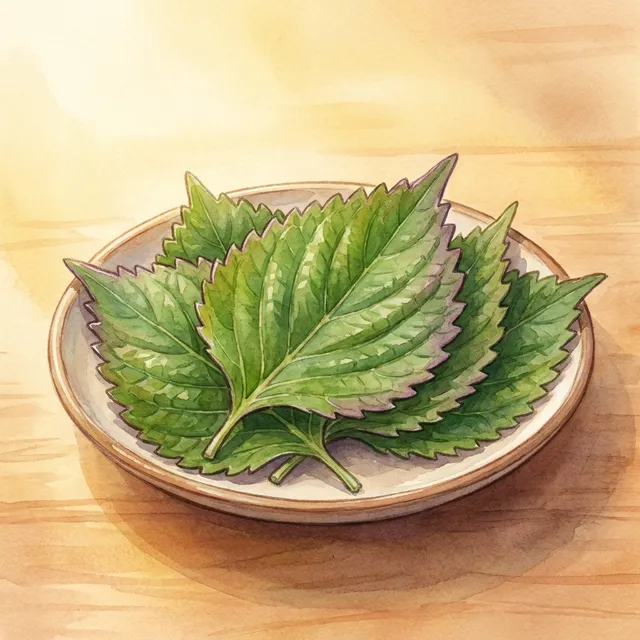 Perilla leaves or sesame seeds, to finish (optional)
Steps
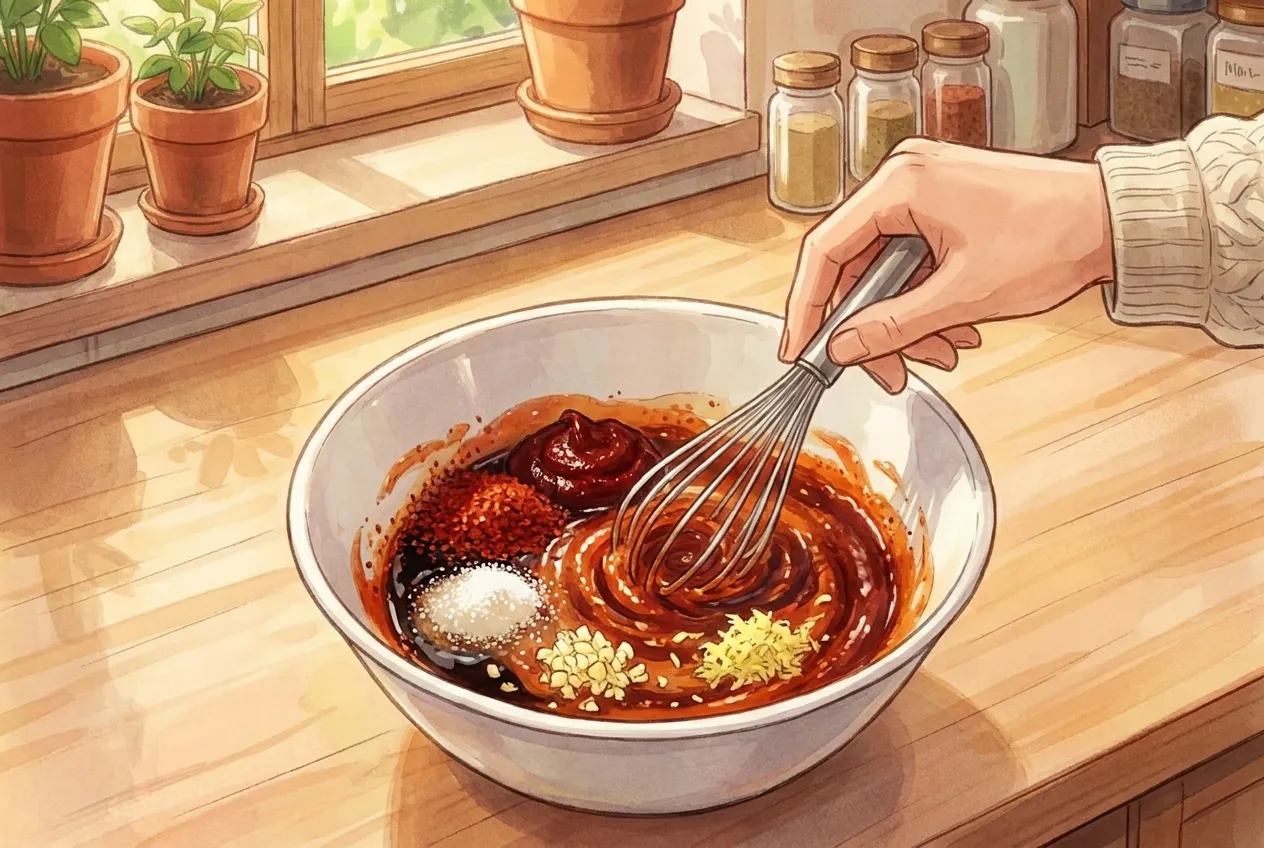
- 1 Whisk the gochujang, gochugaru, soy sauce, sugar, mirin, garlic and ginger into a thick sauce.
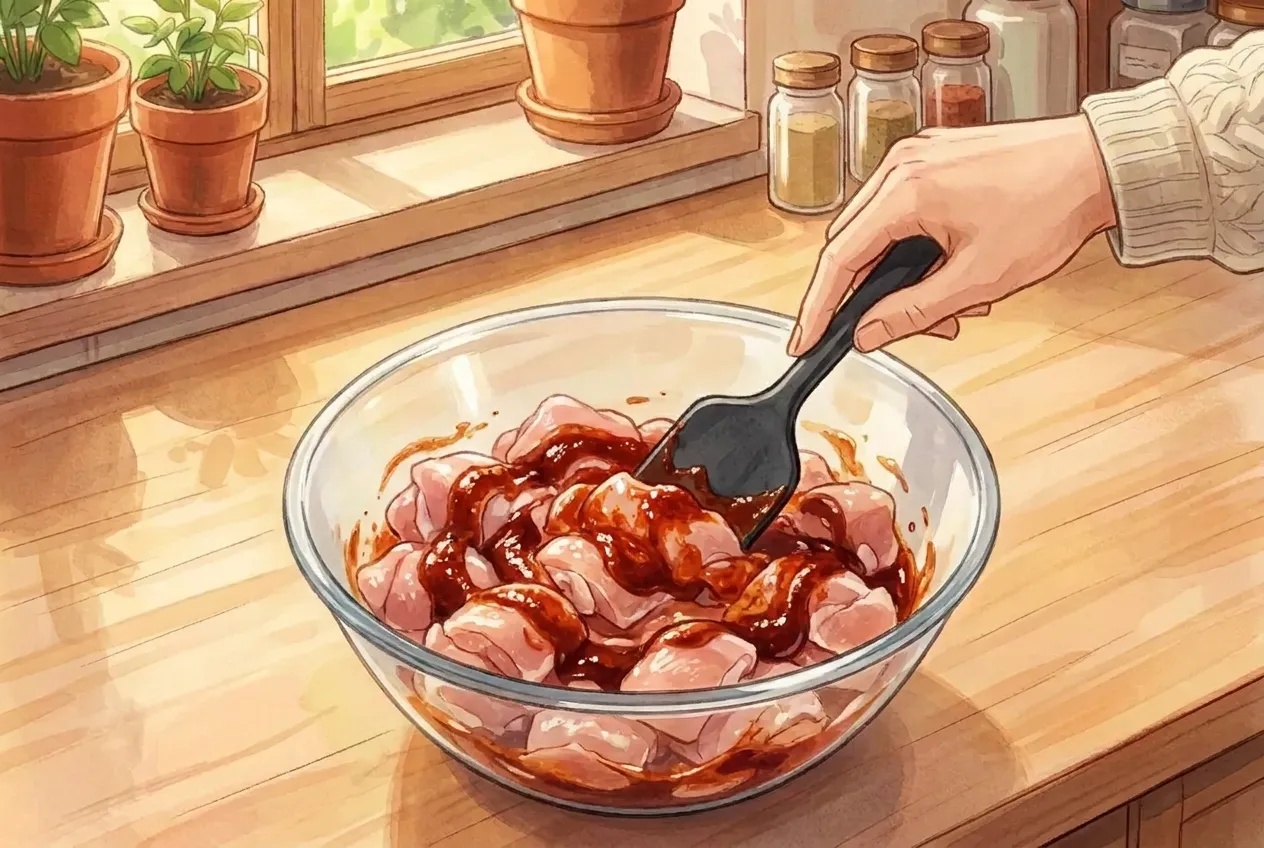
- 2 Toss the chicken with two-thirds of the sauce and let it marinate for at least 20 minutes, or up to overnight in the refrigerator.
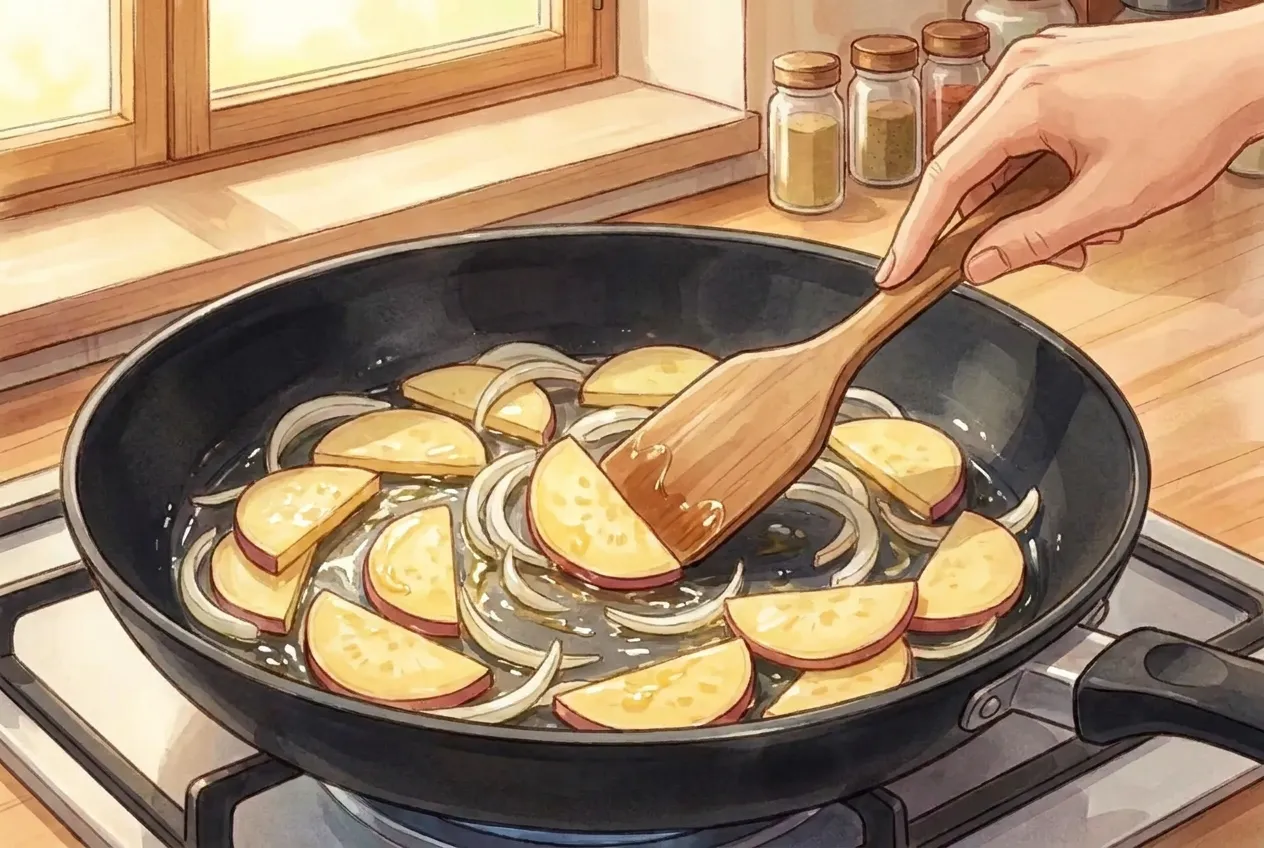
- 3 Heat the oil in a large, wide pan over medium heat. Add the sweet potato and onion and cook for 3 minutes.
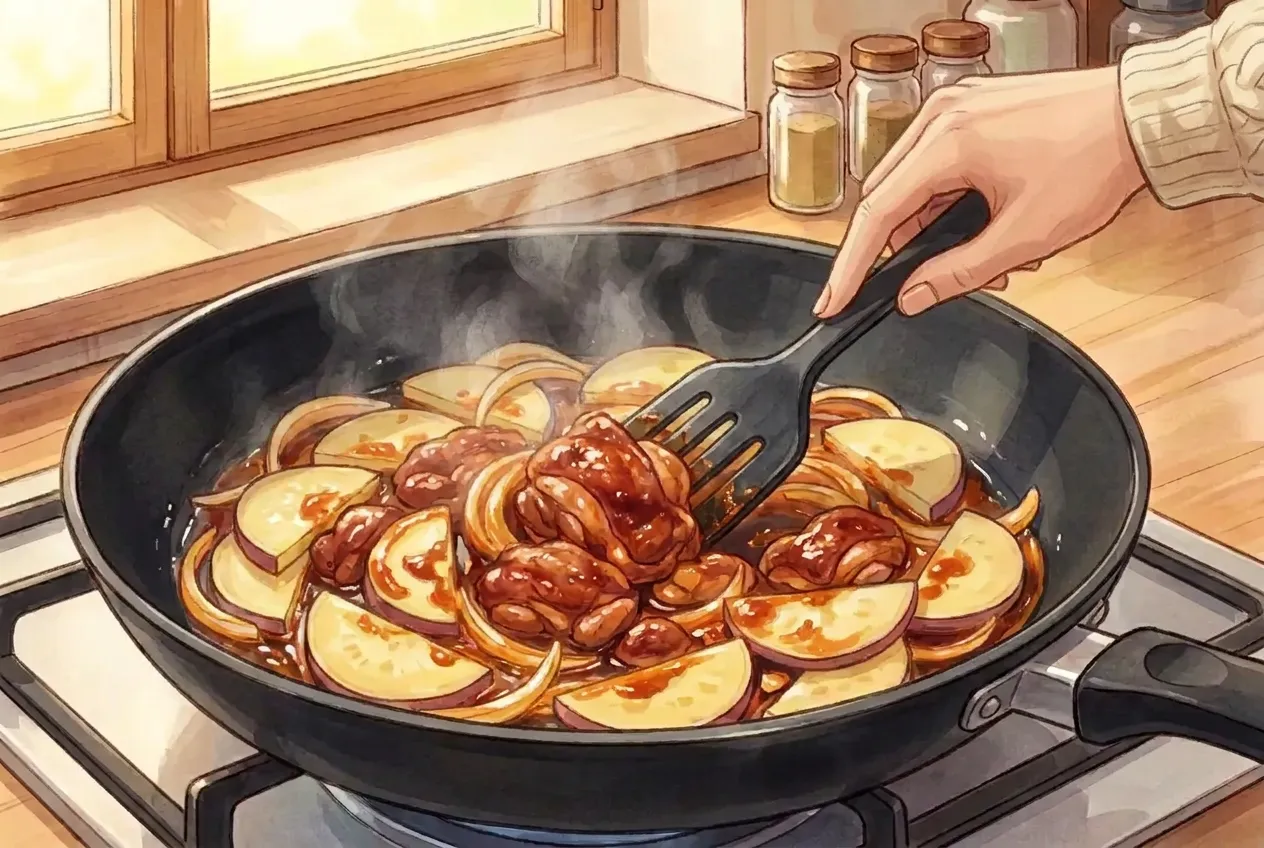
- 4 Add the marinated chicken and cook for 5 minutes, stirring now and then, until the outside is no longer pink.
- 5 Add the cabbage, rice cakes and the rest of the sauce, then cover and cook for 8–10 minutes, stirring once or twice, until the chicken is cooked through and the sweet potato is tender.
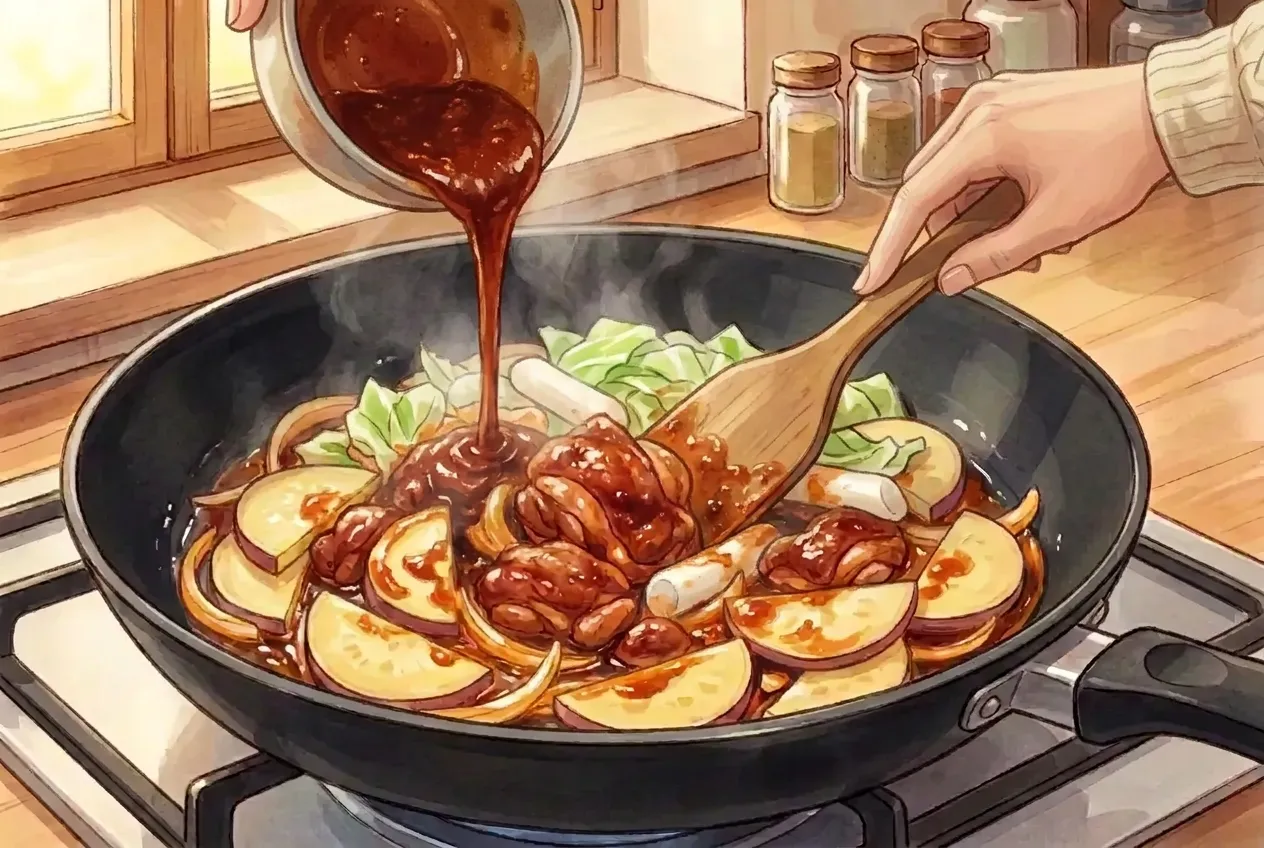
- 6 Remove the lid, stir over high heat for 1–2 minutes until the sauce clings, and serve from the pan with rice.
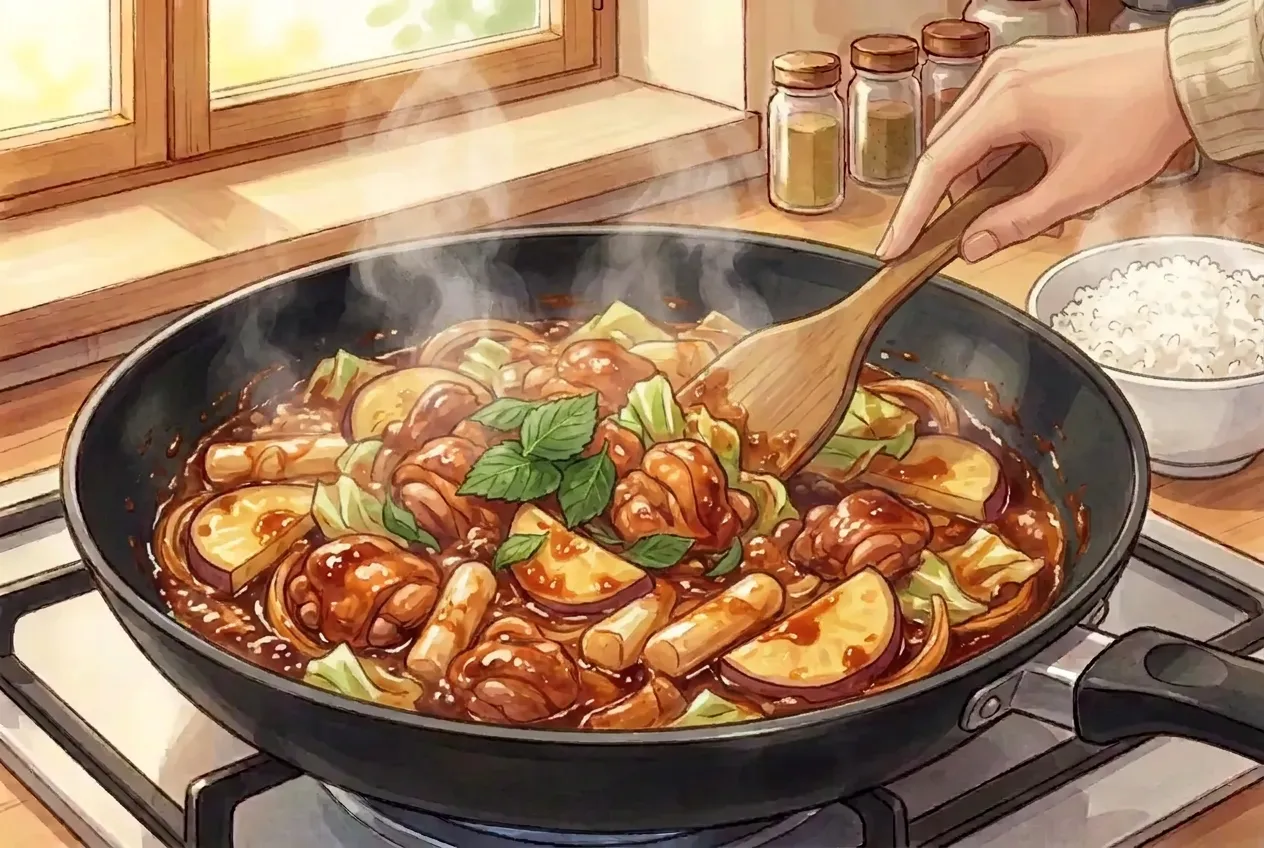
국룰Cook it covered over medium heat — the cabbage releases water, and the sauce becomes glossy rather than burnt.
Substitution Guide
About the Gochujang and the Rice Cakes — Here's What to Do
Two things trip people up: gochujang and the rice cakes. Here's the good news: you can make a very good dakgalbi with chicken, cabbage, sweet potato and one jar of chili paste.
Use this — no need to look further
Gochujang from any Asian grocery store. Look for a tub with a red lid and a heat level you like. If you can only find sriracha-style sauce, see the options on the right.
If you can't find gochujang or gochugaru
- Sambal oelek or a thick chili paste plus 1 tablespoon of miso and 1 teaspoon of sugar per tablespoon of gochujang
- Paprika with a pinch of cayenne for gochugaru, using about the same amount
- Less heat? Use half the chili and add 1 tablespoon of ketchup for sweetness
If you don't have rice cakes
Skip them, or add a handful of cooked noodles or a few cubes of potato. Many cooks finish a dakgalbi pan with a scoop of rice stir-fried in the leftover sauce.
Why it matters (so you're not just guessing next time)
Dakgalbi is built from three jobs: a sweet, spicy, savory sauce, a tender cut of chicken, and watery vegetables that steam everything together. As long as those three jobs get done, you can swap individual ingredients with confidence.
A Couple More Notes
Make It Cheesy
Pile mozzarella on top at the very end and cover the pan for a minute — a popular way to eat it in Korea.
Fried Rice at the End
Push the leftovers aside, add rice, a little oil and sesame seeds, and fry until it forms a crisp crust on the bottom.
Want to Go Further?
Once you're ready to stock two or three Korean pantry staples, a much wider range of Korean dishes opens up with very little extra effort.
Getting Started with Korean Cooking: The 3 Sauces You Need →Watch It Made
These cooks speak Korean. Press CC in the player, then the gear icon → Subtitles → Auto-translate to read along in your language.

Cooks' versions
Made it your way? Show us.
Swapped an ingredient, changed the heat, plated it differently? Add a photo and a few words — we'll turn it into a pretty card right here on the Dakgalbi page, so the next cook can follow your lead.
Spotted a mistake, or have an idea?
Tell us what to fix or improve in this recipe. This is not a public comment — it goes straight to the K-food team.
Made this with a different swap that worked well? Let us know in the comments — it helps the next person who gets stuck on this step.