
Recipe · Party dish · Serves 3–4 as a side
It's Okay — You Can Make Japchae, Korea's Glossy Sweet Potato Noodles, at Home
Japchae is the glossy, chewy sweet potato noodle dish that turns up at Korean birthdays, holidays and potlucks: slippery noodles, a rainbow of vegetables and a sweet, nutty soy sauce. It takes about 40 minutes, and nothing in it is hard. If you don't have every ingredient on this list, that's fine — keep reading before you decide to skip it.
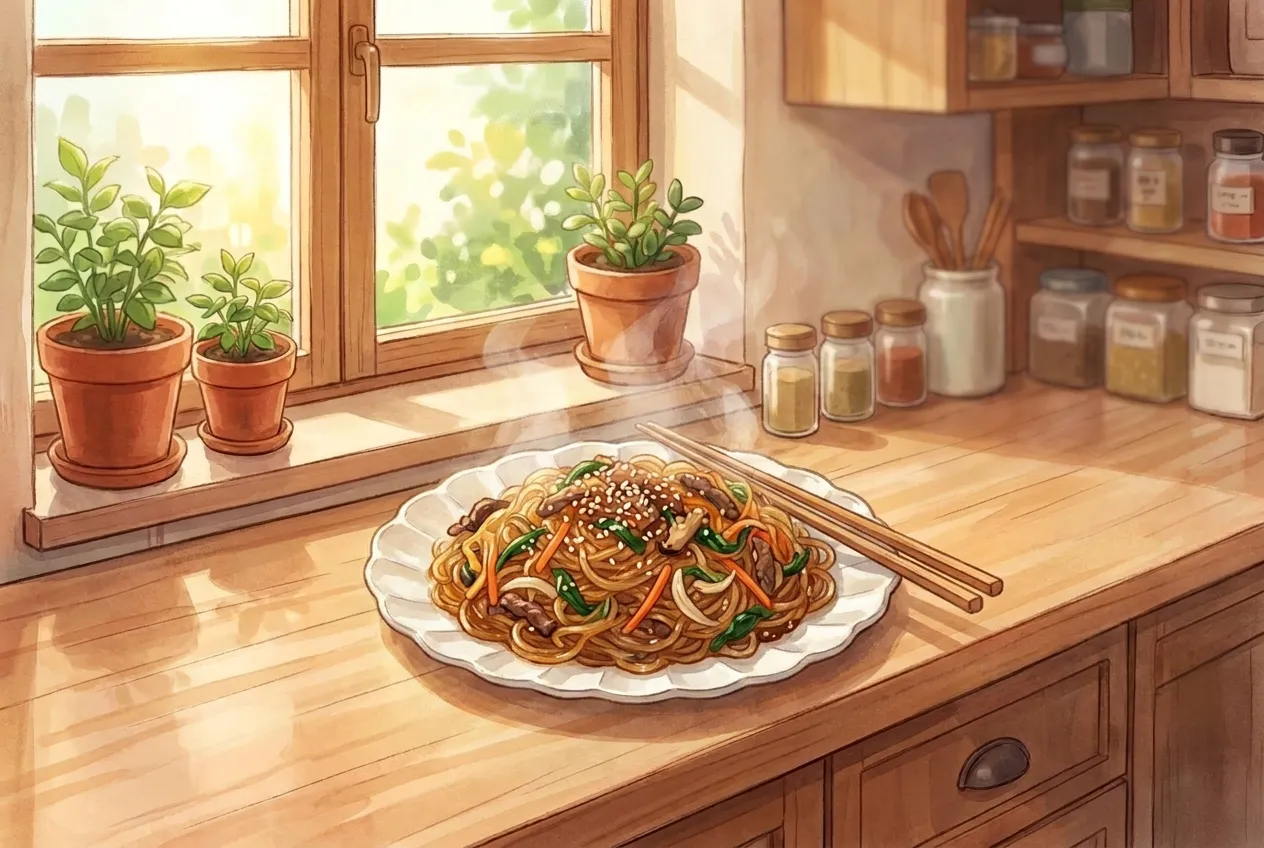
Before You Shop: Quick Ingredient Check
- Dangmyeon (sweet potato starch noodles)substitute below
- Beef, spinach, carrot, onion, mushroomseasy anywhere, swaps below
- Soy sauce, sugar, garlic, sesame seedseasy anywhere
- Toasted sesame oilsubstitute below
Nothing here is a dealbreaker. Let's cook.
Ingredients (serves 3–4 as a side)
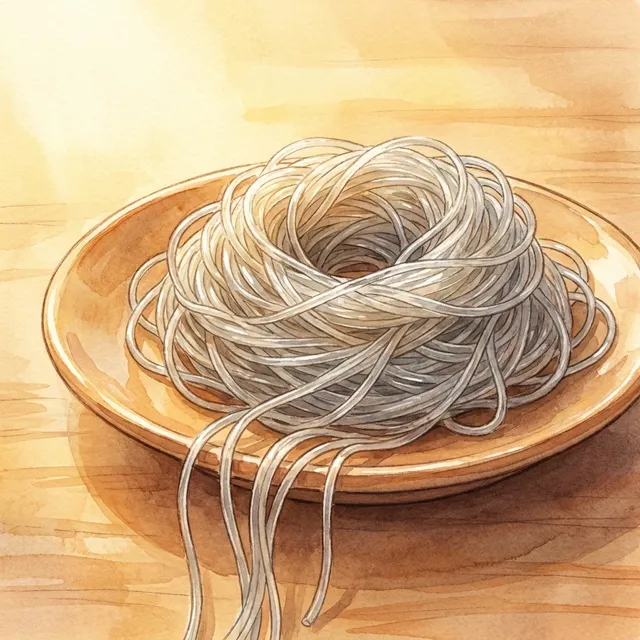 200g (7 oz) dried dangmyeon (sweet potato starch noodles)
- 150g (5 oz) beef (sirloin or ribeye), cut into thin strips (optional; pork also works)
- 100g (about 4 cups, loosely packed) spinach
- 1 carrot, cut into thin matchsticks
- ½ onion, thinly sliced
- 4 shiitake or other mushrooms, sliced
- 3 cloves garlic, minced
- 2 tbsp neutral oil, for stir-frying
 4 tbsp soy sauce (1 tbsp for the beef, 3 tbsp for the sauce)
- 2 tbsp sugar (½ tbsp for the beef, 1½ tbsp for the sauce)
 2 tbsp toasted sesame oil (1 tsp for the beef, 1 tsp for the noodles, the rest for the sauce)
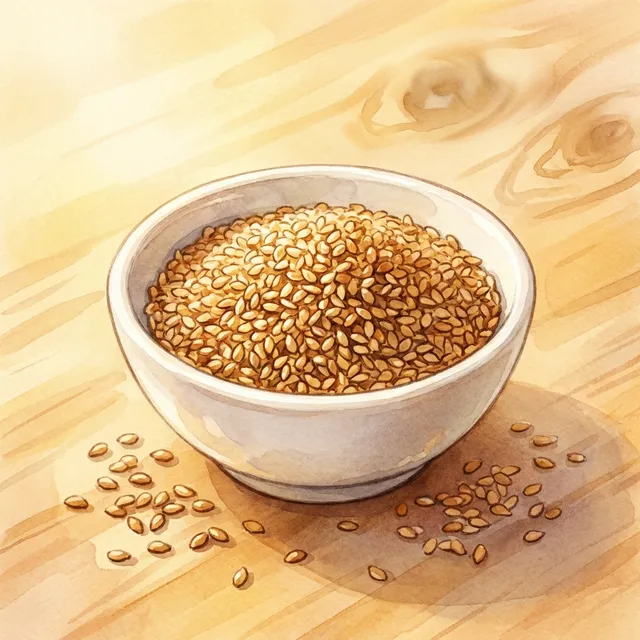 1 tbsp toasted sesame seeds
- Salt and pepper, to taste
Steps
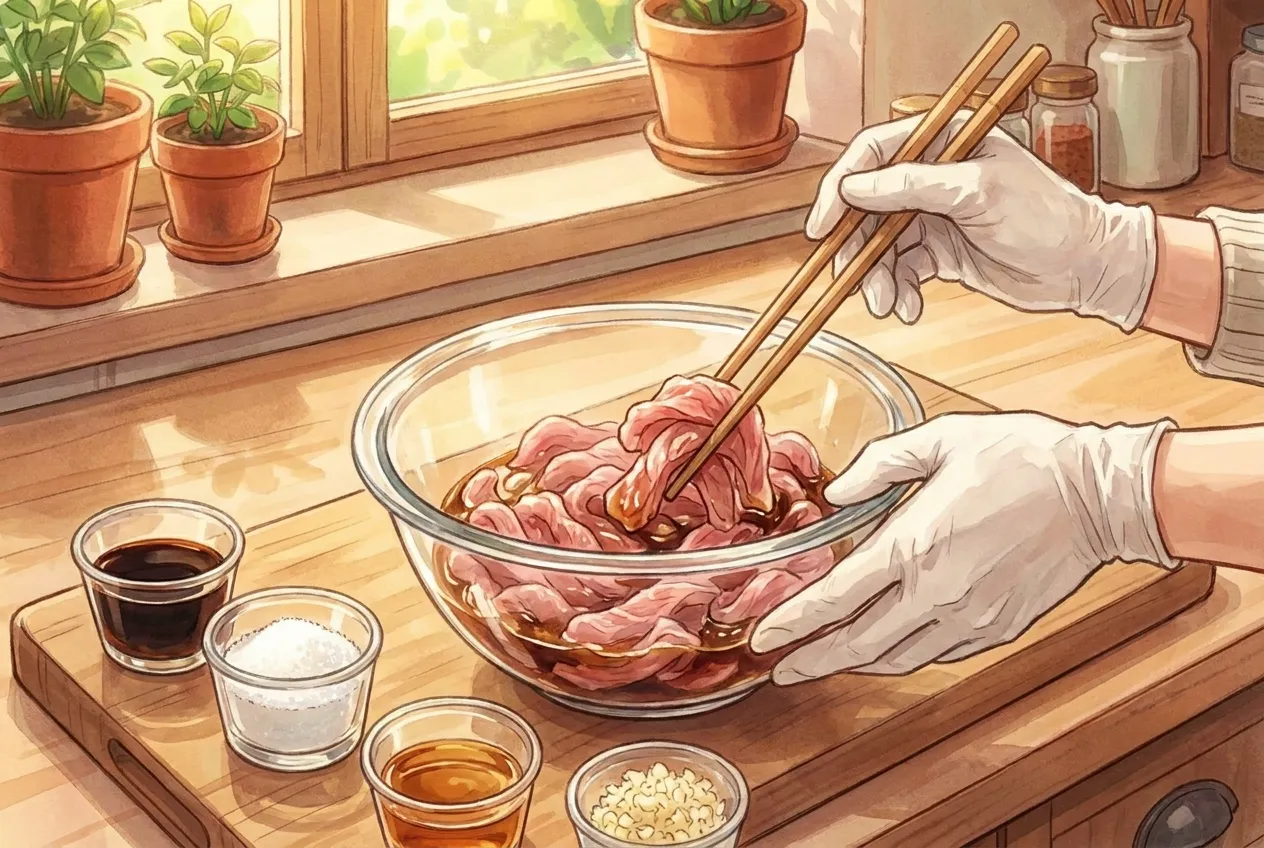
- 1 Mix the beef with 1 tbsp soy sauce, ½ tbsp sugar, 1 tsp sesame oil and a third of the garlic. Let it sit for 10 minutes while you cut the carrot, onion and mushrooms.
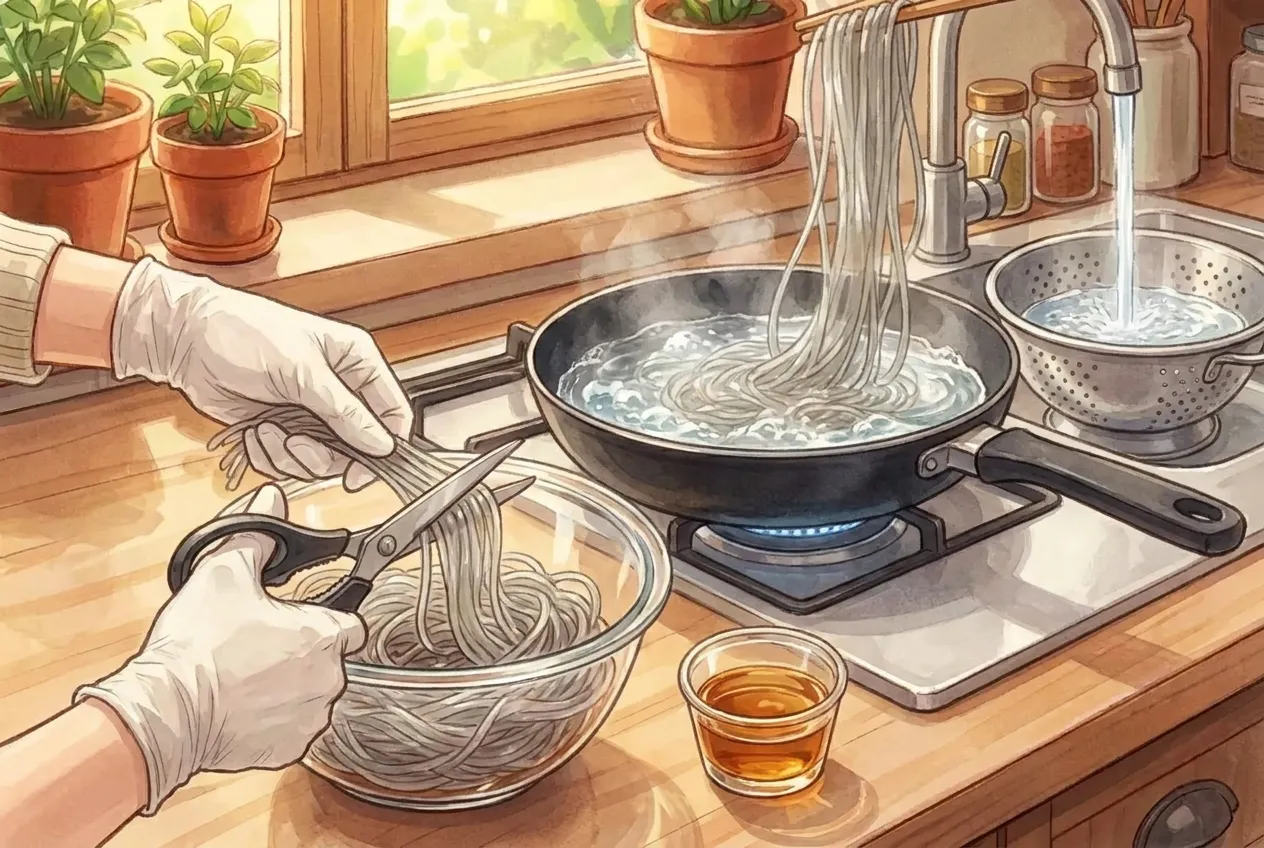
- 2 Boil the noodles in plenty of water for the time on the package (often 6–8 minutes), until soft but still chewy. Drain, rinse briefly under cold water, cut them a few times with scissors, and toss with 1 tsp sesame oil so they don't stick.
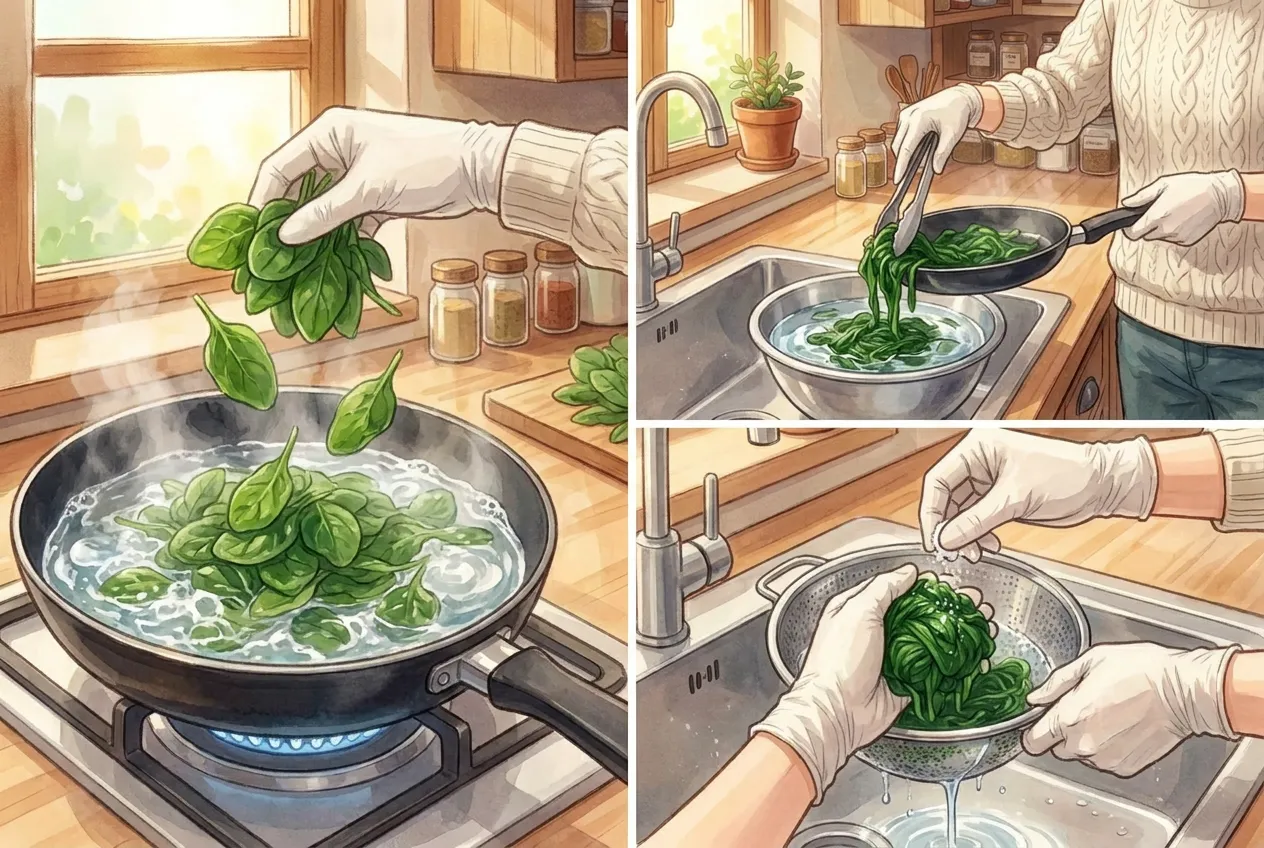
- 3 Blanch the spinach in boiling water for about 30 seconds, rinse in cold water, squeeze out the water and season with a pinch of salt.
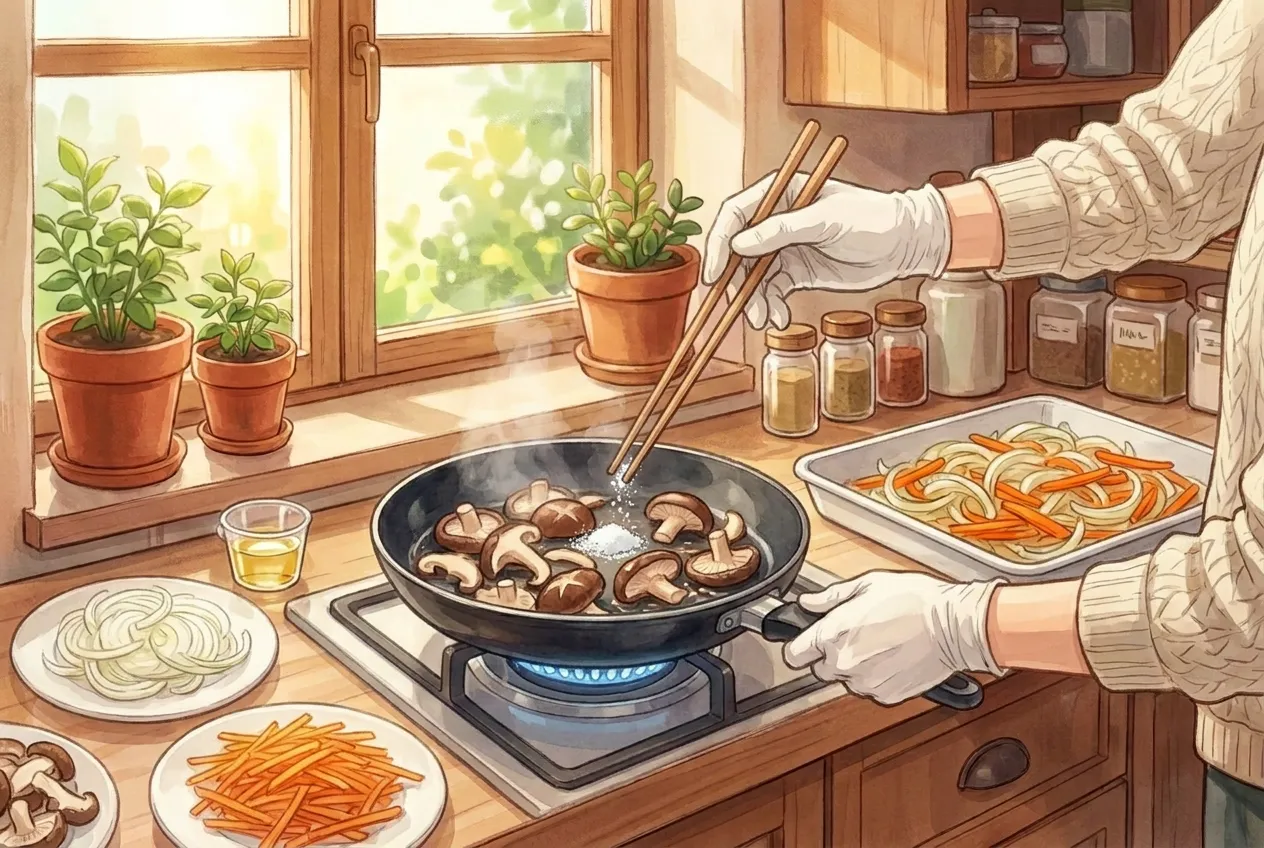
- 4 Heat a little oil in a large pan. Stir-fry the onion, carrot and mushrooms one at a time, 2–3 minutes each, with a pinch of salt, and move each to a large tray.
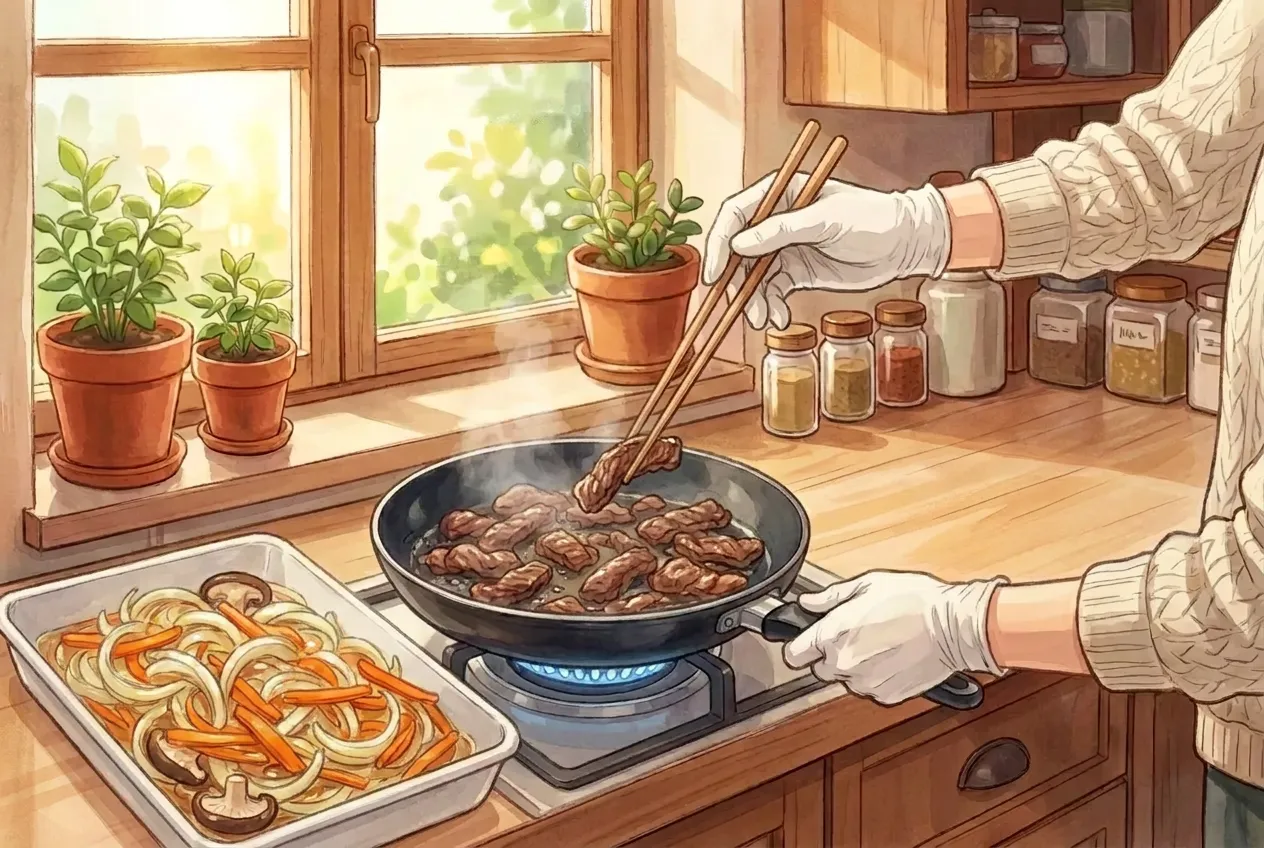
- 5 In the same pan, cook the beef for 2–3 minutes, until browned, and add it to the tray.
- 6 Add the remaining soy sauce, sugar, sesame oil and garlic to the pan with a splash of water. Add the noodles and cook for 1–2 minutes, stirring, until glossy. Toss everything together with the sesame seeds, taste, and serve warm or at room temperature.
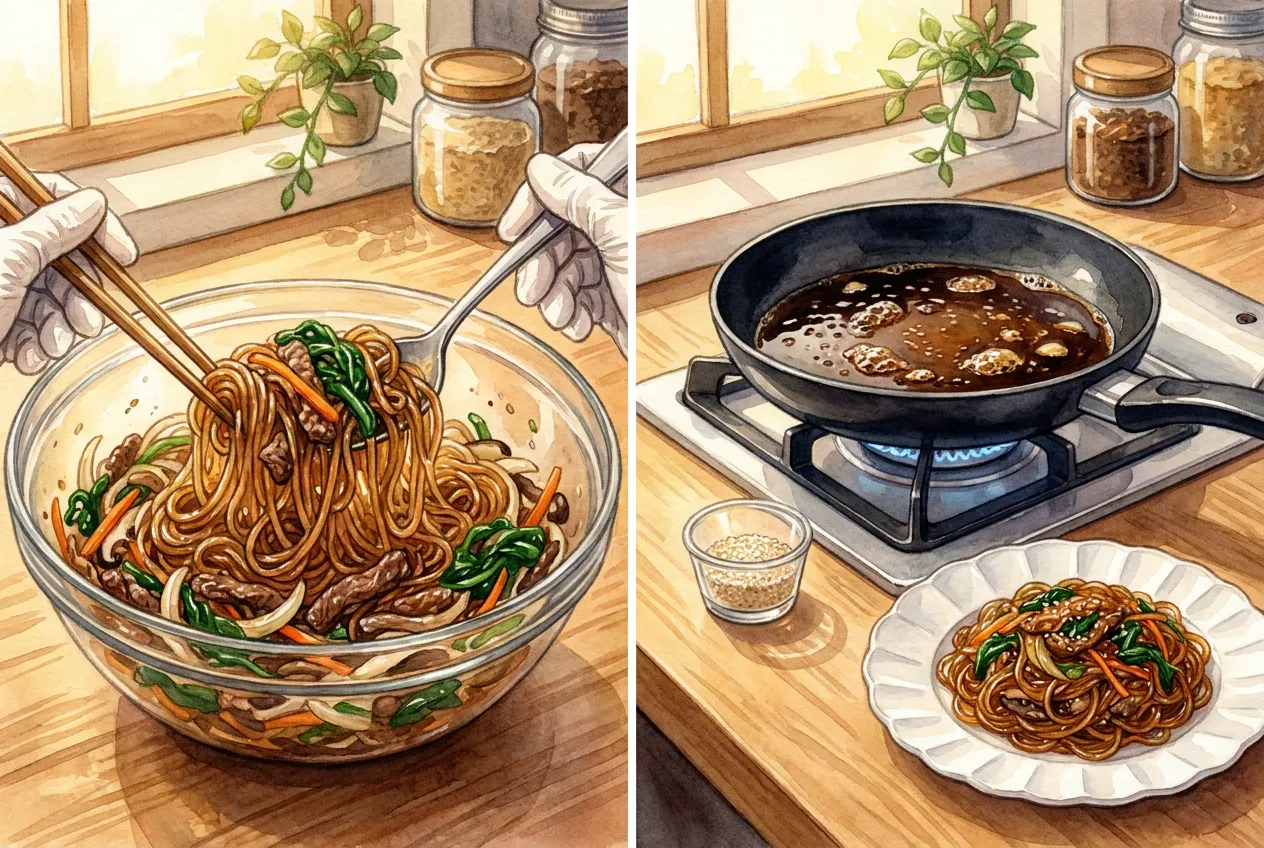
국룰Cook each vegetable on its own — the colours stay bright and every one is cooked just right.
Substitution Guide
About the Noodles and the Sesame Oil — Here's What to Do
Two things trip people up: finding dangmyeon and the nutty flavour of toasted sesame oil. Here's the good news: you can make a very good japchae without either.
Use this — no need to look further
Sweet potato glass noodles from any Asian grocery store. Look for "sweet potato starch noodles" or "fensi" on the label. If all you can find is mung bean cellophane noodles, they work too, but they are softer and cook faster, so start checking them after a few minutes.
If you don't want the beef
- Pork — thin strips, marinated the same way
- Extra mushrooms — a good meat-free version, add a spoonful more soy sauce to the mushrooms
- Firm tofu — cut into strips and pan-fry before adding
If you don't have toasted sesame oil
Use a neutral oil and add a little more toasted sesame seeds on top. It won't taste exactly the same, but it is still a lovely, savory noodle dish.
Why it matters (so you're not just guessing next time)
Japchae is built from three jobs: chewy noodles that are seasoned directly, vegetables cooked separately so each keeps its colour and texture, and a sweet, salty and nutty sauce that coats everything. As long as those three jobs get done, you can swap individual ingredients with confidence.
A Couple More Notes
About the Vegetables
Use what you have: bell pepper, zucchini, green onion or other leafy greens all work. The idea is a mix of colours, not a fixed list.
Serve It Any Way
Japchae is eaten warm or at room temperature. If you make it ahead, keep it covered in the fridge and reheat it gently in a pan with a splash of water or oil.
Want to Go Further?
This dish uses mostly everyday ingredients. Once you're ready to stock two or three Korean pantry staples, a much wider range of Korean dishes opens up with very little extra effort.
Getting Started with Korean Cooking: The 3 Sauces You Need →Watch It Made
These cooks speak Korean. Press CC in the player, then the gear icon → Subtitles → Auto-translate to read along in your language.
Cooks' versions
Made it your way? Show us.
Swapped an ingredient, changed the heat, plated it differently? Add a photo and a few words — we'll turn it into a pretty card right here on the Japchae page, so the next cook can follow your lead.
Spotted a mistake, or have an idea?
Tell us what to fix or improve in this recipe. This is not a public comment — it goes straight to the K-food team.
Made this with a different swap that worked well? Let us know in the comments — it helps the next person who gets stuck on this step.