
Recipe · Comforting soup · Serves 3–4
It's Okay — You Can Make Dwaeji-gukbap, Busan Pork and Rice Soup, at Home
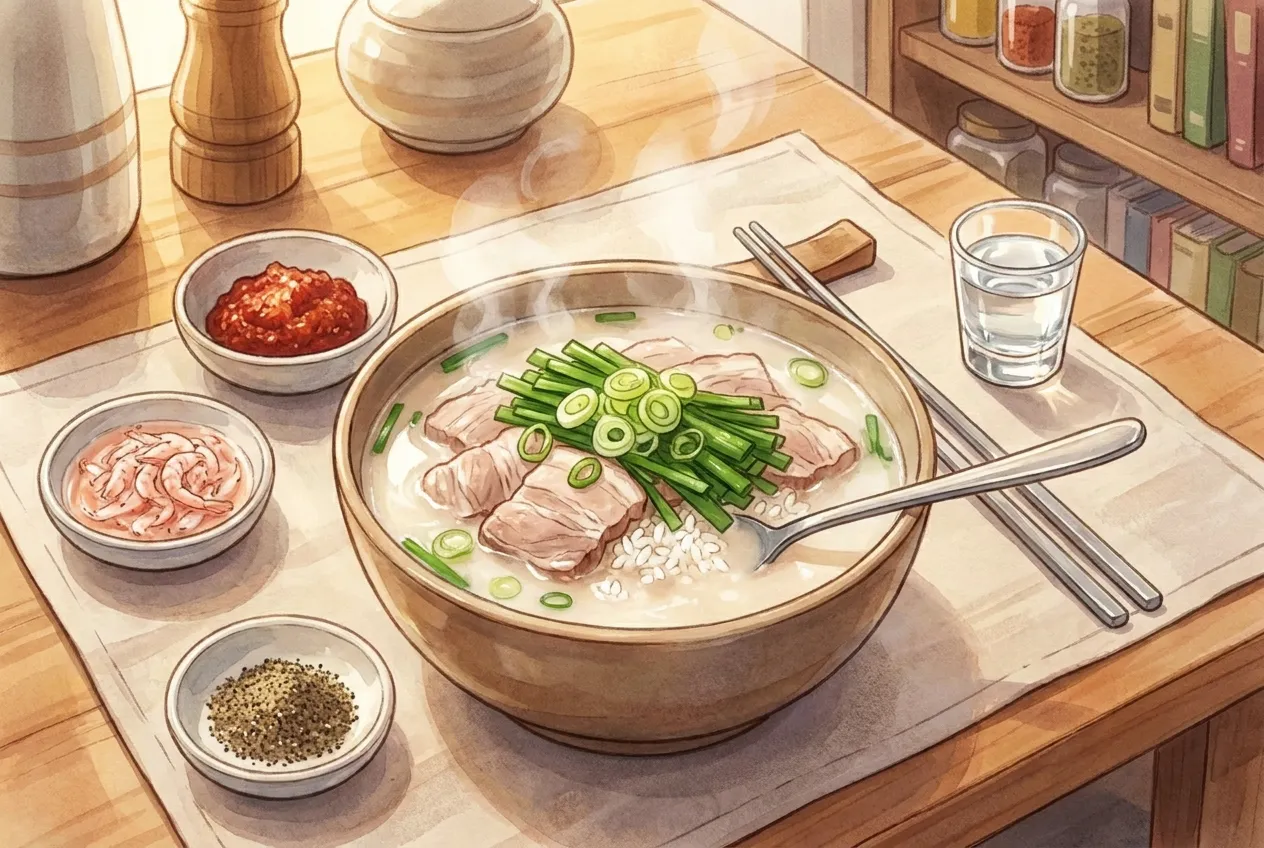
Dwaeji-gukbap is Busan's pork and rice soup: thin slices of tender pork in a clear, savory broth, poured over rice and seasoned at the table with chives, chili paste, pepper and salted shrimp. The pot does most of the work while you wait. If you don't have every ingredient on this list, that's fine — keep reading before you decide to skip it.
Before You Shop: Quick Ingredient Check
- Pork shoulder (or pork belly)easy anywhere
- Garlic chives (buchu)substitute below
- Salted shrimp (saeujeot)substitute below
- Korean chili flakes (gochugaru) for the seasoning pasteoptional
- Garlic, green onion, onion, ginger, salt, pepper, riceeasy anywhere
Nothing here is a dealbreaker. Let's cook.
Ingredients (serves 3–4)
- 600g (1⅓ lb) pork shoulder, in one or two pieces (or pork belly for a richer bowl)
- 8 cloves garlic, peeled
 4 green onions, white parts for the pot, green parts sliced for serving
- ½ onion
- 1 thumb-size piece ginger, sliced
- 1 tsp whole black peppercorns (optional)
- About 2 liters (8 cups) water
- 1 cup bone broth (optional, for a richer, milkier soup)
- Salt, to taste
- Steamed rice, 1 bowl per person
 1 large handful garlic chives (buchu), chopped
 1 tbsp gochugaru, 1 minced garlic clove, 1 tsp fish sauce and 1 tsp sesame oil, mixed (seasoning paste)
 Salted shrimp (saeujeot) and black pepper, to season at the table (optional)
Steps
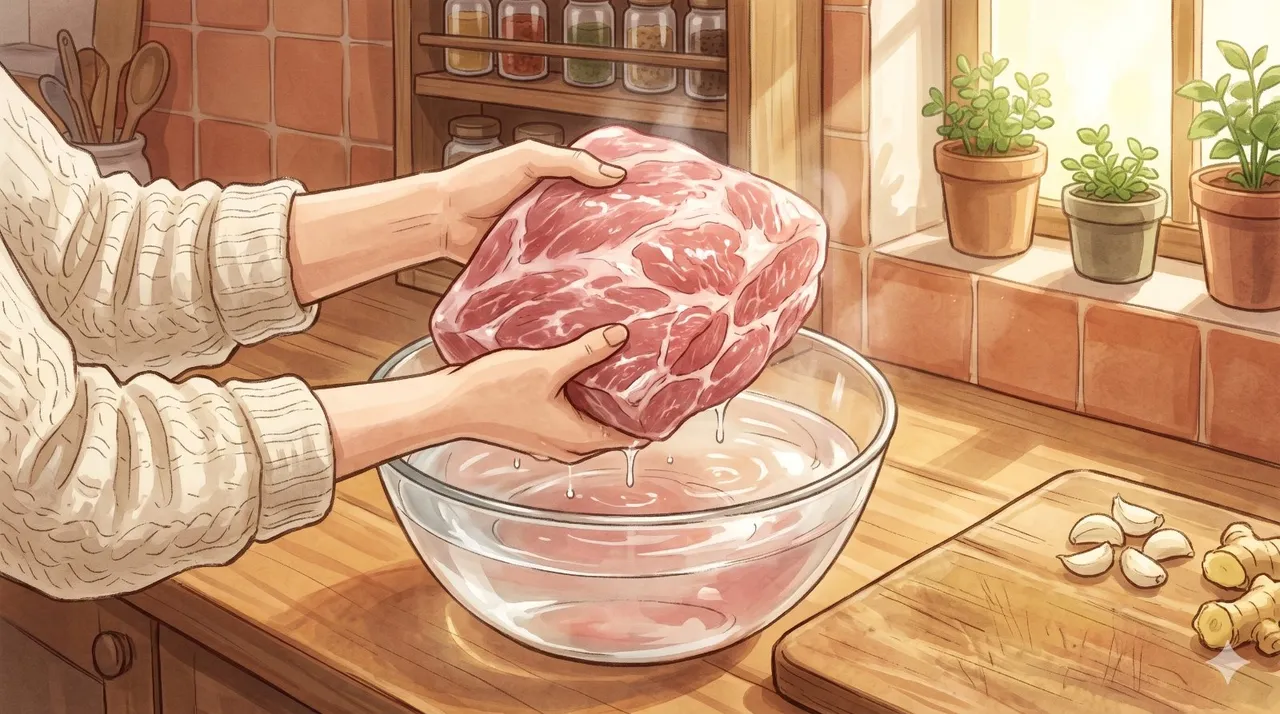
- 1 Put the pork shoulder in a bowl of cold water for 20–30 minutes to draw out the blood, then drain. This keeps the broth clean and mild.
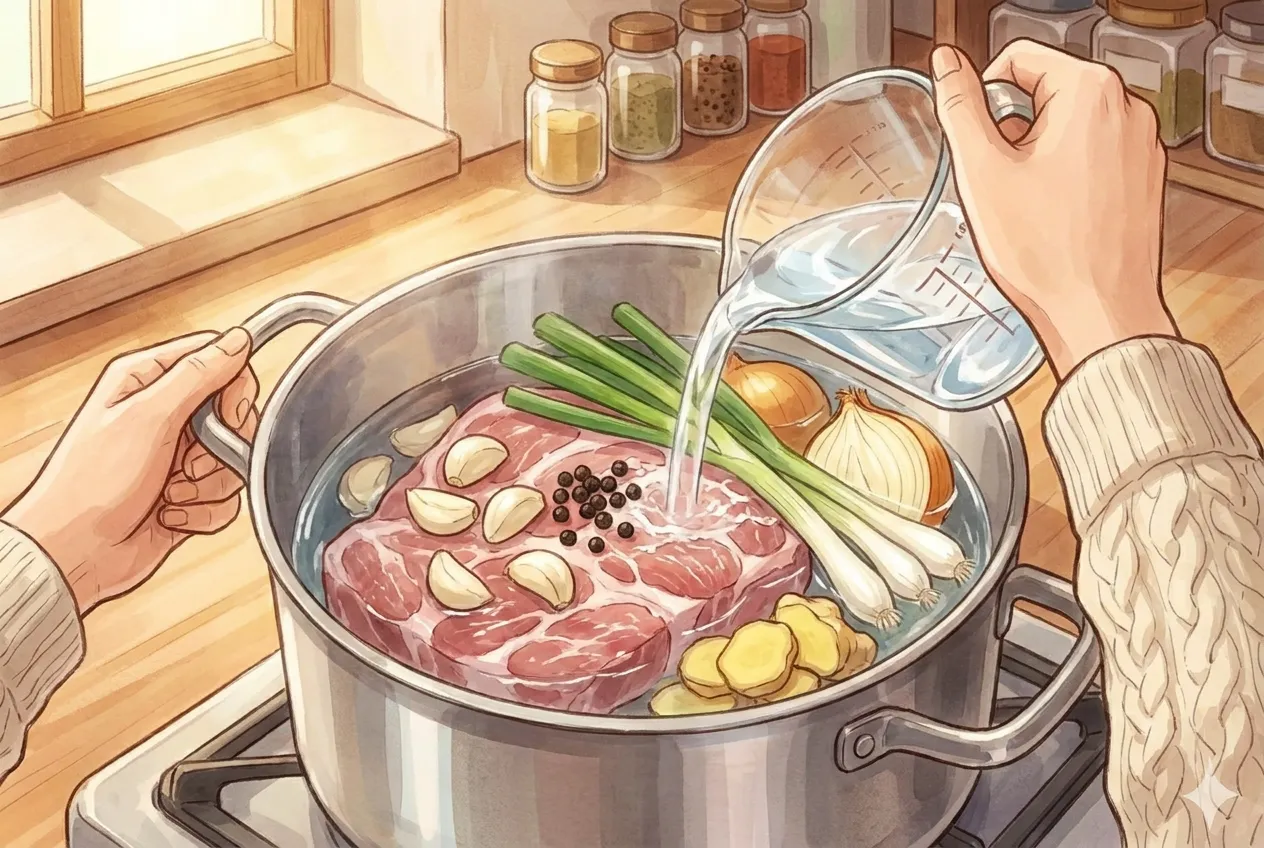
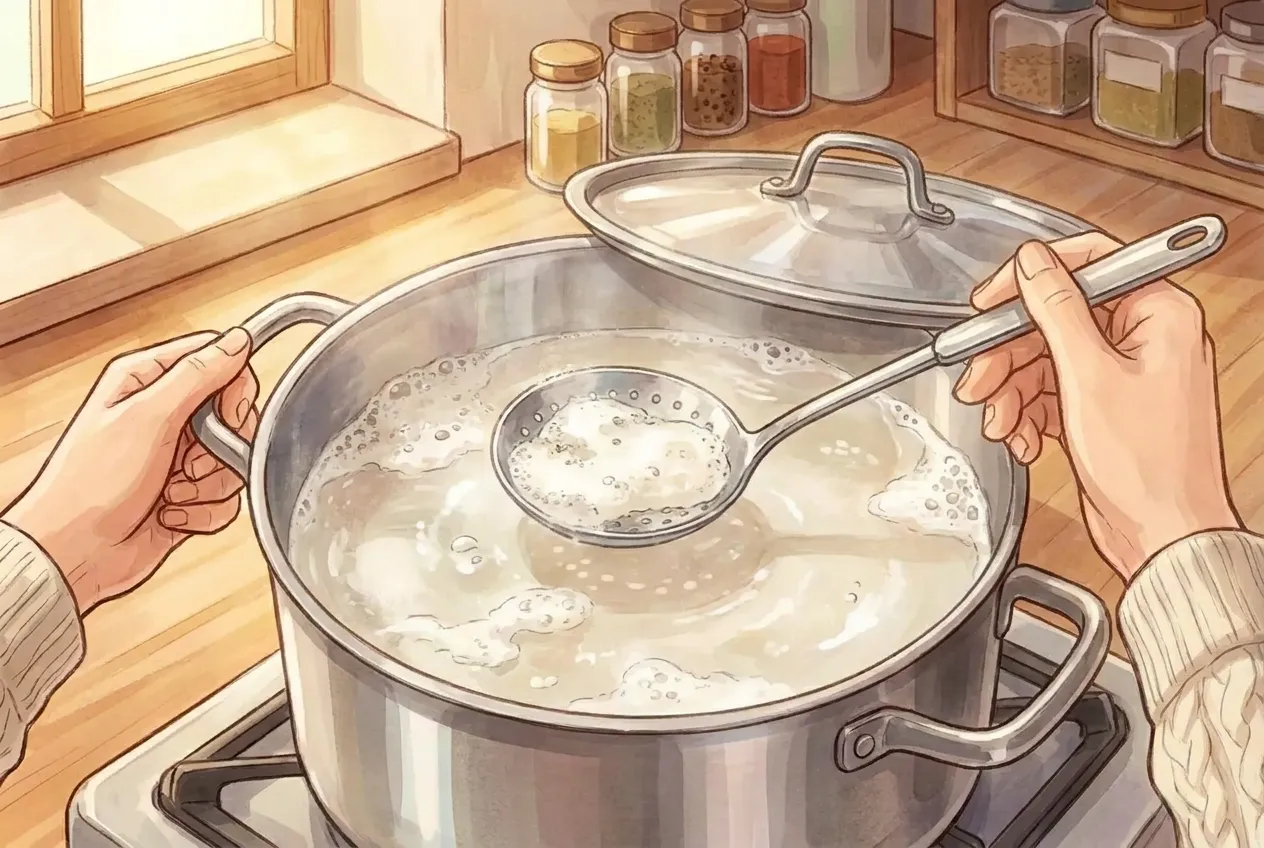
- 2 Add the pork to a large pot with the garlic, whole peppercorns, white parts of the green onions, onion and ginger. Pour in 2 liters of water. Bring to a boil, then skim off the foam.
- 3 Lower the heat so the pot barely bubbles, cover loosely and simmer for 40–50 minutes, until a skewer slides easily into the thickest piece of pork.
- 4 Lift out the pork and let it cool for a few minutes, then slice it thinly. Strain the broth and set it back over low heat. If you want a richer broth, stir in the bone broth now.
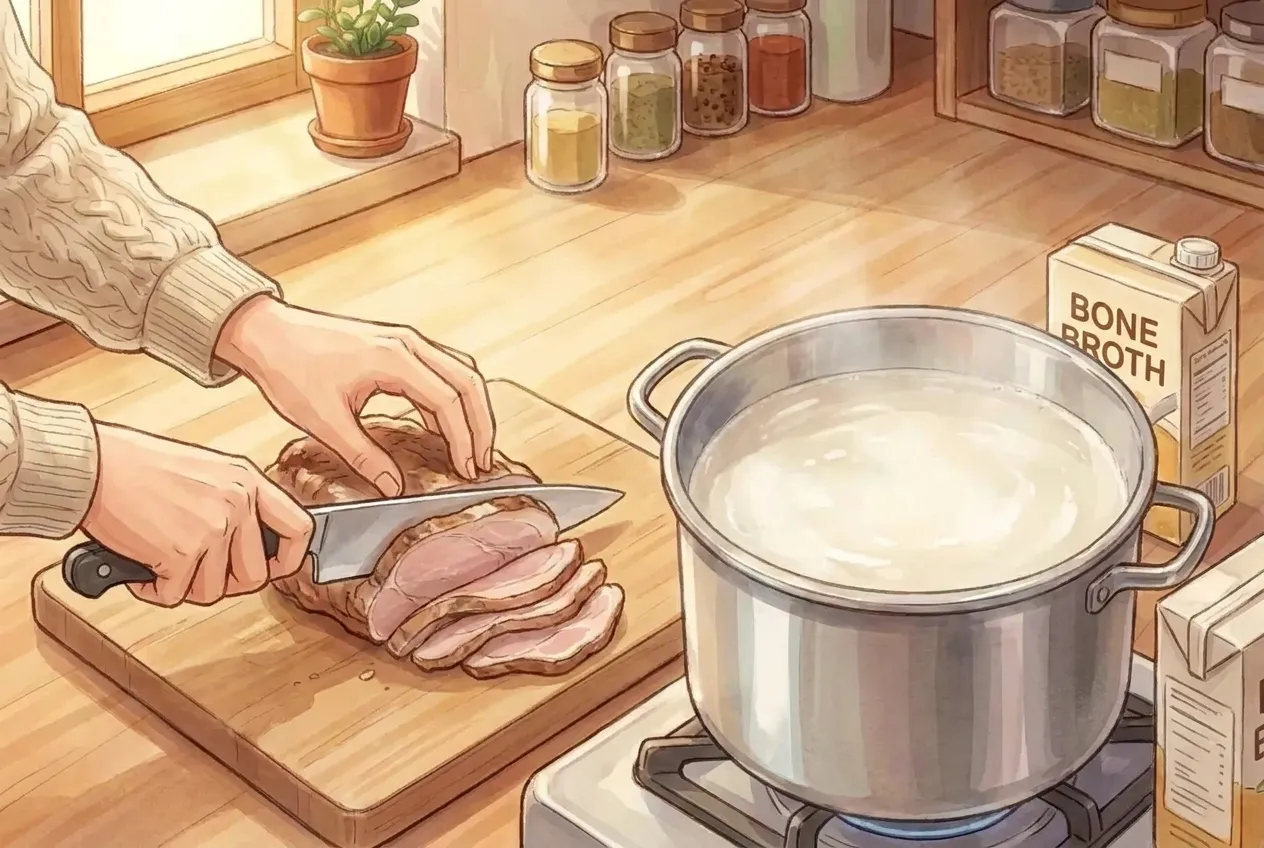
- 5 While the broth stays hot, mix the seasoning paste in a small bowl: gochugaru, minced garlic, fish sauce, sesame oil and a few spoonfuls of hot broth.

- 6 Season the broth with a little salt. Put rice in each bowl, lay the sliced pork on top and ladle over plenty of boiling-hot broth. The heat warms the pork through.

- 7 Top with a generous handful of chopped garlic chives and the green onion. At the table, add the seasoning paste, black pepper and salted shrimp to taste, a little at a time.
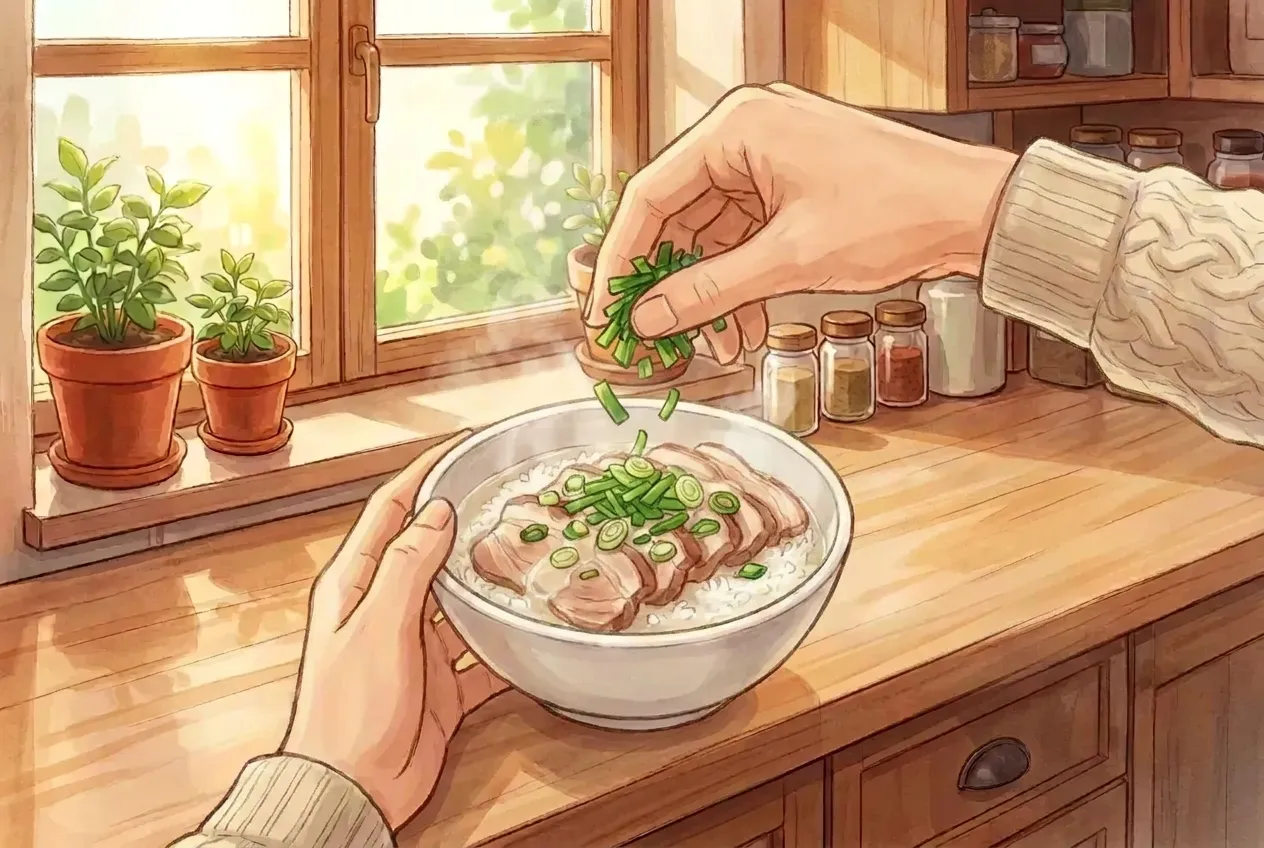
돼지국밥Keep the simmer gentle. Boiling hard turns the broth cloudy and the pork dry.
Substitution Guide
About the Chives and the Salted Shrimp — Here's What to Do
Two things trip people up: garlic chives and salted shrimp. Here's the good news: green onion and a splash of fish sauce make a lovely bowl.
Use this — no need to look further
Pork shoulder, garlic, green onion and rice from any supermarket. These four carry the bowl.
If you can't find garlic chives
- Chinese chives — the same plant, same amount
- Green onion tops with a little extra minced garlic
- Regular chives — milder, so use a bigger handful
If you can't find salted shrimp
Season with about half as much fish sauce, tasted as you go, and a pinch of salt if needed. You will lose the tiny shrimp pieces but keep the briny depth.
Why it matters (so you're not just guessing next time)
Dwaeji-gukbap is built from three jobs: a clean pork broth, tender thin-sliced meat, and rice to soak it all up. The seasonings are added by each person at the table, so you can adjust the bowl to your own taste.
A Couple More Notes
Make It Quicker
Use store-bought bone broth as the base and simmer the pork in it for 30 minutes. It is a good weeknight shortcut.
Keep the Broth
The broth keeps for 3 days in the fridge. Reheat until boiling and pour it over the rice and cold pork slices.
Want to Go Further?
This soup uses mostly everyday ingredients. Once you're ready to stock two or three Korean pantry staples, a much wider range of Korean dishes opens up with very little extra effort.
Getting Started with Korean Cooking: The 3 Sauces You Need →

Cooks' versions
Made it your way? Show us.
Swapped an ingredient, changed the heat, plated it differently? Add a photo and a few words — we'll turn it into a pretty card right here on the Dwaeji-gukbap page, so the next cook can follow your lead.
Spotted a mistake, or have an idea?
Tell us what to fix or improve in this recipe. This is not a public comment — it goes straight to the K-food team.
Made this with a different swap that worked well? Let us know in the comments — it helps the next person who gets stuck on this step.