
Recipe · Comfort soup · Serves 2
It's Okay — You Can Make Kimchi Sujebi, Korea's Hand-Torn Dough Soup, at Home
Little Forest, the 2018 film about a young woman cooking her way through a year in the countryside, lingers on simple home dishes like dough soup. Sujebi is exactly that: flour, water and a pot of tangy kimchi broth, with noodles you tear by hand. If you don't have every ingredient on this list, that's fine — keep reading before you decide to skip it.
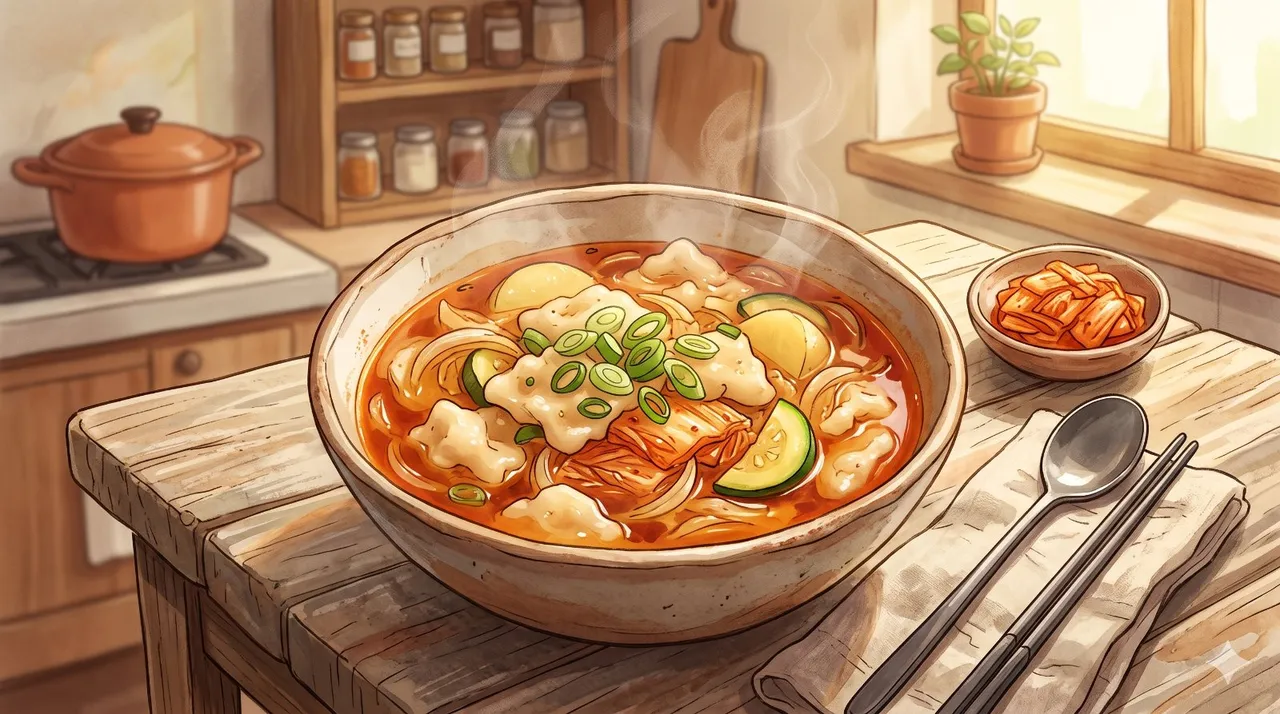
Before You Shop: Quick Ingredient Check
- Flour, salt, oileasy anywhere
- Potato, onion, garlic, green onioneasy anywhere
- Well-fermented kimchithe flavour of the whole soup — see below
- Dried anchovies & kelp (for the stock)substitute below
Nothing here is a dealbreaker. Let's cook.
Ingredients (serves 2)
- 2 cups (about 250 g) all-purpose flour, for the dough
- ½ tsp salt
- 1 tbsp neutral oil
- About ¾ cup (180 ml) water, for the dough
- 8 cups (2 litres) water, for the broth
 8 large dried anchovies, heads and guts removed (or 1 anchovy stock pack)
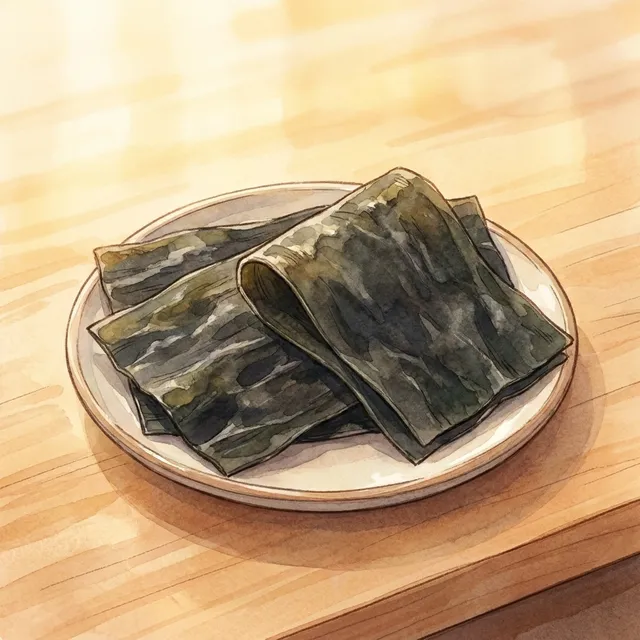 1 piece dried kelp, about 10 cm square (optional)
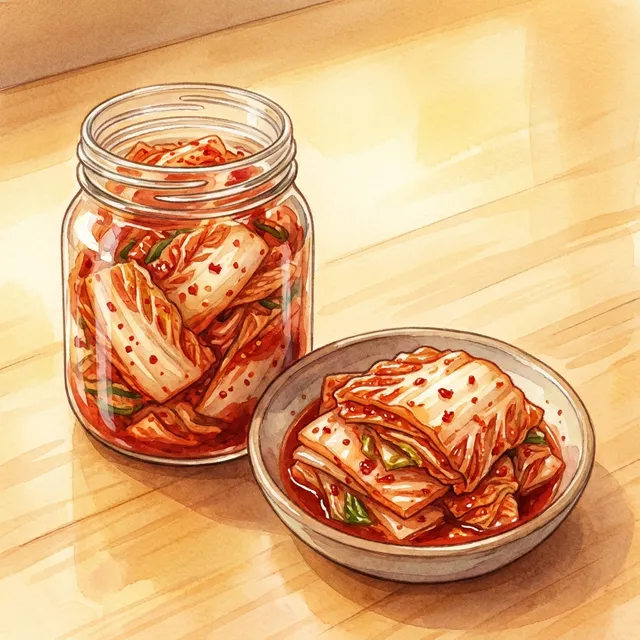 1 cup well-fermented kimchi, chopped (plus ¼ cup of its juice)
- 1 medium potato, sliced (the classic addition)
- ½ onion, sliced
- 2 cloves garlic, minced
 1 tbsp soup soy sauce or fish sauce (or regular soy sauce, plus salt to taste)
- ½ small zucchini, cut into half-moons (optional)
 1 green onion, sliced
Steps
- 1 Mix 2 cups flour, ½ tsp salt, 1 tbsp oil and about ¾ cup water into a lumpy dough, then knead 5-10 minutes until smooth. Wrap it and let it rest at least 30 minutes while you make the broth.

- 2 Put 8 cups (about 2 litres) water, the dried anchovies (heads and guts removed), the kelp, sliced onion and potato into a large pot. Simmer 10 minutes, then lift out the kelp.
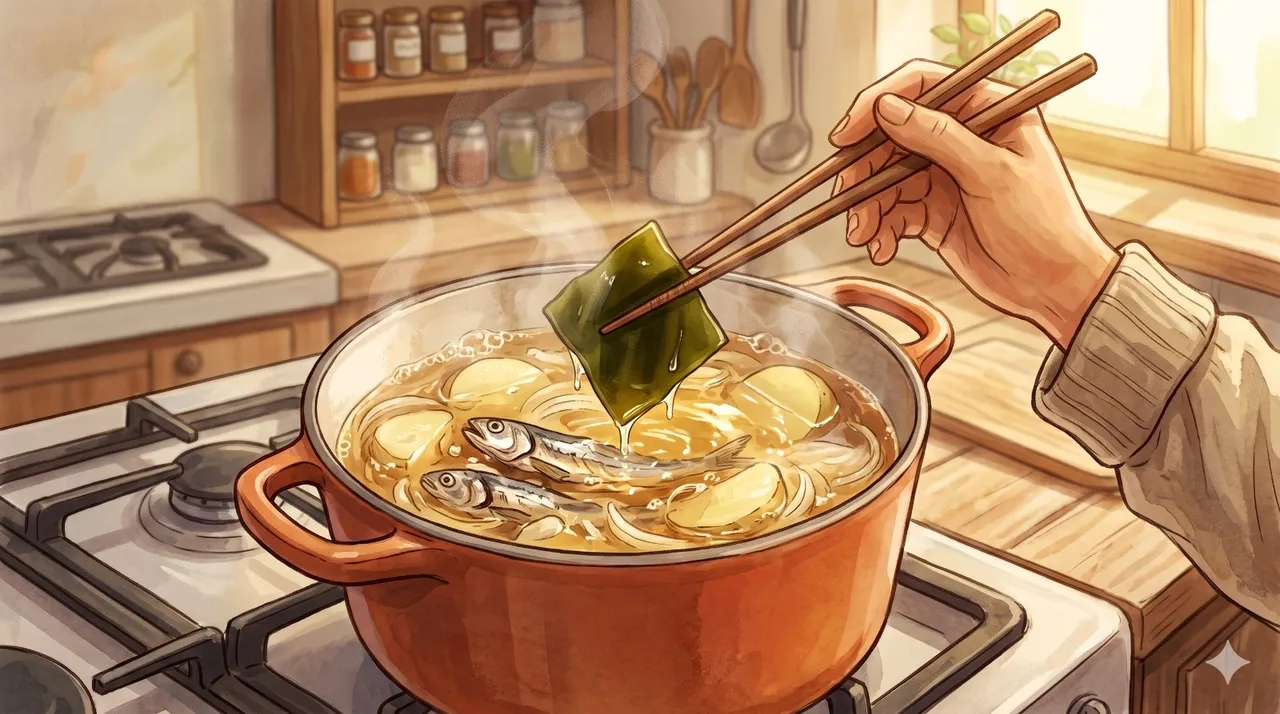
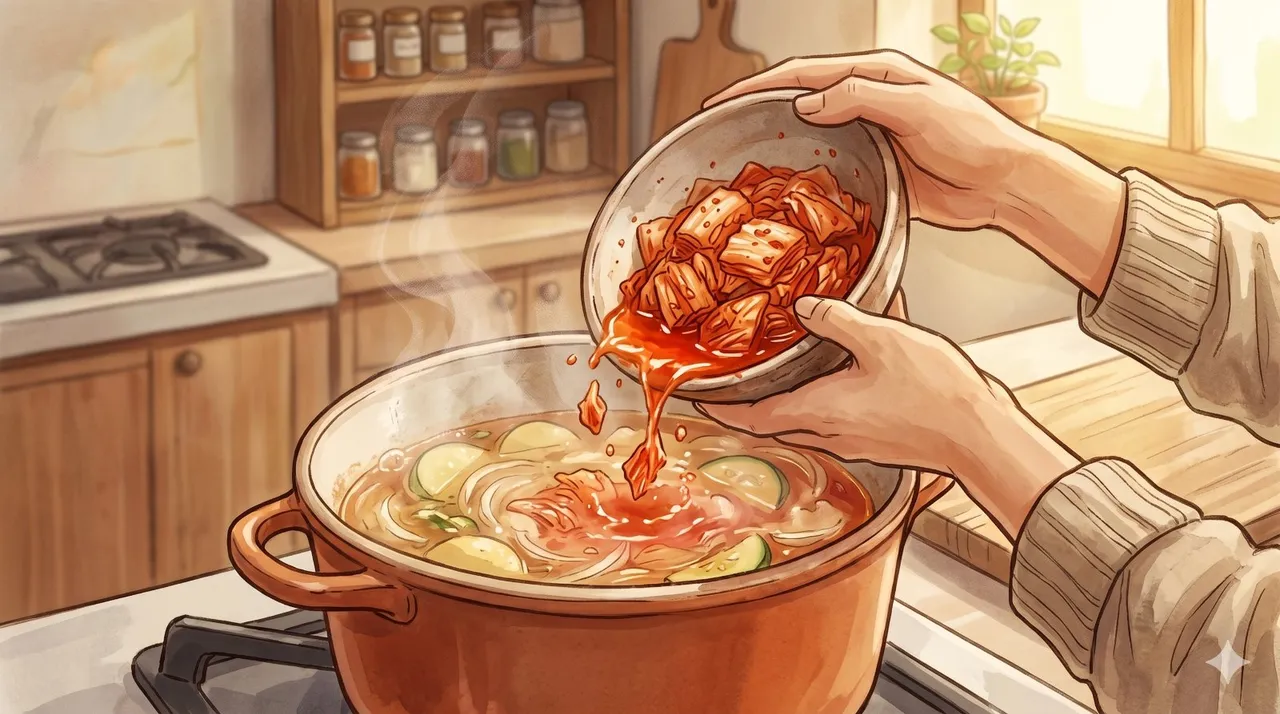
- 3 Squeeze the kimchi lightly, chop it and add it to the pot along with ¼ cup of the kimchi juice. Simmer another 10-15 minutes, until the kimchi softens and the broth turns a gentle red. Fish out the anchovies if you like.
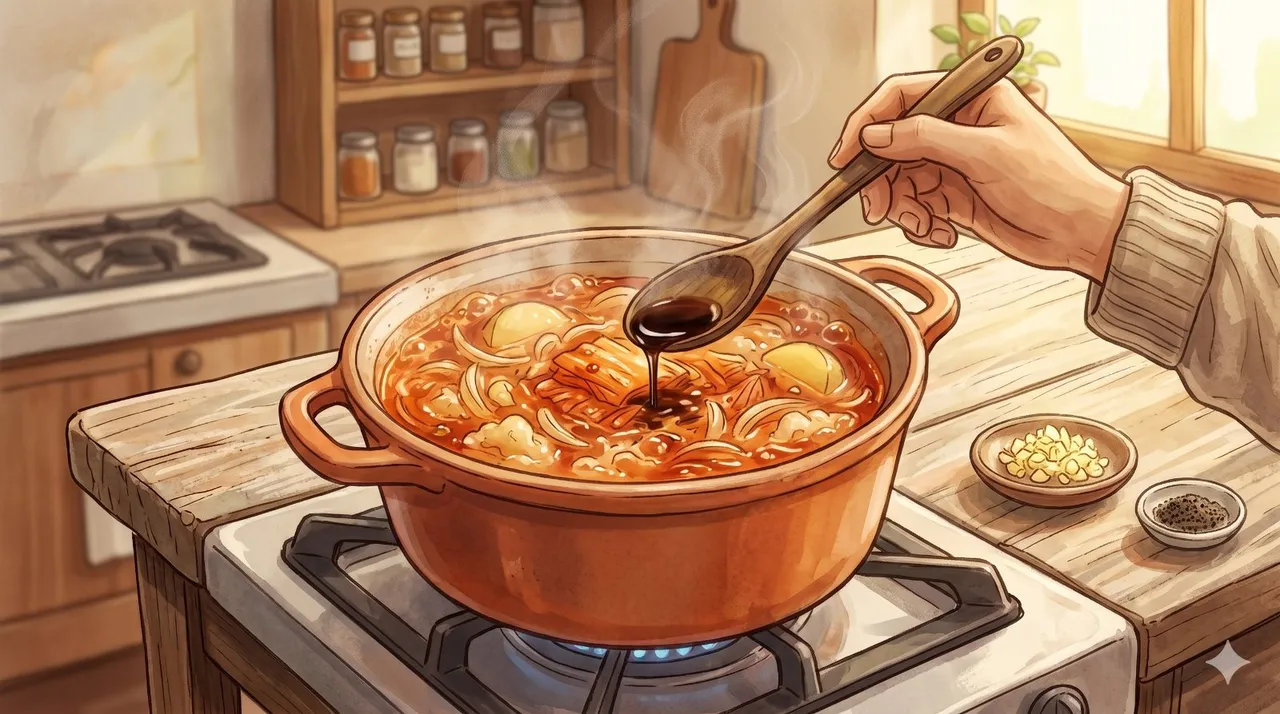
- 4 Season with the soup soy sauce or fish sauce, garlic and a pinch of black pepper. Taste: the kimchi decides how salty and sour it ends up, so go slowly.
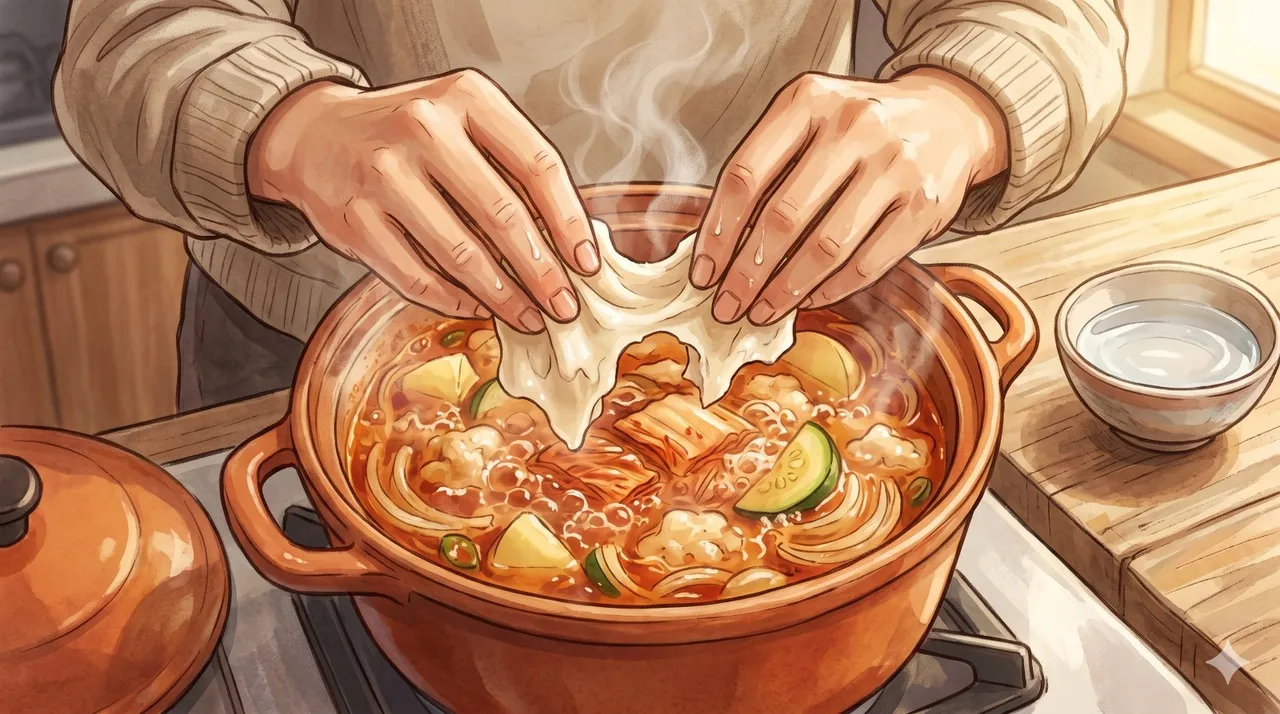
- 5 Wet your fingers, flatten a piece of dough until almost see-through (about 3 mm), and tear it into bite-size pieces straight into the simmering broth. Thin and even pieces cook evenly.
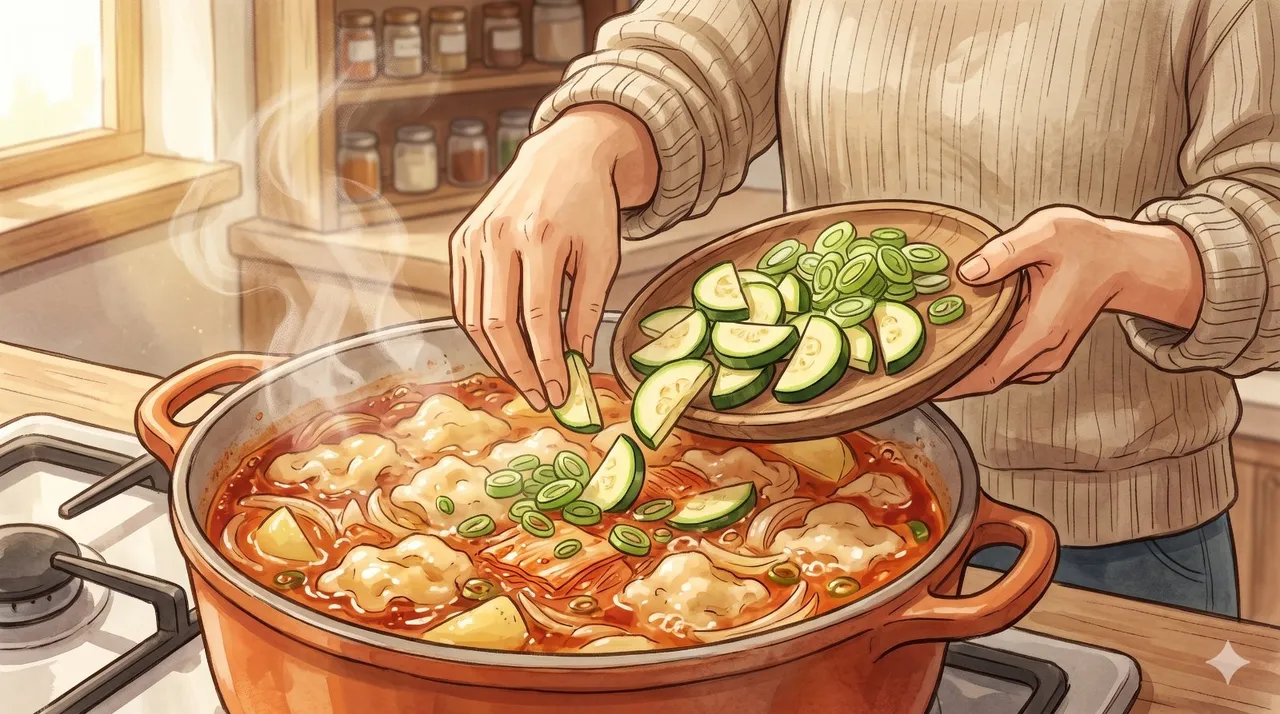
- 6 Simmer 4-5 minutes, until the noodles float and no raw centre remains (cut the thickest piece to check). Add sliced green onion and zucchini, cook one more minute, and serve hot with extra kimchi.
국룰Stretch each piece of dough thin before tearing it in — thin, even pieces are what make sujebi silky instead of doughy.
Substitution Guide
About the Stock and the Kimchi — Here's What to Do
Two things trip people up: the anchovy stock and kimchi that's sour enough. Here's the good news: the soup is still lovely without perfect versions of either.
Use this — no need to look further
Any kimchi you have. Older, sourer kimchi gives the deepest flavour, but fresh kimchi works too — just simmer it a little longer and add a pinch of sugar if the broth tastes flat.
If you don't have dried anchovies
- Chicken or vegetable broth — mild and widely available
- Dashi, if you have it — a similar savoury, sea-like note
- Plain water with an extra splash of soy sauce — the kimchi carries plenty of flavour
If you don't have kelp or fish sauce
Skip the kelp entirely, and use regular soy sauce plus a pinch of salt in place of soup soy sauce or fish sauce. The soup will taste a touch simpler, and still comforting.
Why it matters (so you're not just guessing next time)
Sujebi is built from three things: a savoury broth, a tangy kimchi layer, and a dough that rests long enough to stretch thin. Rest the dough, and the rest is forgiving — uneven pieces still taste good.
A Couple More Notes
Plain sujebi
Leave out the kimchi for the milder, classic version: just the anchovy broth, potato, zucchini and torn noodles.
Make-ahead dough
The dough keeps in the fridge for a day or two, so you can knead it ahead and tear it in on a tired evening.
Want to Go Further?
This soup uses mostly everyday ingredients. Once you're ready to stock two or three Korean pantry staples, a much wider range of Korean dishes opens up with very little extra effort.
Getting Started with Korean Cooking: The 3 Sauces You Need →You Might Also Like


Cooks' versions
Made it your way? Show us.
Swapped an ingredient, changed the heat, plated it differently? Add a photo and a few words — we'll turn it into a pretty card right here on the Kimchi sujebi page, so the next cook can follow your lead.
Spotted a mistake, or have an idea?
Tell us what to fix or improve in this recipe. This is not a public comment — it goes straight to the K-food team.