
Recipe · Hearty soup · Serves 4
It's Okay — You Can Make Galbitang, Korea's Clear Beef Short Rib Soup, at Home
Galbitang is a clear, gently savory soup of beef short ribs simmered with radish until the meat slides off the bone. It is a dish for celebrations, for family visits, and for days when you want something nourishing. The method is mostly patience: parboil, rinse, then let the pot do the work. If you don't have every ingredient on this list, that's fine — keep reading before you decide to skip it.
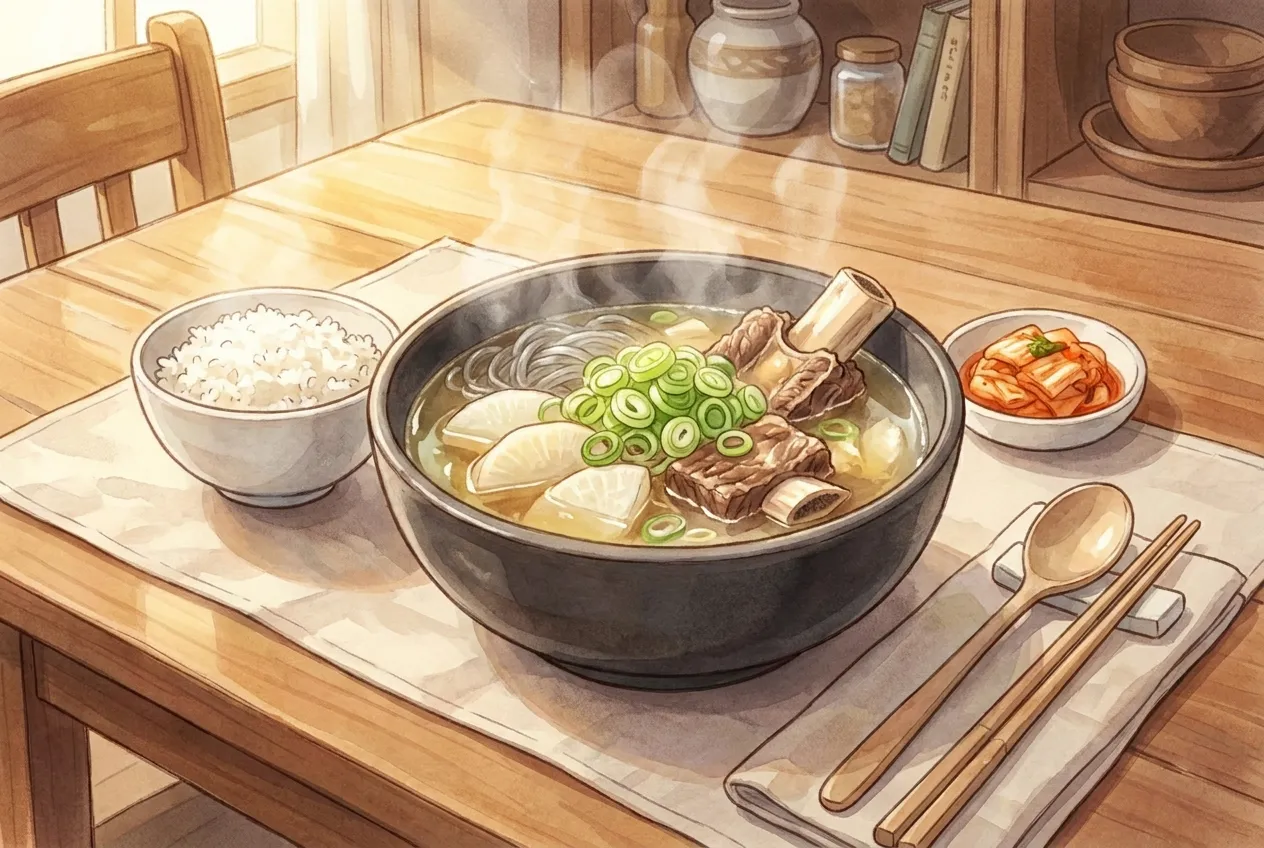
Before You Shop: Quick Ingredient Check
- Dangmyeon (sweet potato glass noodles)substitute below
- Guk-ganjang (Korean soup soy sauce)substitute below
- Korean radishsubstitute below
- Beef short ribs, onion, garlic, ginger, green onionseasy anywhere
Nothing here is a dealbreaker. Let's cook.
Ingredients (serves 4)
- 1 kg (2.2 lb) beef short ribs, cut into 5cm (2 in) pieces
- 10 cups (2.4 liters) water
 300g (10 oz) Korean radish or daikon, in 3 large chunks
- 1 onion, halved
- 8 garlic cloves
- 1 thumb-size piece of ginger (about 15g / ½ oz), sliced
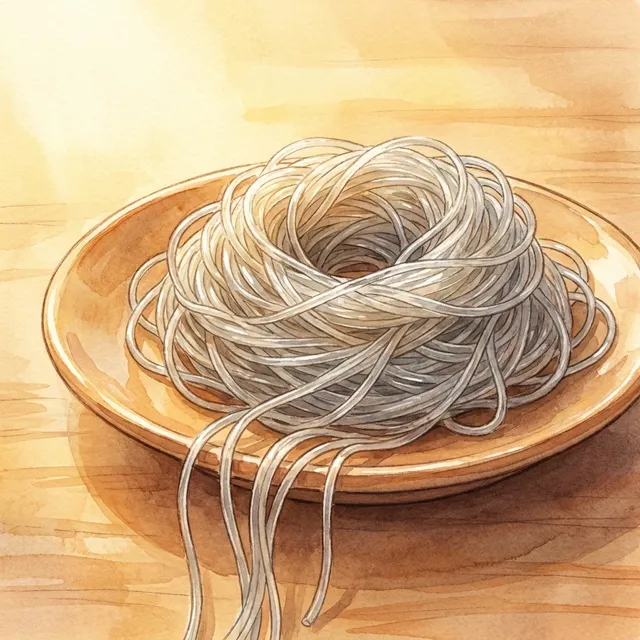 100g (3½ oz) dangmyeon (sweet potato glass noodles)
 2 tbsp Korean soup soy sauce (guk-ganjang)
- 1 tsp salt, plus more to taste
- ½ tsp black pepper
 3 green onions, thinly sliced
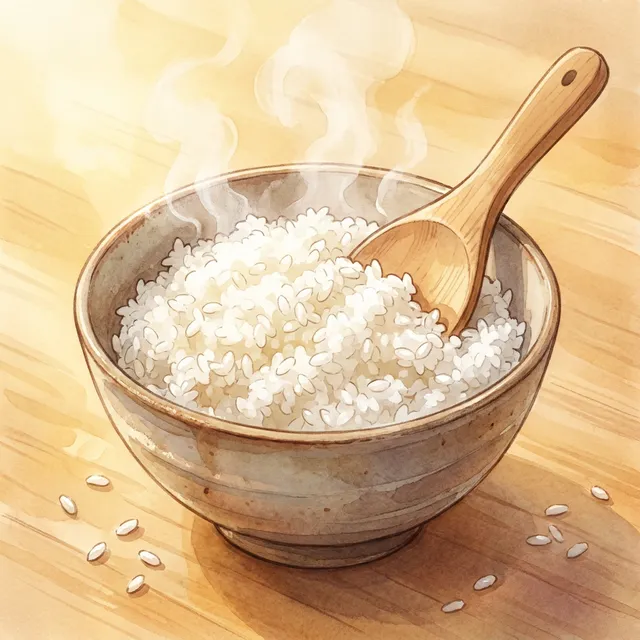 Cooked rice, to serve
Steps
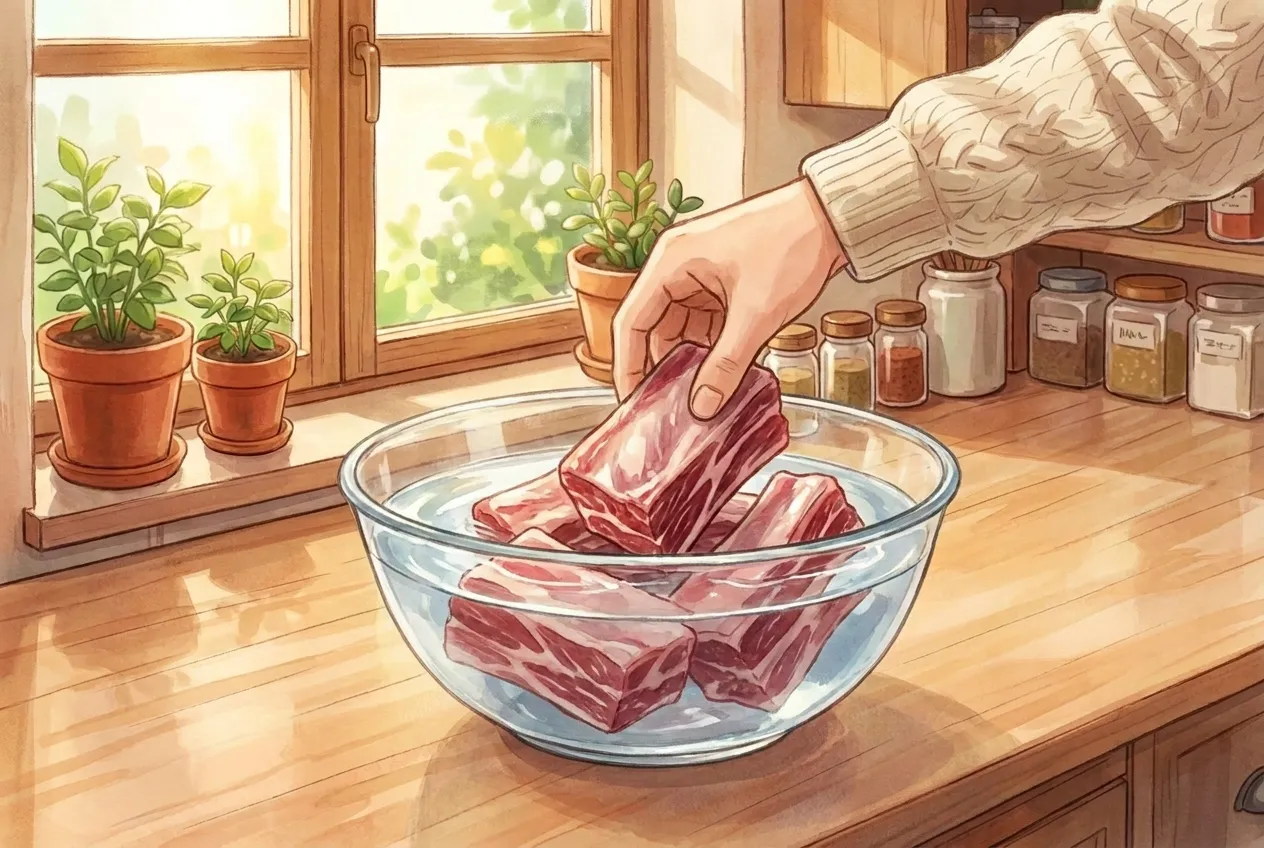
- 1 Soak the short ribs in cold water for 30–60 minutes, changing the water once, to draw out the blood. Drain.
- 2 Boil a pot of water, add the ribs and parboil for 5–10 minutes, until grey foam rises. Drain, then rinse the ribs and the pot under cold water.
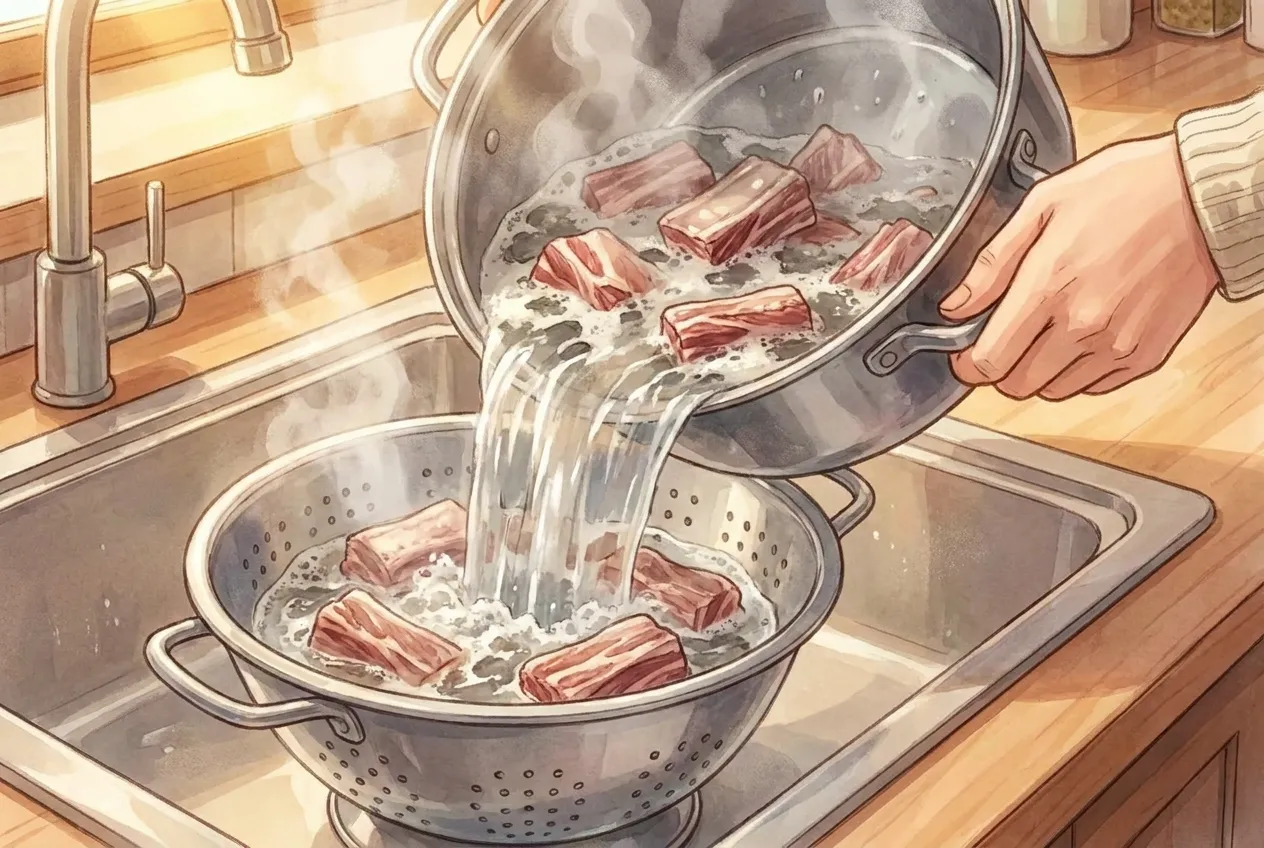
- 3 Return the ribs to the clean pot with the 10 cups of water, radish chunks, onion, garlic and ginger. Bring to a boil, then simmer covered over medium-low heat for 1 hour to 1 hour 30 minutes, skimming any foam.
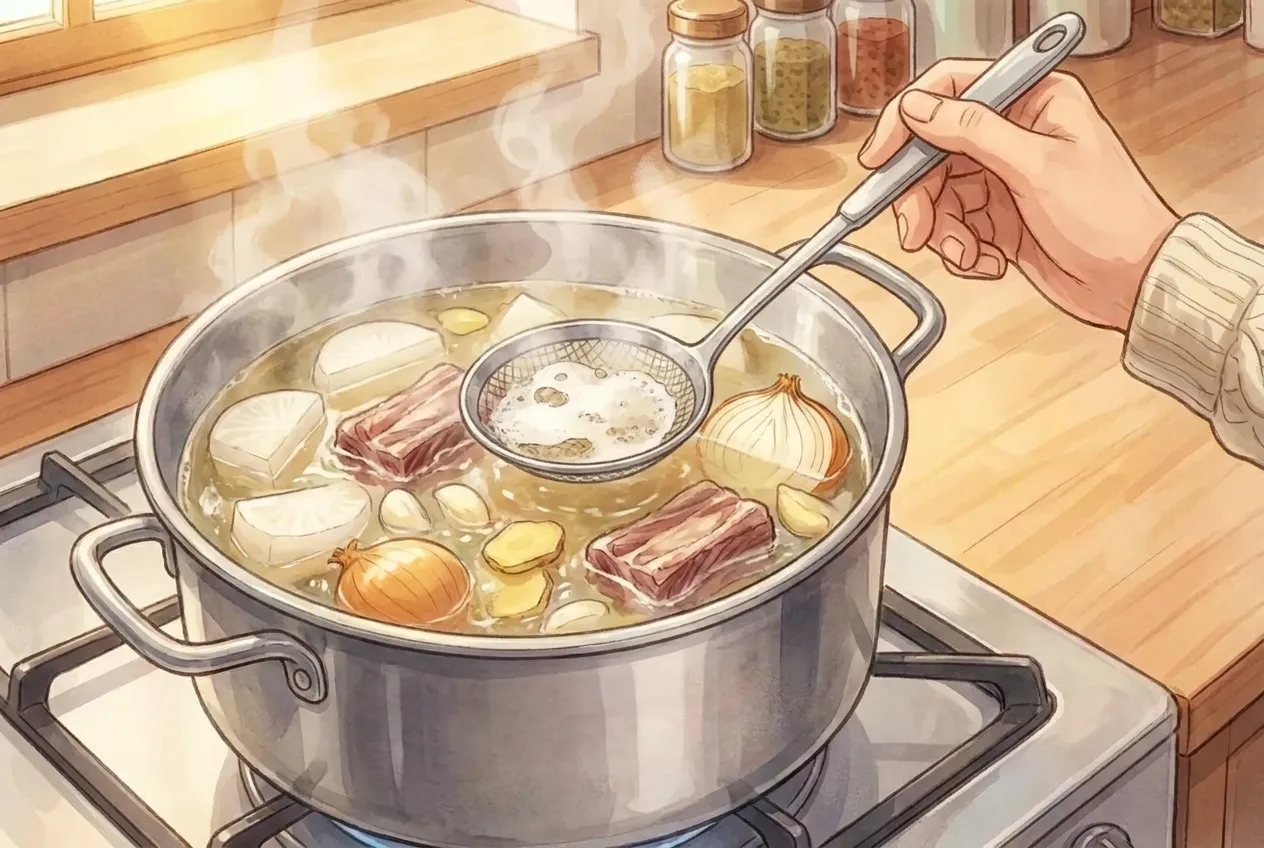
- 4 Lift out the radish and cut it into 1cm (½ in) thick bite-size pieces. Skim off any fat floating on the broth.
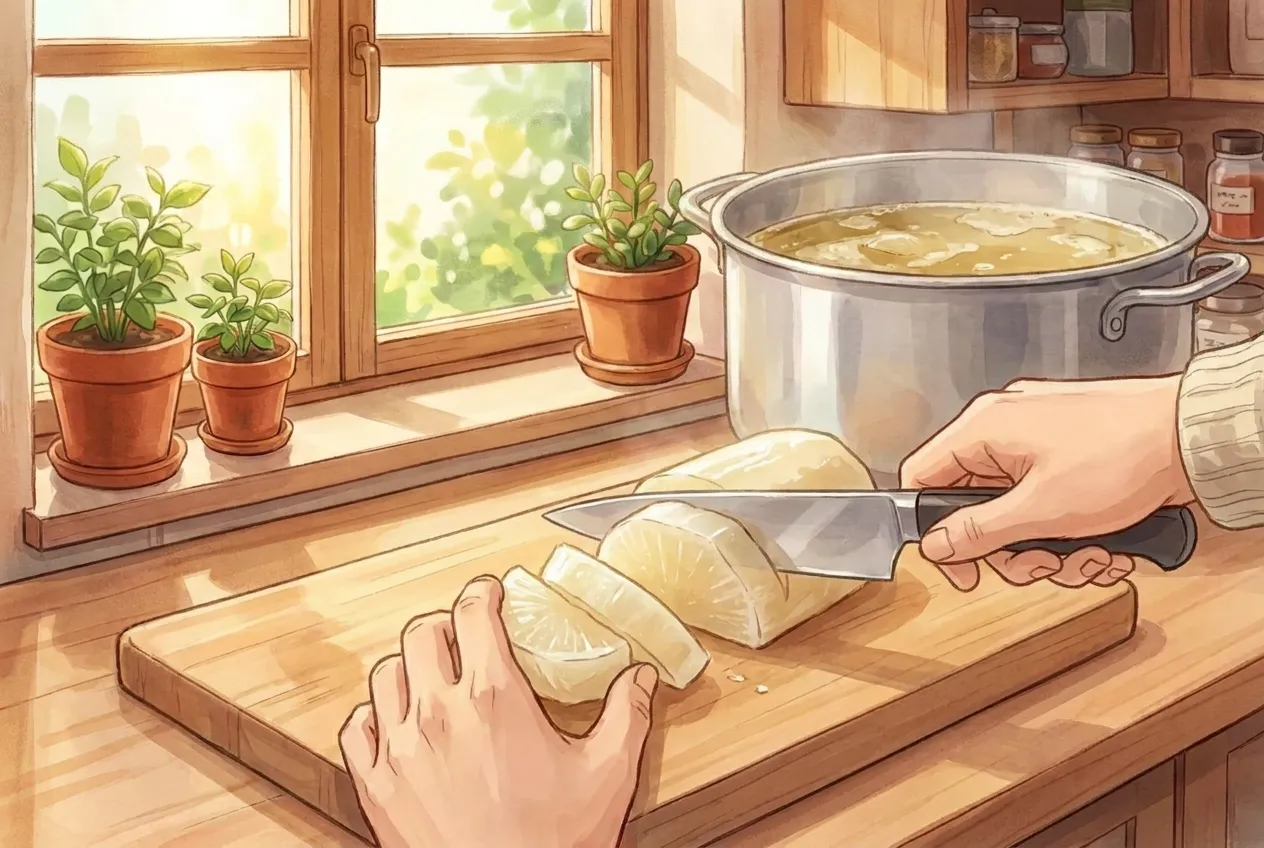
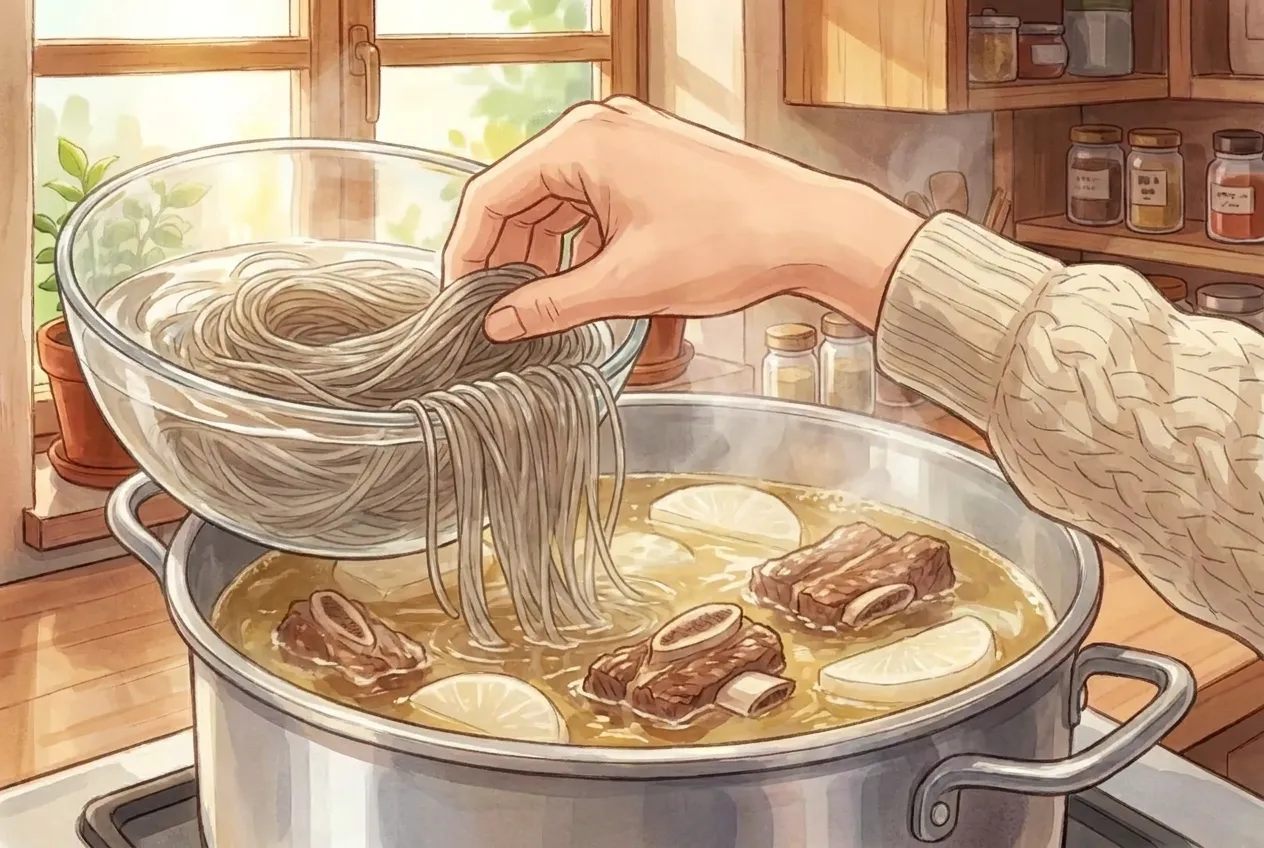
- 5 Put the radish back in. Soak the dangmyeon in warm water for 30 minutes, then add it to the pot and simmer for 5–7 minutes, until the noodles are soft and clear.
- 6 Season with the soup soy sauce, salt and pepper. Taste and adjust, then stir in half of the green onions.
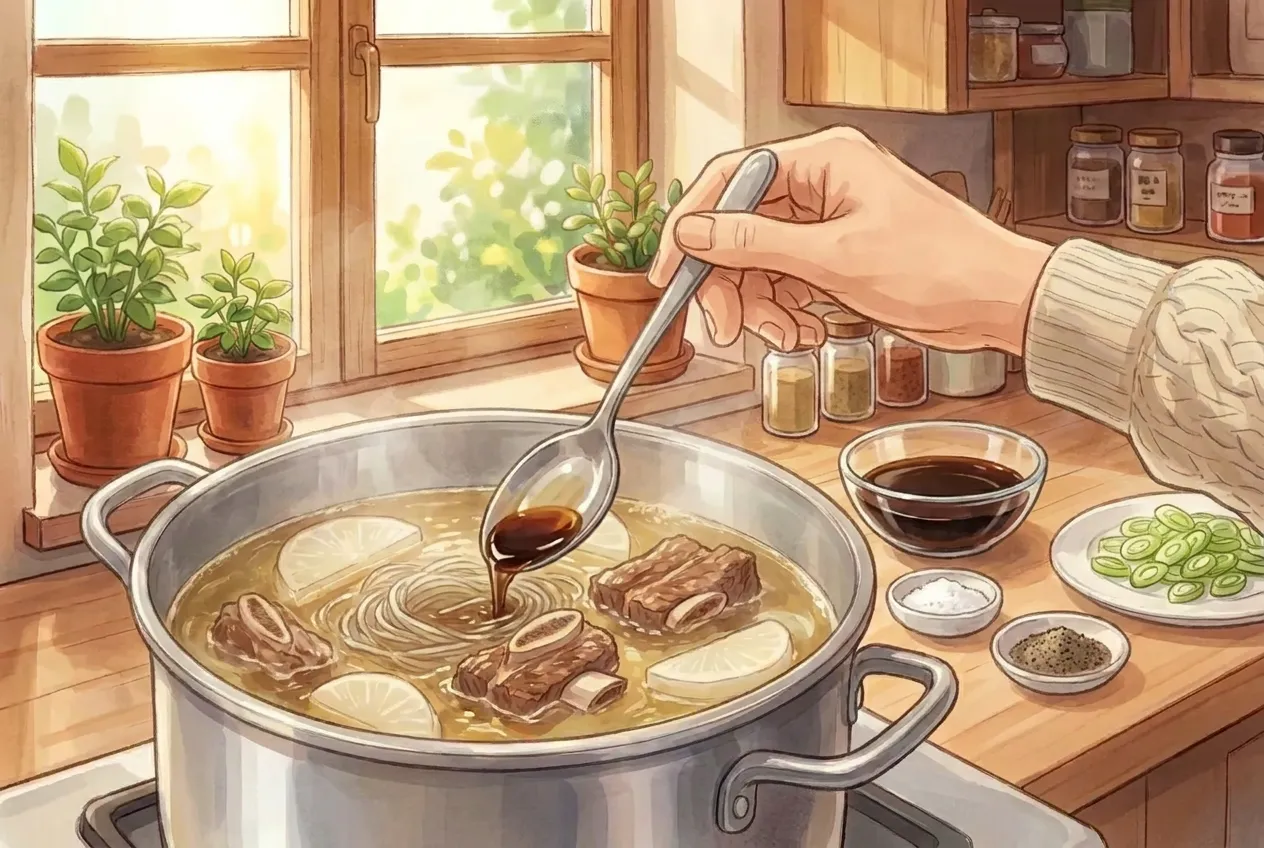
- 7 Ladle into bowls with ribs, radish and noodles. Top with the remaining green onions and serve hot with rice.
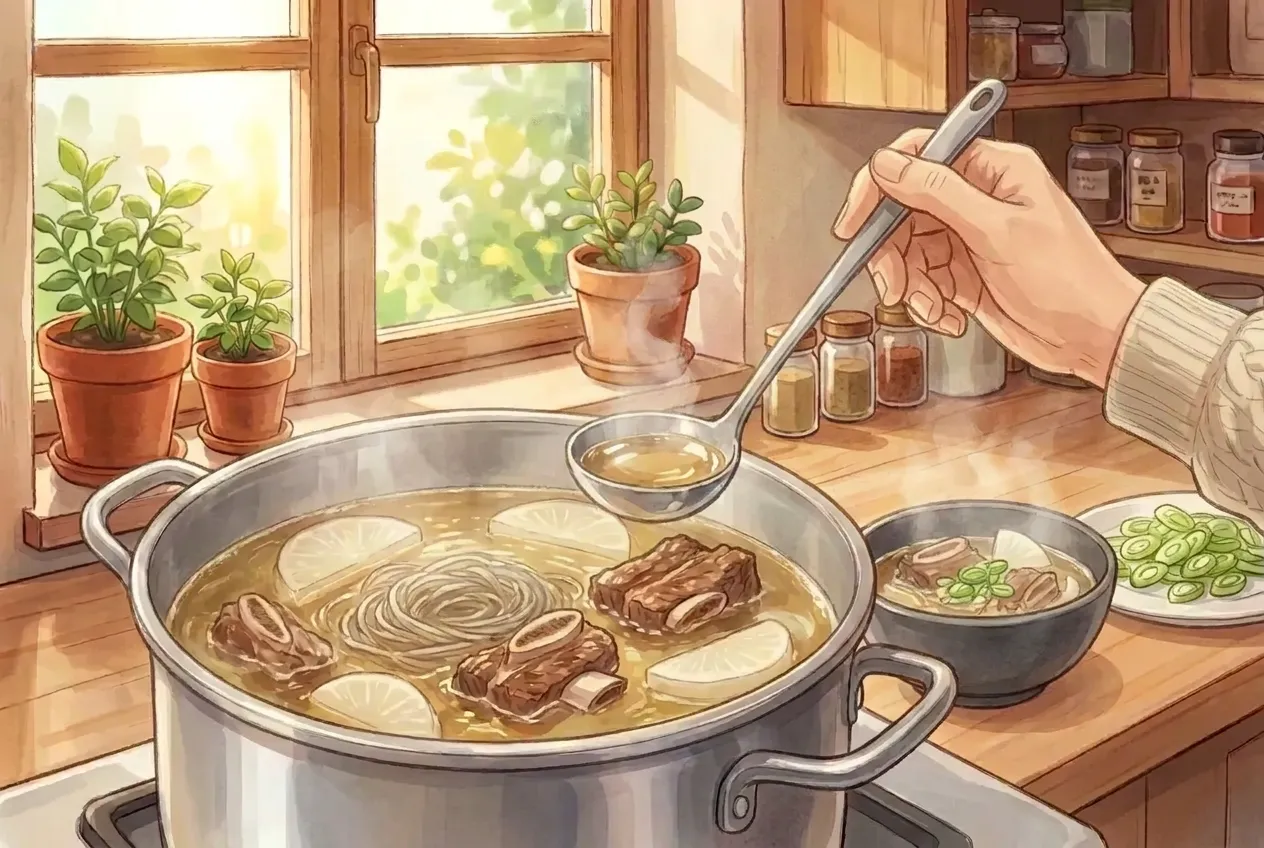
국룰Don't skip the parboil-and-rinse. It is the step that keeps the broth clear and clean-tasting instead of cloudy and gamey.
Substitution Guide
About the Glass Noodles and the Soup Soy Sauce — Here's What to Do
Two things can send you shopping: dangmyeon and guk-ganjang. Here's the good news: galbitang is mostly beef, radish and broth, so it stays delicious even if you leave the noodles out or season with regular soy sauce.
Use this — no need to look further
Dangmyeon from an Asian grocery store, sold dried in a bag. It adds a slippery, chewy texture that soaks up the broth. Soup soy sauce comes from the same aisle, in a bottle marked guk-ganjang.
If you can't find dangmyeon or soup soy sauce
- Skip the noodles: galbitang is traditionally good without them, and the rice does the same job
- Cooked rice vermicelli is a light stand-in for glass noodles: add it in the last 2 minutes
- Regular soy sauce plus extra salt in place of soup soy sauce: use 1½ tbsp soy sauce and season with salt after (the broth will be slightly darker)
If you can't find Korean radish
Daikon is the closest swap, and a white turnip works too. Cut the chunks so they stay whole while they simmer, then slice them afterward.
Why it matters (so you're not just guessing next time)
Galbitang is built from three jobs: a clean start (soaking and parboiling) so the broth stays clear, a long gentle simmer that pulls flavor from the bones and softens the meat, and light seasoning added at the end so you control the salt. As long as those three jobs get done, you can swap individual ingredients with confidence.
A Couple More Notes
Skim the Fat
Let the pot cool for a few minutes after cooking, or chill it overnight, and lift off the layer of fat that rises. The soup tastes cleaner and lighter.
Better the Next Day
Refrigerate leftovers and reheat gently. The broth deepens overnight, and it freezes well for up to a month. Add fresh green onions when serving.
Want to Go Further?
Once you're ready to stock two or three Korean pantry staples, a much wider range of Korean dishes opens up with very little extra effort.
Getting Started with Korean Cooking: The 3 Sauces You Need →Watch It Made
These cooks speak Korean. Press CC in the player, then the gear icon → Subtitles → Auto-translate to read along in your language.


Cooks' versions
Made it your way? Show us.
Swapped an ingredient, changed the heat, plated it differently? Add a photo and a few words — we'll turn it into a pretty card right here on the Galbitang page, so the next cook can follow your lead.
Spotted a mistake, or have an idea?
Tell us what to fix or improve in this recipe. This is not a public comment — it goes straight to the K-food team.
Made this with a different swap that worked well? Let us know in the comments — it helps the next person who gets stuck on this step.