
Recipe · Make-ahead · Fills a 1-liter jar
It's Okay — You Can Make Mak-kimchi, Korea's Easy Cut Napa Cabbage Kimchi, at Home
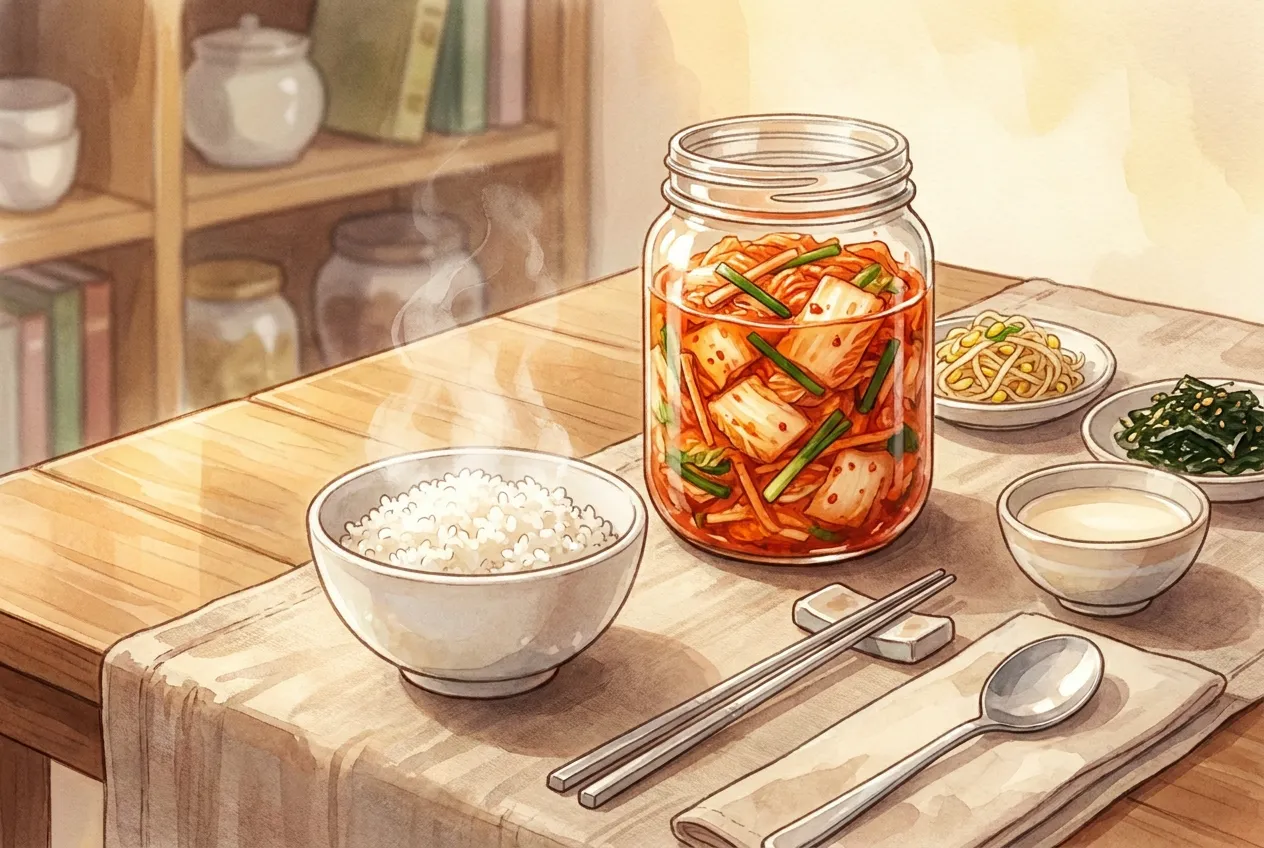
Mak-kimchi is the easy, home-style kimchi: napa cabbage cut into pieces, salted, tossed in a red chili paste and left to ferment. There is no whole-head stuffing, and it is ready to eat fresh the next day or sour in a week. If you don't have every ingredient on this list, that's fine — keep reading before you decide to skip it. If you don't have every ingredient on this list, that's fine — keep reading before you decide to skip it.
Before You Shop: Quick Ingredient Check
- Gochugaru (Korean chili flakes)substitute below
- Fish sauce or salted shrimp (saeujeot)substitute below
- Napa cabbageeasy at most grocery stores
- Garlic, ginger, sugar, green onion, radish, coarse salteasy anywhere
Nothing here is a dealbreaker. Let's cook.
Ingredients (makes about 1 liter / 1 quart)
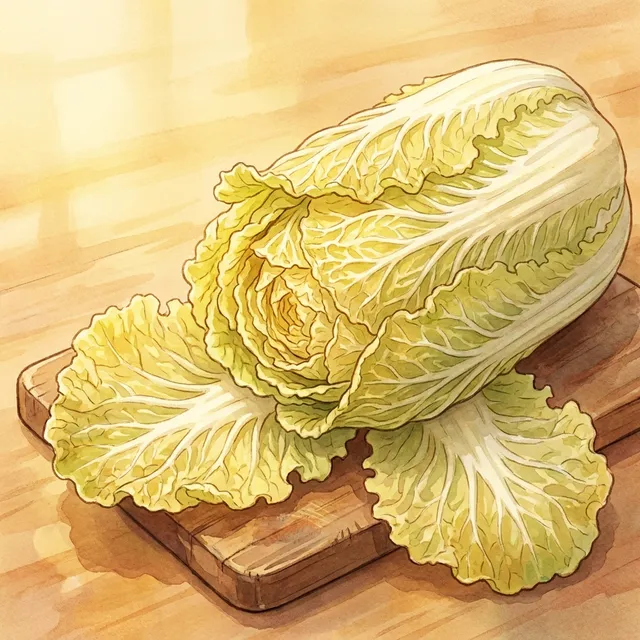 1 napa cabbage (about 1kg / 2 lb), cut into bite-size pieces
- ¼ cup (about 50g) coarse sea salt, for salting
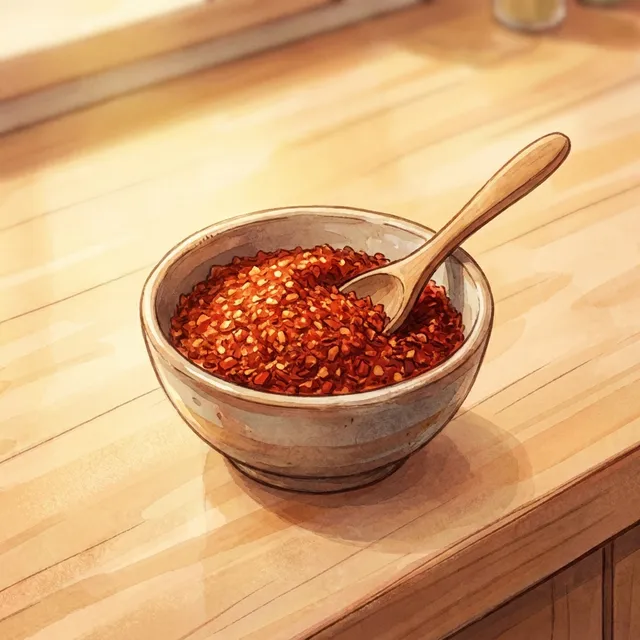 ½ cup (about 40g) gochugaru (Korean chili flakes)
 3 tbsp fish sauce, or anchovy sauce
 1 tbsp salted shrimp (saeujeot), minced
- 1 tbsp sugar
- 5 cloves garlic, minced
- 1 tbsp grated ginger
 ½ cup Korean radish or daikon, cut into matchsticks
 3 green onions, cut into 4cm (1½ in) lengths
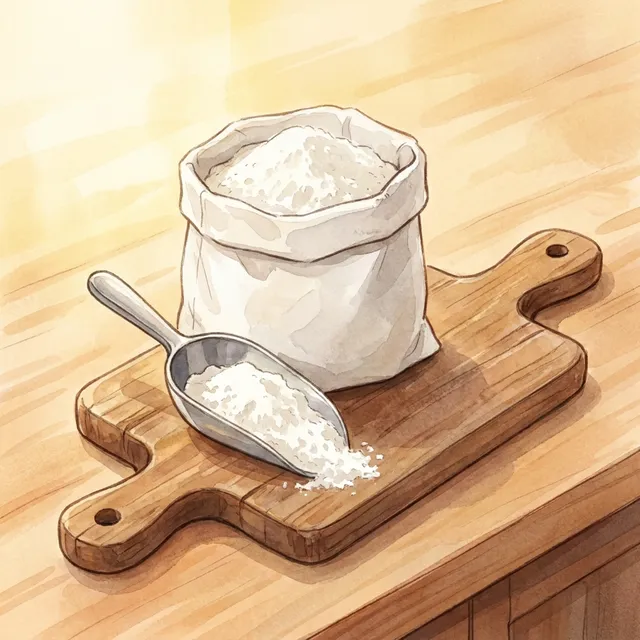 2 tbsp sweet rice flour mixed with ½ cup water, cooked into a thin paste and cooled
Steps
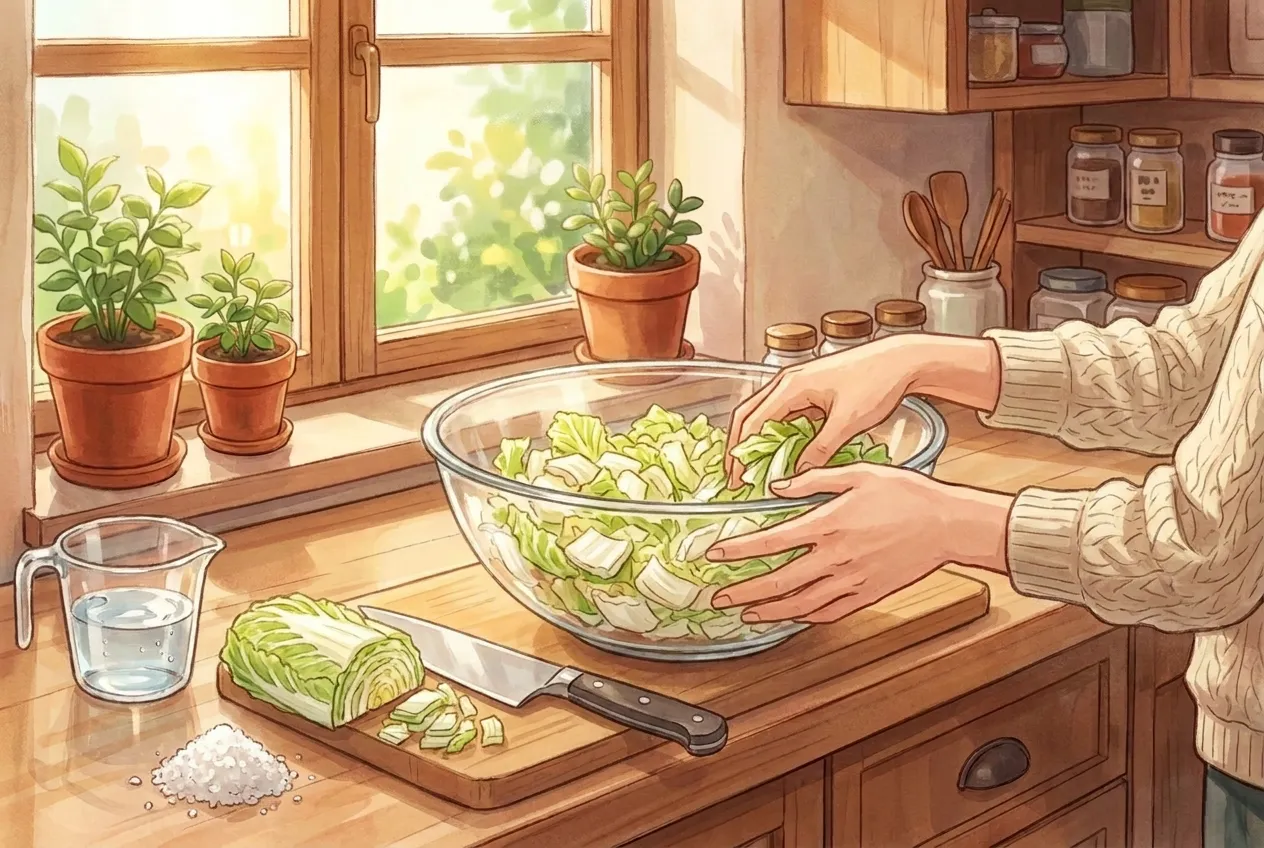
- 1 Cut the cabbage into bite-size pieces and put it in a large bowl. Sprinkle with the coarse salt and a splash of water, toss, and leave for 1 hour, turning it over every 20 minutes.
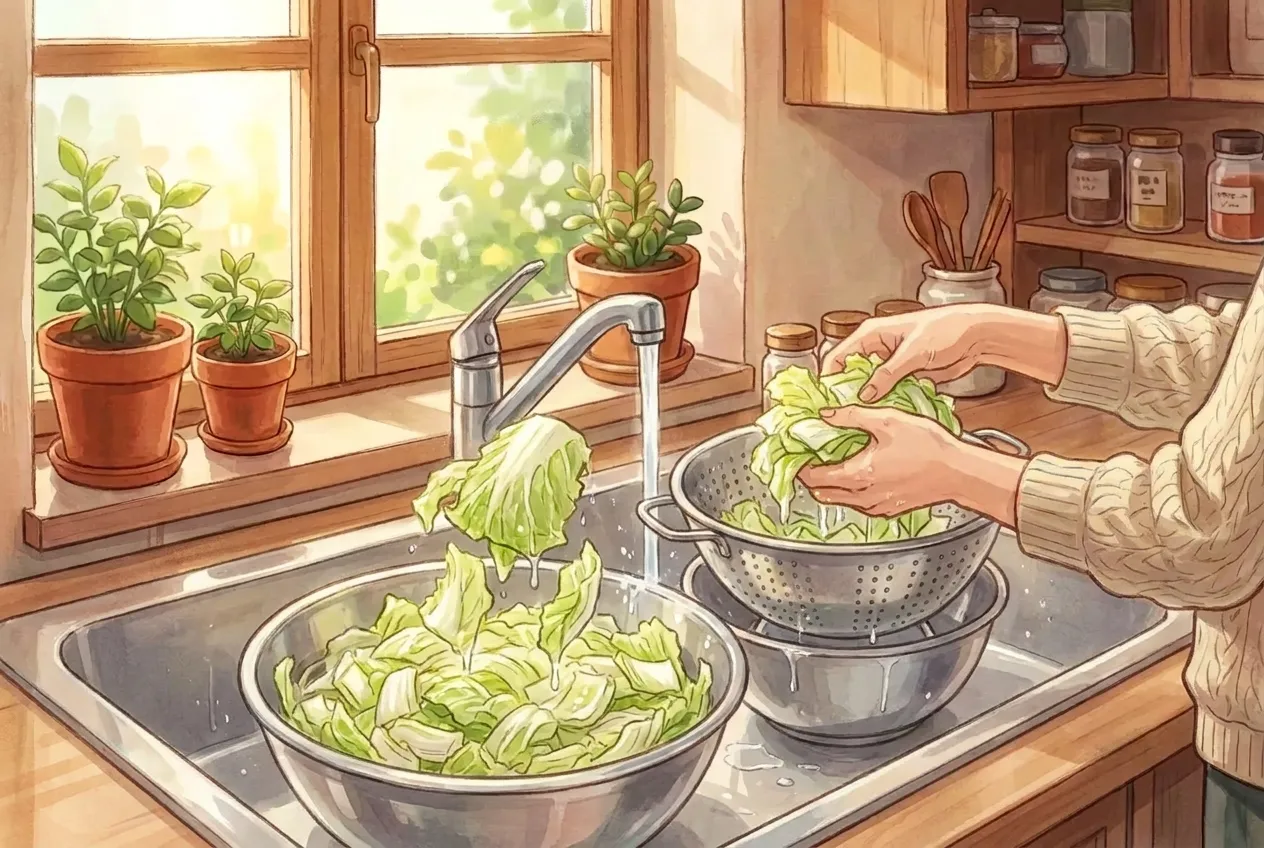
- 2 Rinse the cabbage 2–3 times in cold water, then drain well in a colander for 20 minutes. The stems should bend without breaking.
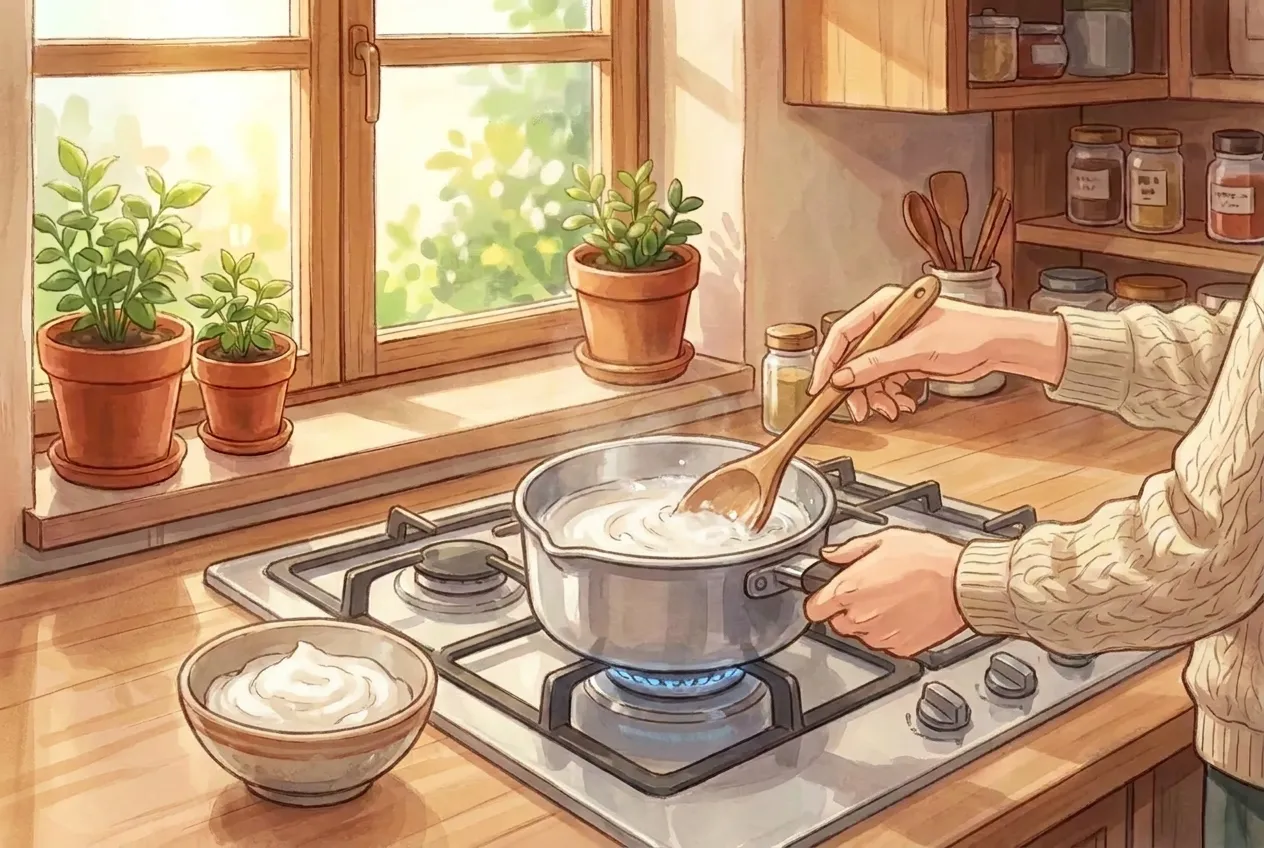
- 3 Cook the sweet rice flour and water in a small pot over low heat for 2–3 minutes, stirring, until it thickens. Let it cool.
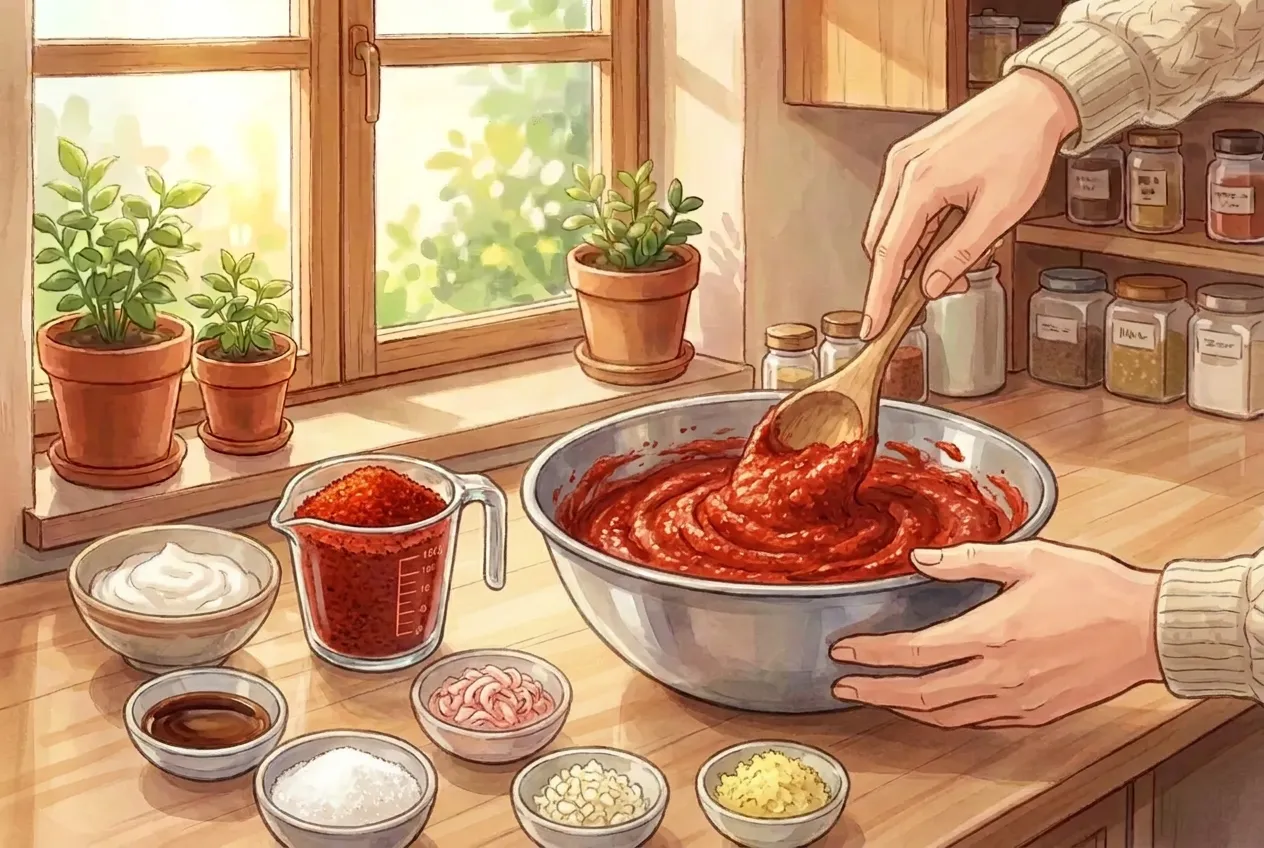
- 4 In a bowl, mix the cooled paste with the gochugaru, fish sauce, salted shrimp, sugar, garlic and ginger until it forms a thick red paste.
- 5 Wearing gloves, toss the drained cabbage with the paste, the radish and the green onions until every piece is coated.
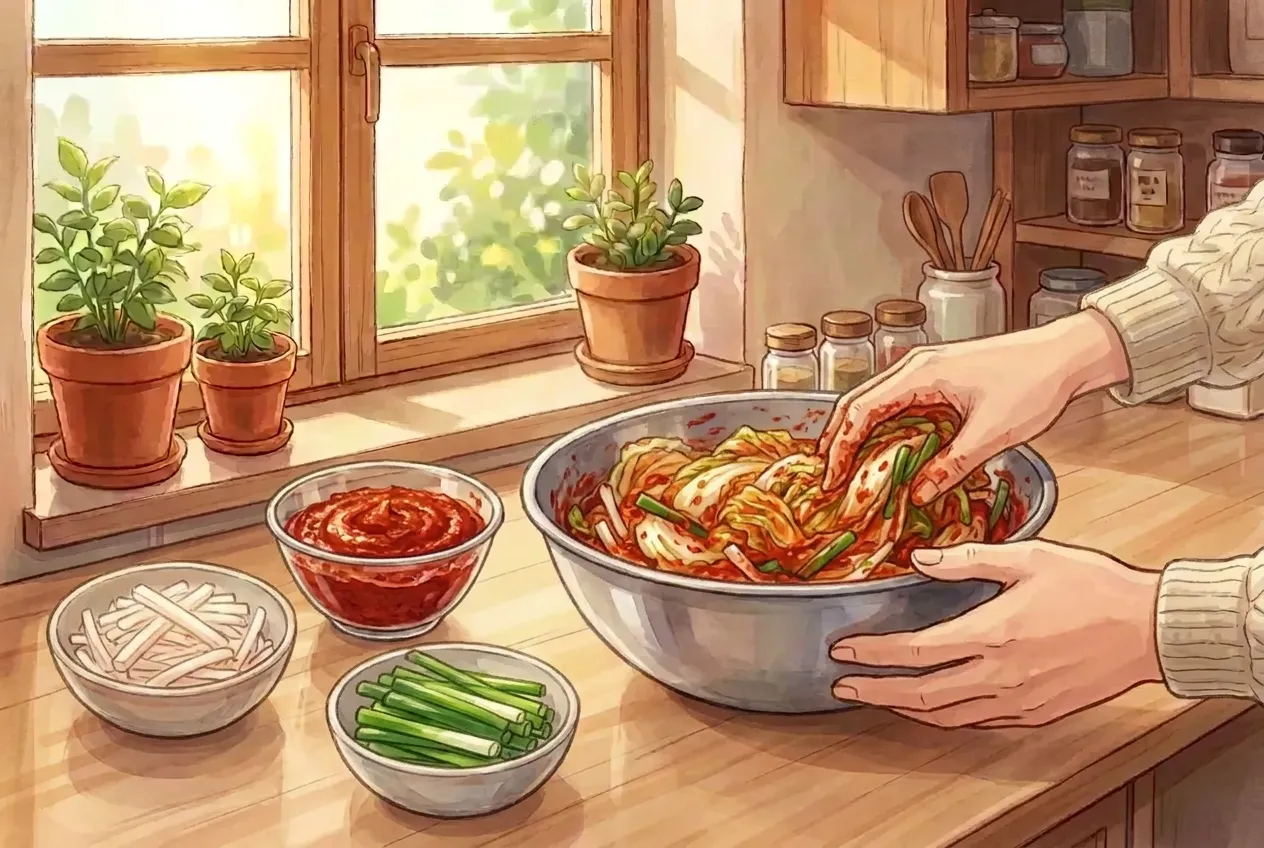
- 6 Pack the kimchi into a clean jar, pressing it down, and leave about 3cm (1 inch) of space at the top. Leave it at room temperature for 1 day, then refrigerate. It is ready to eat right away and keeps improving for a week.
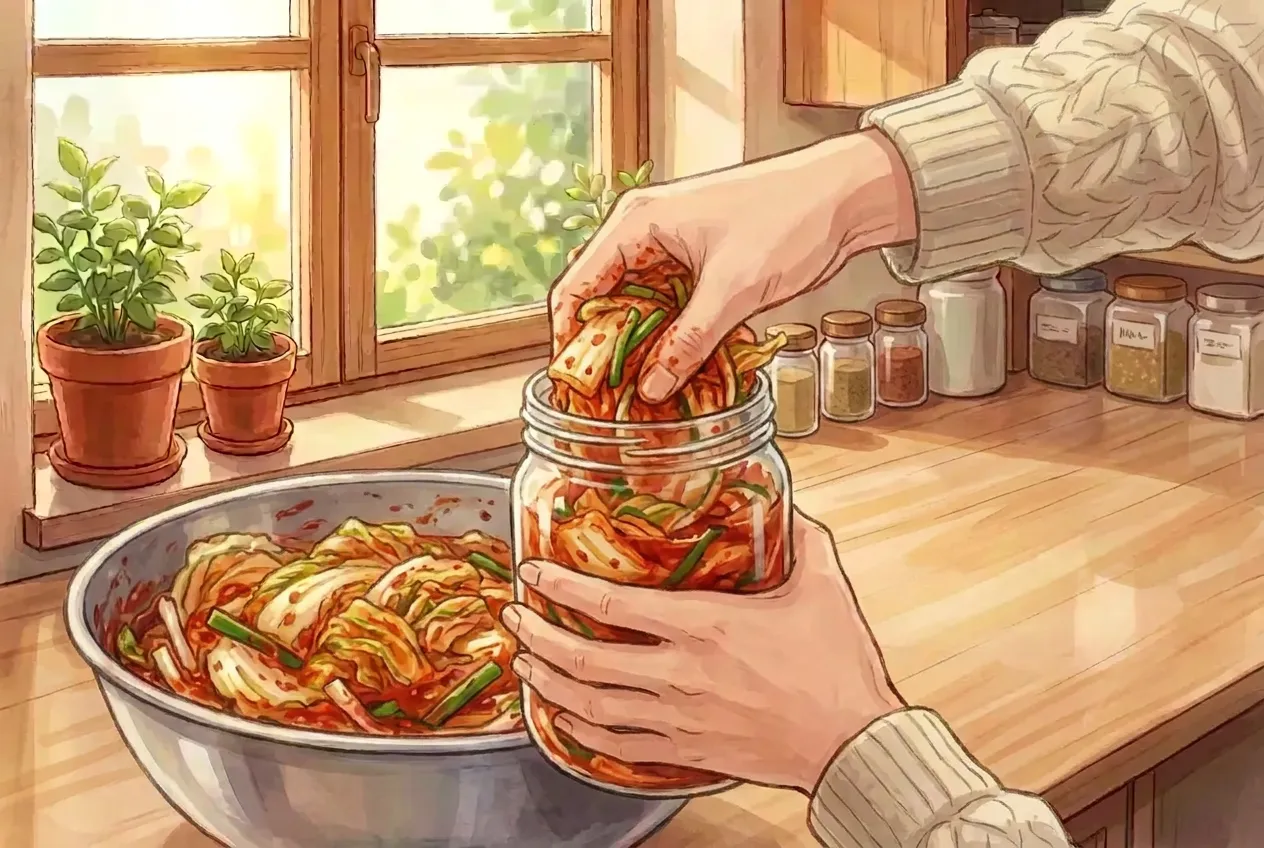
국룰Press the kimchi down so the cabbage sits under its own juices — this keeps it from spoiling and helps it ferment evenly.
Substitution Guide
About the Chili Flakes and the Fish Sauce — Here's What to Do
Two things trip people up: gochugaru and the savory fish sauce or salted shrimp. Here's the good news: you can make a good kimchi with one bag of chili flakes and the fish sauce from any grocery store.
Use this — no need to look further
Gochugaru from an Asian grocery store, in a bag labelled for kimchi (coarse). It has a fruity, mild heat that is hard to replace exactly, so it is worth looking for one bag.
If you can't find gochugaru or saeujeot
- Mild paprika plus a little cayenne for gochugaru — use about the same amount, adding cayenne to taste
- Extra fish sauce in place of salted shrimp: add 1 more tablespoon
- Vegan? Use soy sauce with a piece of kombu or a little miso for the savory depth
If you can't find Korean radish or sweet rice flour
Daikon works for the radish. Plain rice flour, cornstarch or even a spoon of cooked rice blended with the water works for the paste; it feeds the fermentation and helps the paste cling.
Why it matters (so you're not just guessing next time)
Mak-kimchi is built from three jobs: salt that draws out water and keeps the cabbage crisp, a spicy paste that seasons it, and time at room temperature for the fermentation. As long as those three jobs get done, you can swap individual ingredients with confidence. As long as those three jobs get done, you can swap individual ingredients with confidence.
A Couple More Notes
How Sour Do You Like It?
Eat it fresh after a day, or leave it on the counter for 2 days in a warm kitchen for a sourer taste, then refrigerate. Sour kimchi is perfect for kimchi-jjigae and kimchi fried rice.
Handling the Chili
Wear kitchen gloves when you mix the paste — the chili stays on your skin and stings if you touch your eyes.
Want to Go Further?
Once you're ready to stock two or three Korean pantry staples, a much wider range of Korean dishes opens up with very little extra effort.
Getting Started with Korean Cooking: The 3 Sauces You Need →Watch It Made
These cooks speak Korean. Press CC in the player, then the gear icon → Subtitles → Auto-translate to read along in your language.

Cooks' versions
Made it your way? Show us.
Swapped an ingredient, changed the heat, plated it differently? Add a photo and a few words — we'll turn it into a pretty card right here on the Mak-kimchi page, so the next cook can follow your lead.
Spotted a mistake, or have an idea?
Tell us what to fix or improve in this recipe. This is not a public comment — it goes straight to the K-food team.
Made this with a different swap that worked well? Let us know in the comments — it helps the next person who gets stuck on this step.