Korean Food Stories · Everyday food
Gim and Gimbap: How Korea Wrapped Rice in Seaweed
It is in lunchboxes, on picnics and next to almost every bowl of rice in Korea. Here is where gim and gimbap come from.
A paper-thin sheet of sea
Gim (김) is the Korean word for dried, roasted seaweed sheets. Along with miyeok and dasima, it is one of the most widely cultivated and eaten seaweeds in Korea. People wrap rice in it, roast it with sesame oil and salt as a side dish, and crumble it over bowls and noodles.
It has an old history. A thirteenth-century record notes that people of the Silla period used gim as part of a dowry. Later royal records call it "sea cloth". One king is said to have suspended the royal gim tribute on hearing that a single sheet cost twenty pieces of cotton.
The first farmed crop of the sea
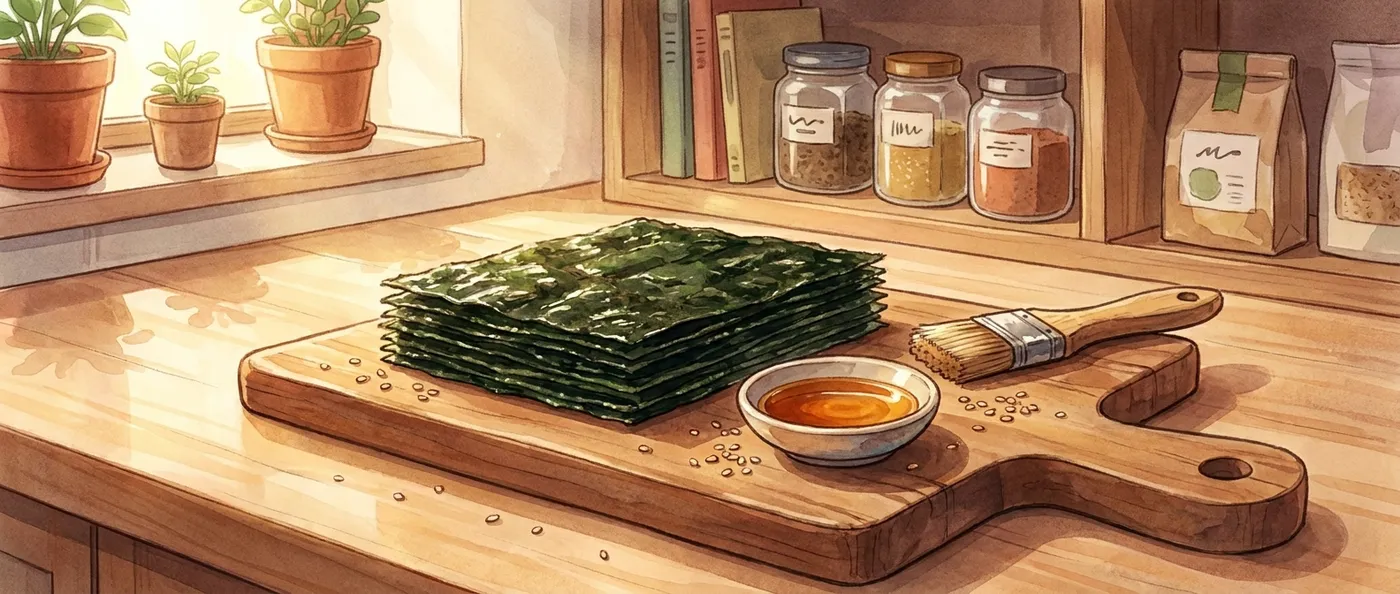
Gim farming is thought to be the oldest aquaculture in Korea, with records of production in the southern provinces of Jeolla and Gyeongsang from the 15th and 16th centuries. A 19th-century cookbook already describes brushing gim with sesame oil, adding chili and sesame seeds, and roasting it.
Today South Korean gim accounts for roughly 70 percent of the world's dried seaweed market, according to Wikipedia, with the United States, Japan and China among the biggest buyers.
Gimbap, a roll with an argument
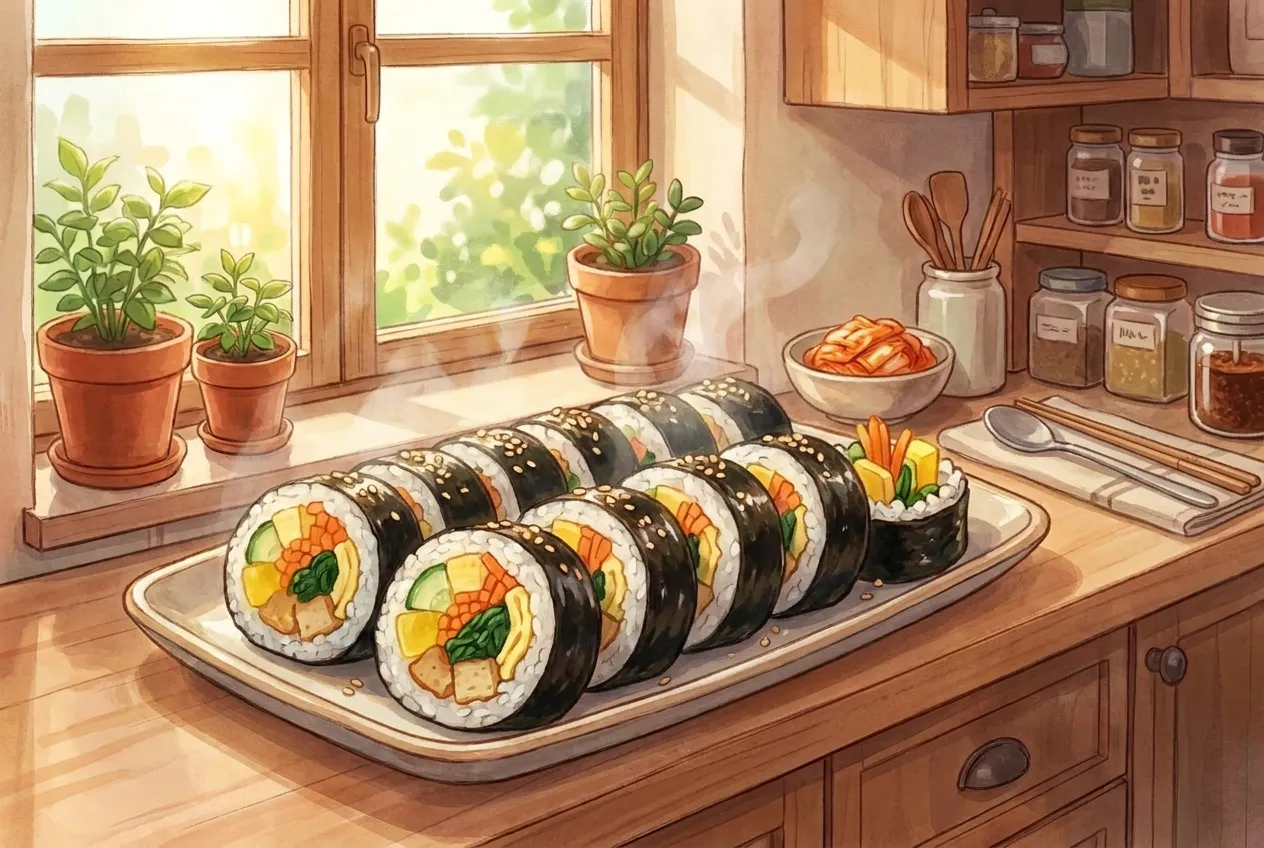
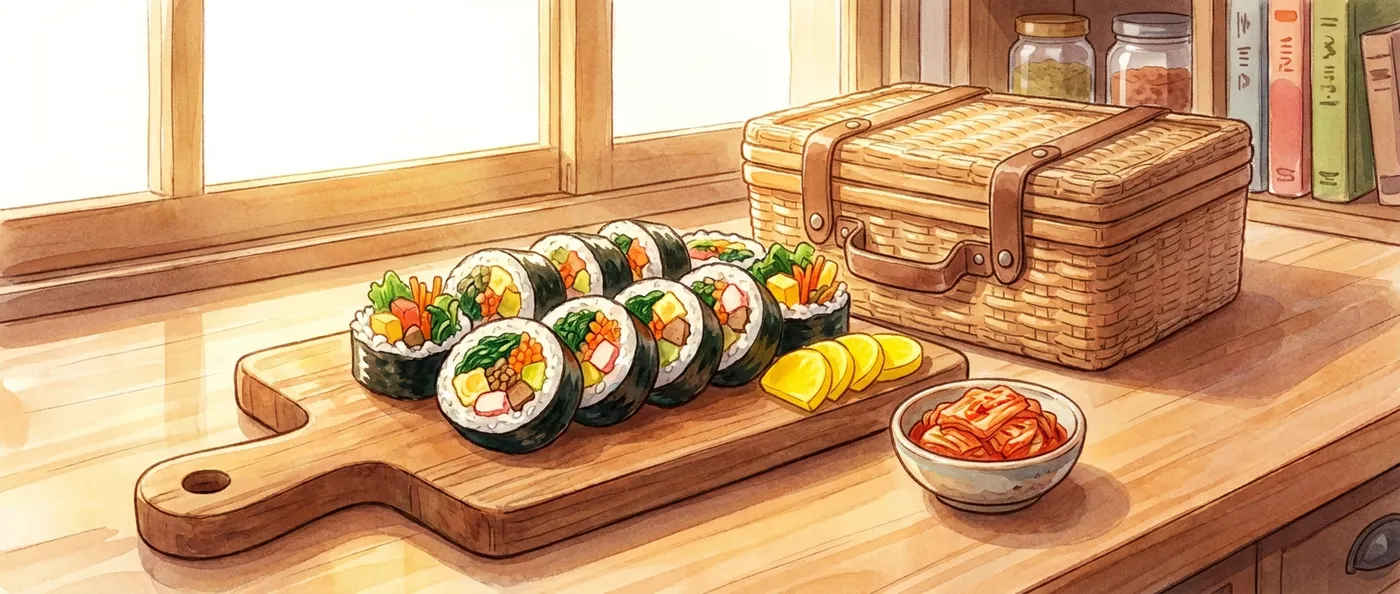
Gimbap (김밥), literally "seaweed rice", is cooked rice and fillings rolled in a sheet of gim and cut into bite-size slices. It is the food of picnics and school trips, packed in a lunchbox with pickled yellow radish (danmuji) and kimchi.
Where it comes from is debated. One common view is that it grew from the Japanese roll norimaki, introduced during the Japanese occupation. The word gimbap appears in a 1935 newspaper. Another view, put forward in the Encyclopedia of Korean Culture, is that it grew from the older Korean habit of wrapping rice and side dishes in gim, which an 1819 book calls bokssam. What is clear is that Korean gimbap tastes its own way: the rice is seasoned with sesame oil and salt, where Japanese rolls use vinegar and sugar.
Gim versus nori
Gim and sushi nori are the same kind of seaweed. Korean gim is usually thinner and glossier, and often seasoned with oil and salt. If you only have plain nori, you can use it as it is for gimbap. For snacking, add a pinch of salt and a drop of toasted sesame oil, and it comes close.
Try rolling your own with our gimbap recipe, and see our gim guide for where to find it in your country.