Korean Food Stories · Traditions
Kimjang: The Season When Everyone Makes Kimchi Together
Every late autumn, Korean families and neighbours make enough kimchi to last the winter. It is also why a jar of sour kimchi ends up in so many stews.
Winter in a jar
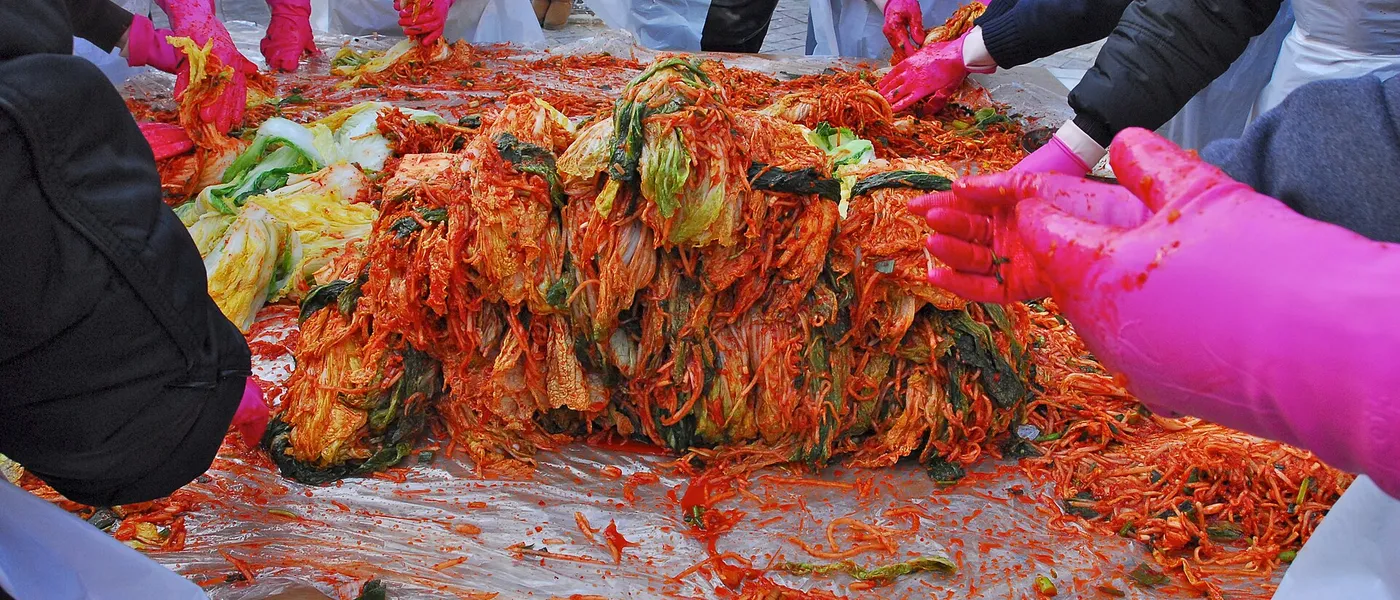
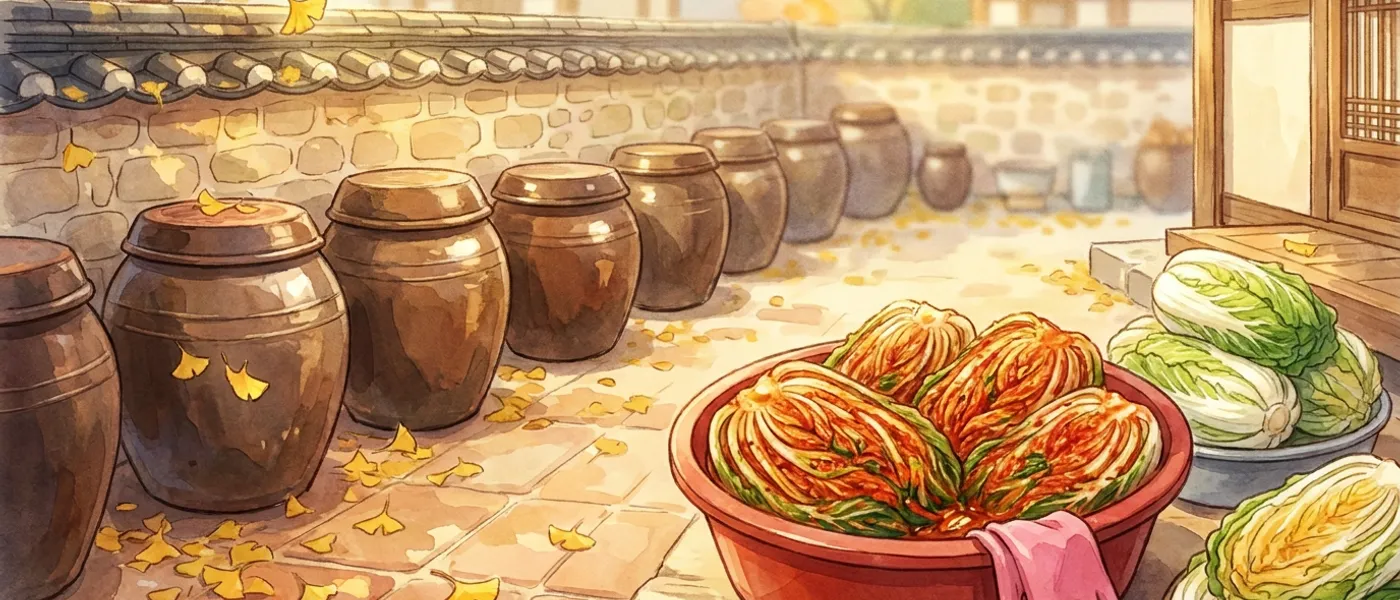
Late autumn is kimjang season. Communities make and share large quantities of kimchi together, so that every household has enough to get through the long, harsh winter.
A shared tradition
Kimjang is usually a group effort, and knowledge is passed from one generation to the next, traditionally from mothers-in-law to new daughters-in-law, with local variations in methods and ingredients. UNESCO added "Kimjang, making and sharing kimchi in the Republic of Korea" to its list of the Intangible Cultural Heritage of Humanity in 2013, recognising how it strengthens family bonds and a sense of shared identity.
Why sour kimchi gets cooked
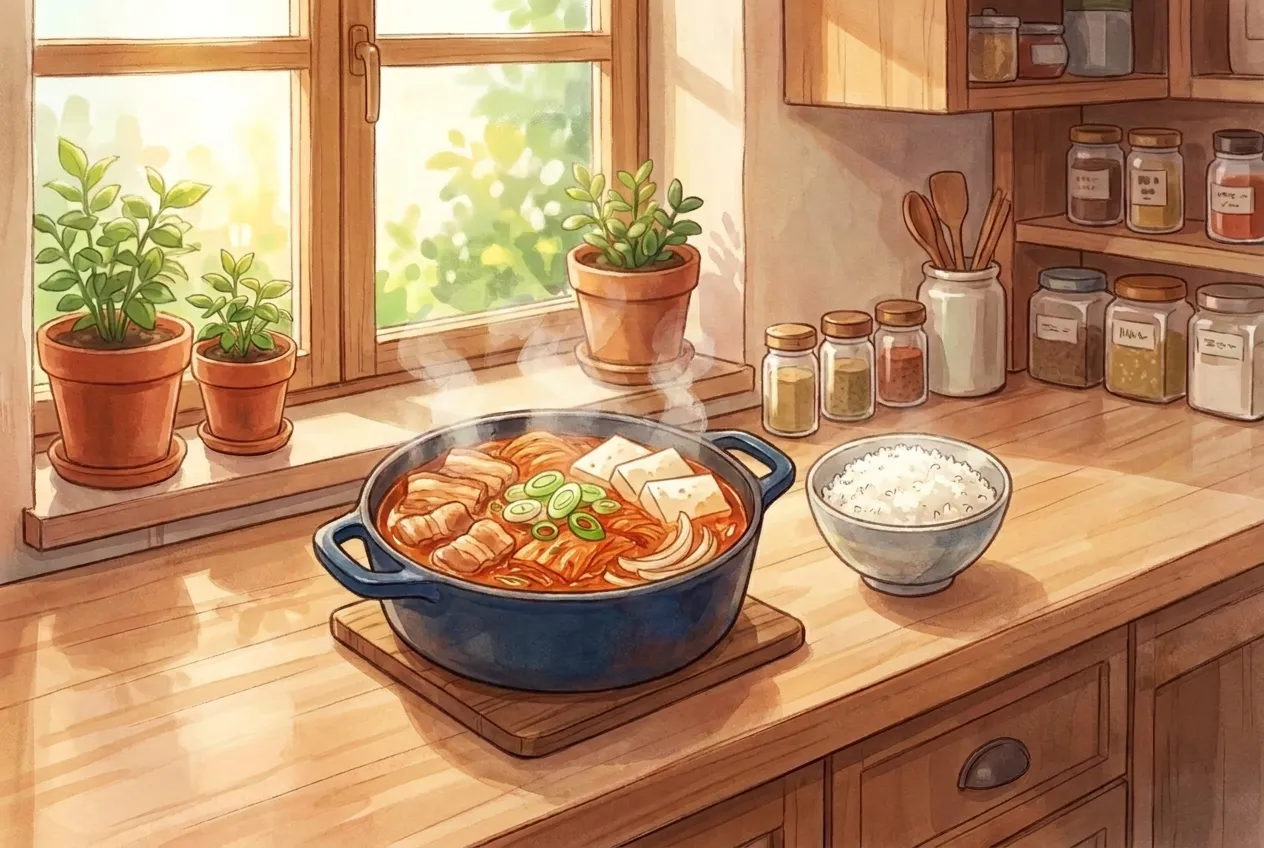
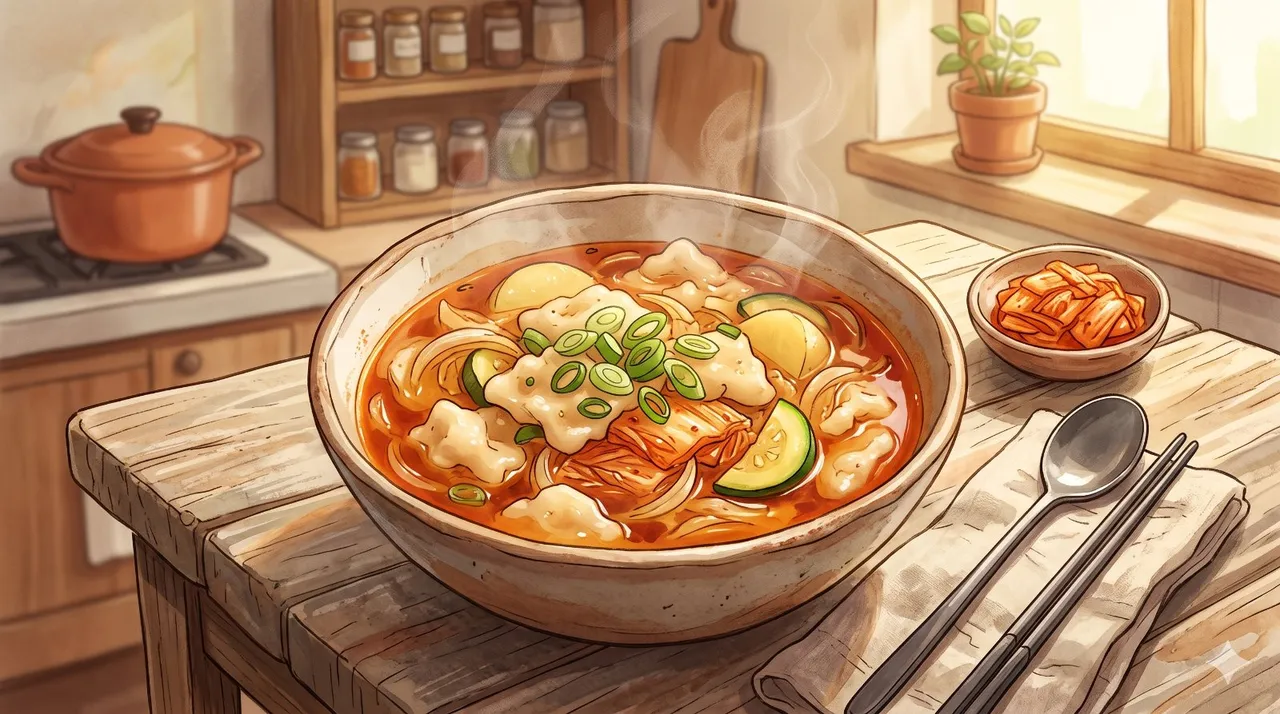
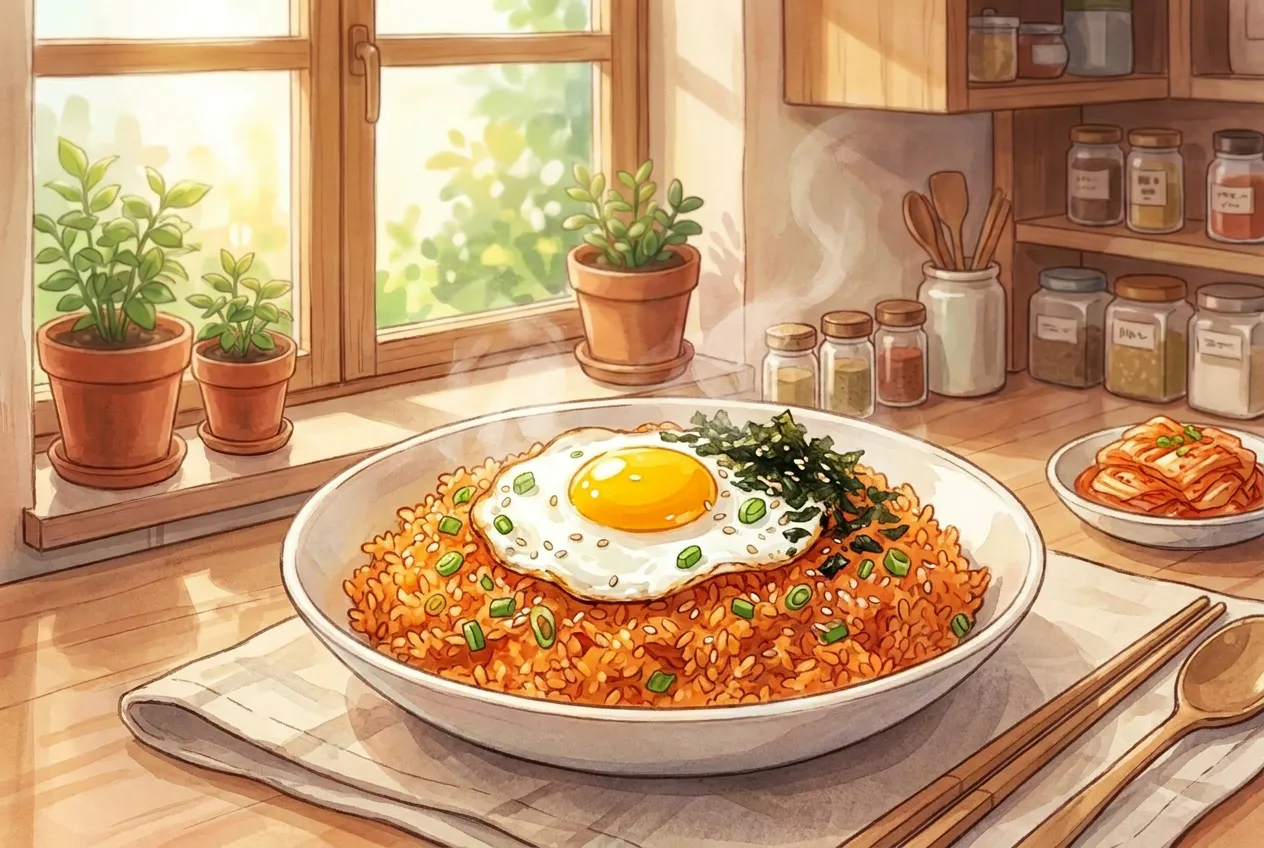
Kimchi keeps changing as it ferments. Fresh kimchi tastes crisp and bright, and as the weeks pass it becomes more sour. Cooks do not throw the sour jar away; they cook with it. That is why well-fermented kimchi is the star of stews, soups and fried rice.
If you do not make your own
You do not need to take part in a kimjang to cook the dishes. Buy a jar of kimchi at a Korean or Asian grocery store, leave it for a few weeks in the fridge if you want it more sour, and use it as the base for a stew or a soup.