Korean Food Stories · Drinks
Makgeolli: The Milky Rice Wine Koreans Pour for Friends on a Rainy Day
It is cloudy, lightly sparkling, a little sweet and a little sour, and it has been poured in Korean farm fields and living rooms for a very long time.
A drink the color of milk
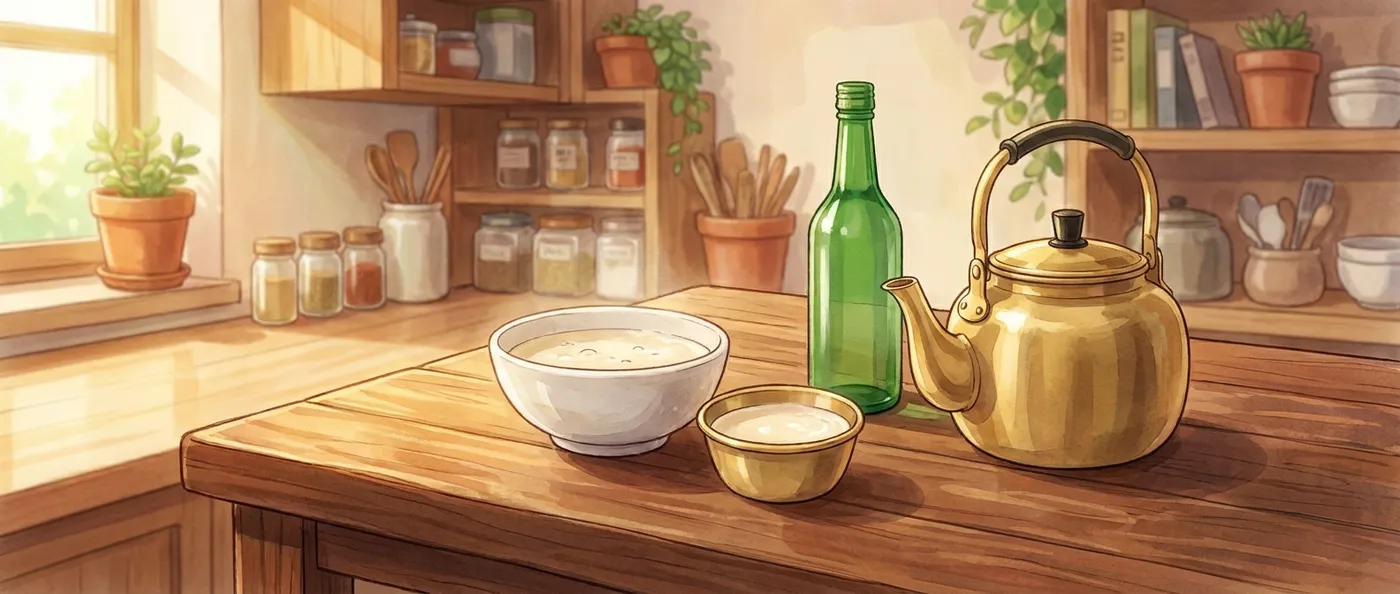
Makgeolli (막걸리) is a Korean rice wine that looks like thin milk. It is off-white, lightly sparkling and a little thick, with a taste that is slightly sweet, tangy, bitter and a touch chalky all at once. It is also gentle: it is usually only six to nine percent alcohol, so it is more often shared across a table than sipped from a small glass.
The cloudy look comes from the sediment of rice that stays in the drink. That is why it is also called takju (탁주), "cloudy wine", in contrast to cheongju, the clear refined rice wine.
What the name means
The name is a little sentence. Mak (막) means "just now", and georeu (거르) means to strain, so makgeolli is wine strained just now, in a rough and ready way. Another old name is nongju (농주), "farmer's wine", because it was a favorite of people working the fields.
It is also the oldest alcoholic drink in Korea. Rice wine has been brewed since the Three Kingdoms era, which ran from the first century BCE to the seventh century CE.
Fresh is the point
In Korea, makgeolli is often unpasteurized, which means it is still alive. The wine keeps maturing in the bottle, getting a little more sour and fizzy each day, so fresh bottles are kept cold and drunk within a short time. Many exported bottles are pasteurized so that they last longer, which makes them more stable but also takes away some of the lively flavor.
Because the sediment settles, many people gently turn the bottle upside down once or twice before pouring. Open it slowly: a fresh bottle can fizz.

What to eat with it
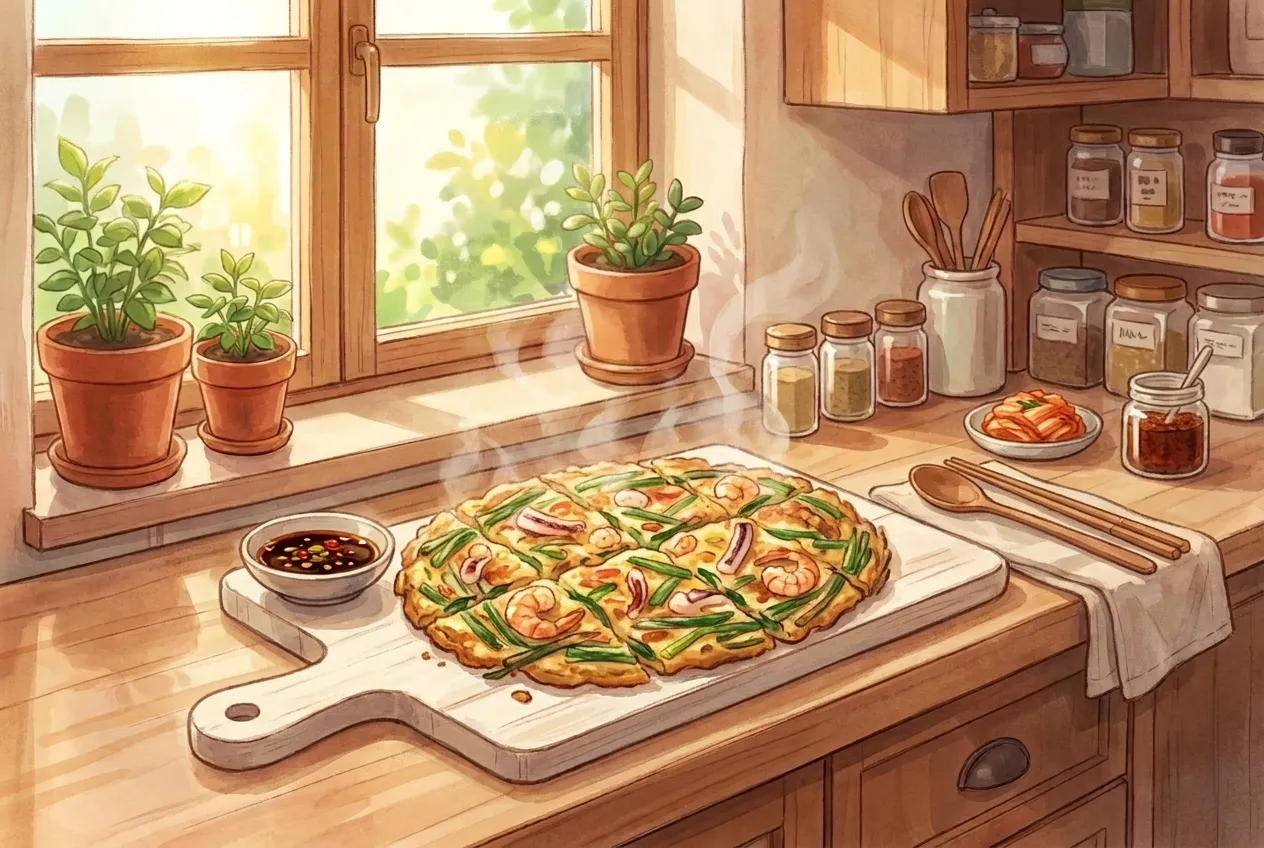
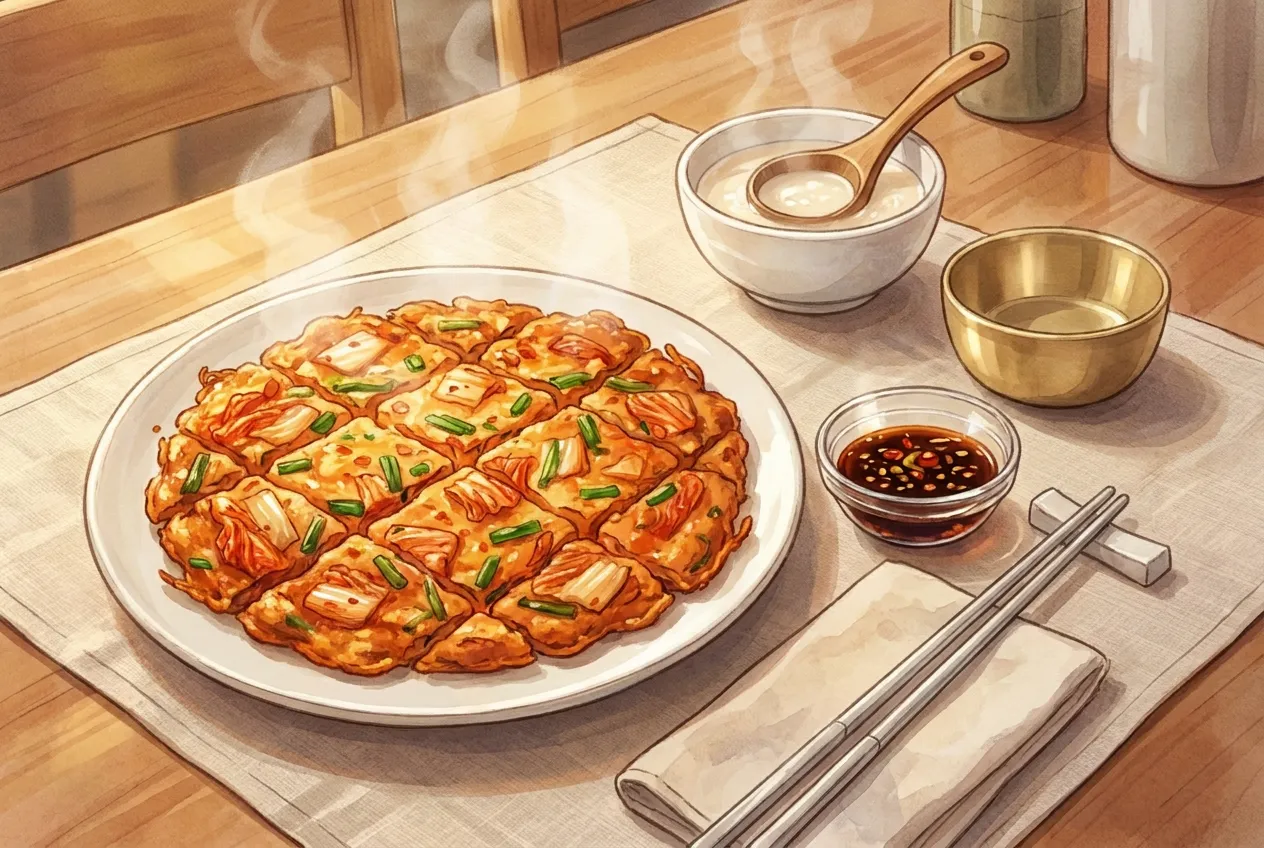
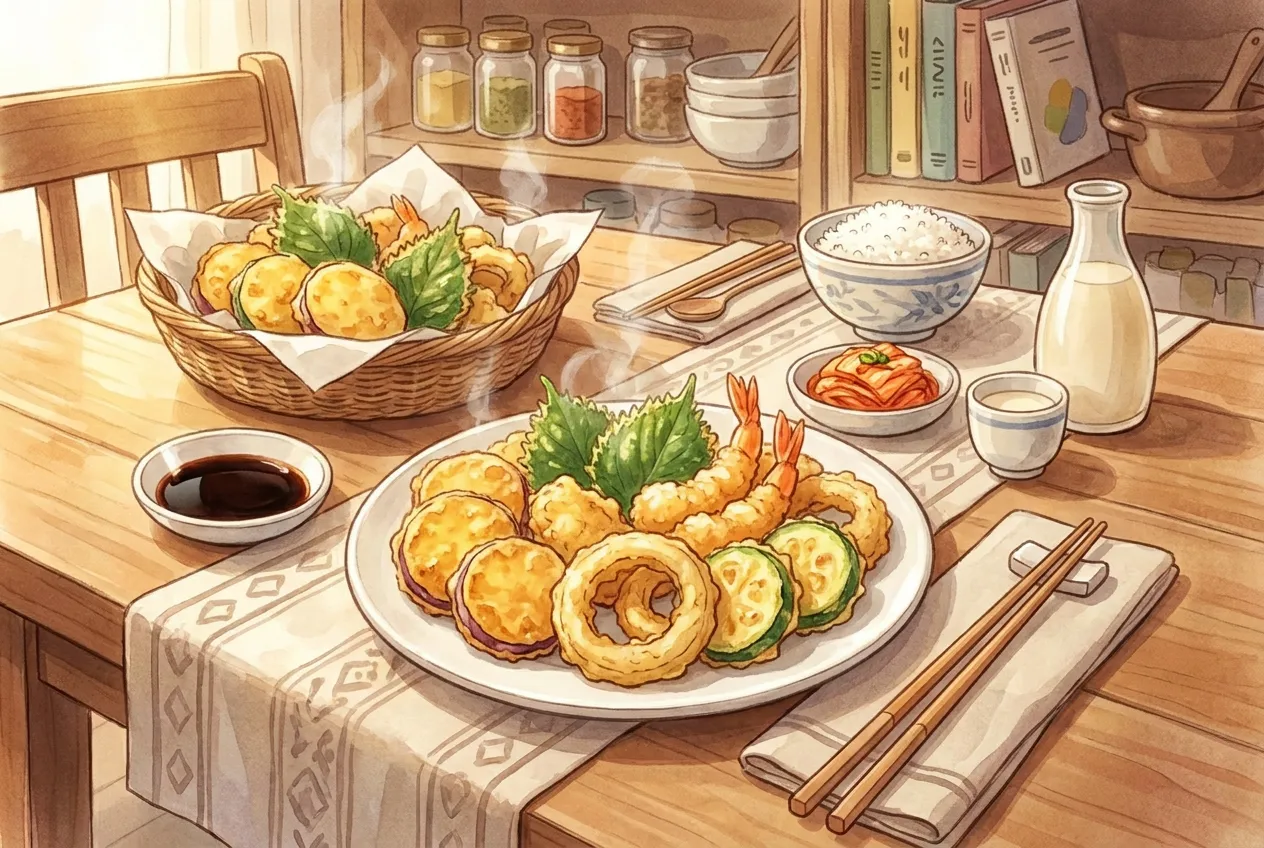
A classic match is something fried and savory. Koreans love pajeon (scallion pancake) and other jeon with makgeolli, especially on a rainy day, when the sizzle of the pan and the sound of rain go together. The sourness of the drink cuts through the oil.
Try it with our haemul-pajeon, kimchi-jeon or twigim recipes. If you cannot find makgeolli near you, check the refrigerated section of a Korean grocery, where the fresh bottles are kept.