Korean Food Stories · Seasons
Samgyetang and Boknal: Why Koreans Fight Summer Heat with a Boiling Soup
In the hottest weeks of the year, Korean restaurants fill with people eating a bubbling hot chicken soup. The old saying behind it is: fight heat with heat.
The three hottest days
Korea has a traditional calendar of boknal, the three hottest days of summer: chobok, jungbok and malbok. They fall between about mid-July and mid-August, and together they mark the stretch when the heat and humidity are at their worst. Each day has long been a reason to eat something nourishing.
The saying that goes with them is iyeol chiyeol, which means to fight heat with heat. The idea is that when you sweat all day, a bowl of something steaming hot restores the energy you have lost, and that the body feels cooler afterwards. Whether or not you believe the theory, the pleasure of sweating over a boiling soup on a hot day is very real.
What is in the pot
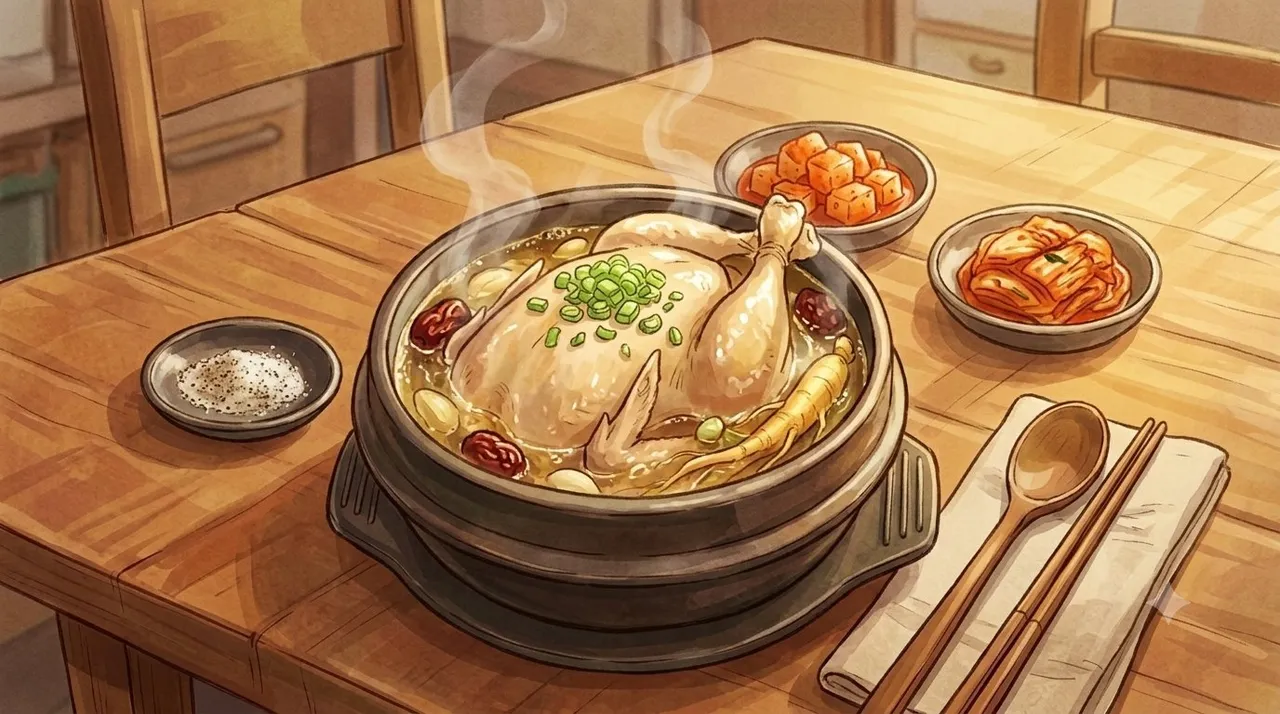
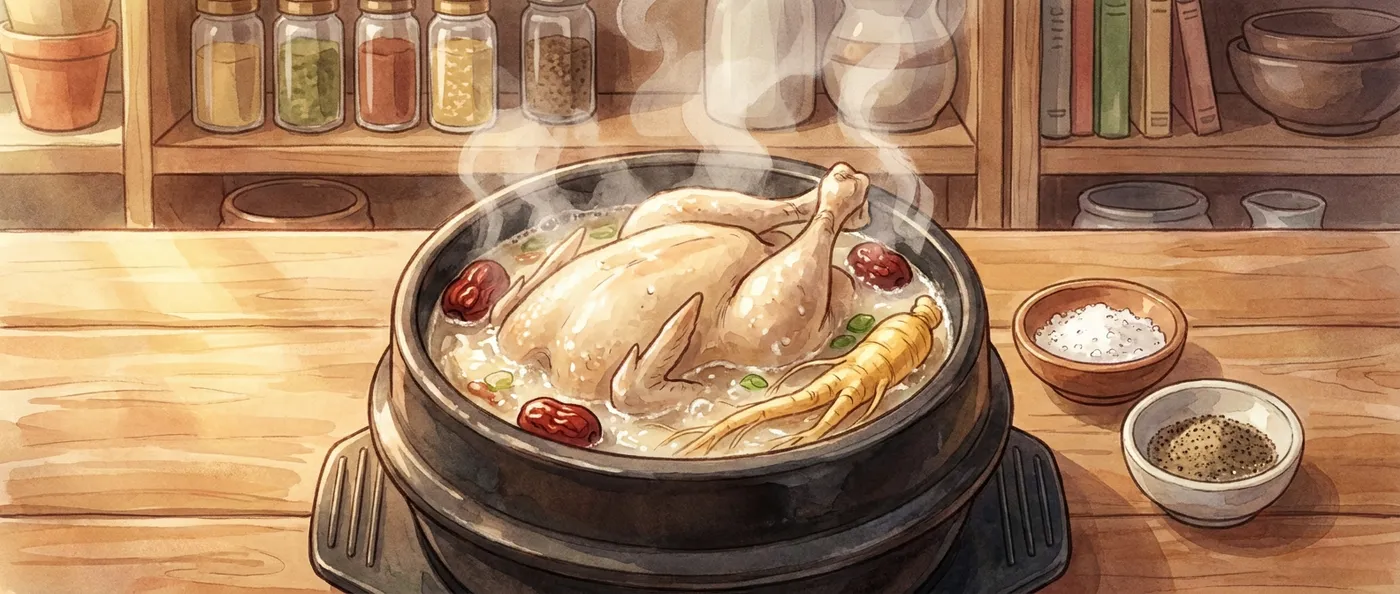
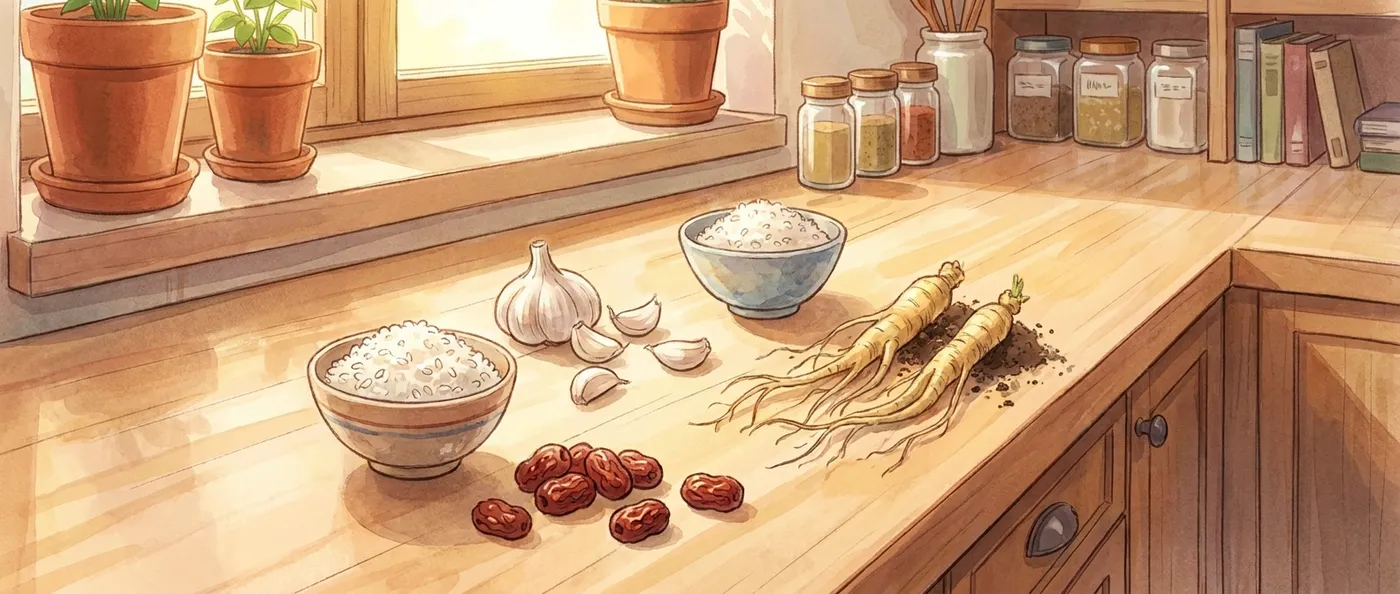
Samgyetang is the dish of boknal. A whole small young chicken is stuffed with glutinous rice, garlic, jujubes and a root of ginseng, then simmered until the meat falls off the bone and the rice swells into a soft, creamy filling that thickens the broth. It arrives in front of you still boiling, usually in a black earthenware bowl, with the whole chicken in the middle.
The broth is mild and clean, so it is seasoned at the table with salt and pepper. There is usually kimchi or crunchy radish kimchi on the side to cut the richness. Some restaurants also offer a small cup of ginseng liquor to go with it.
An old idea, a modern dish
Koreans have eaten chicken with ginseng for a long time, but the dish as it is served now, one small chicken per person in its own bowl, is largely a modern one that spread through the twentieth century. Ginseng, once an expensive medicine, became cheap enough to put in a soup for ordinary people.
That is why queues outside famous samgyetang restaurants in Seoul are longest on the boknal days. People wait in the heat to eat something hot, and nobody finds that strange.
Cooking it abroad
The hard part is the chicken. Korean samgyetang uses a very small young bird of about 500 to 800 grams. A Cornish hen is the closest thing in many shops, and a small whole chicken works if you give it more time. Fresh ginseng is sold in Korean groceries, and dried ginseng from an Asian shop is a fair stand-in. If you can find neither, the soup is still good with extra garlic and ginger, though it will taste less like the original.
Soak the sweet rice for half an hour before you stuff the bird, and do not overfill it, because the rice swells. Then simmer gently and keep the lid on. A pot of samgyetang is a dish that rewards patience.