Korean Food Stories · Everyday food
What Is on a Korean Table: Rice, Soup and a Row of Small Dishes
A Korean meal is not one dish. It is rice, a soup or stew, kimchi, and small shared plates, and the whole idea fits in a single glance.
The basic setup
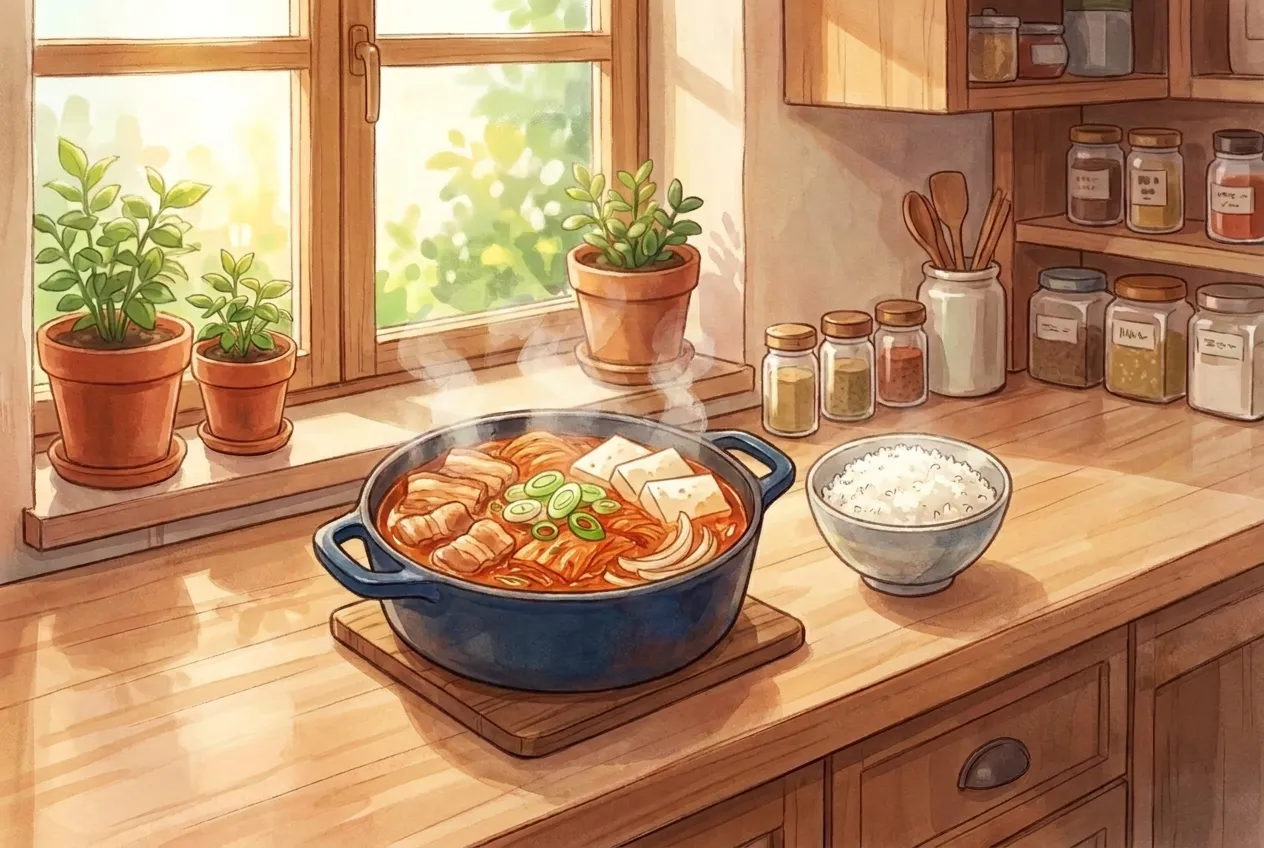
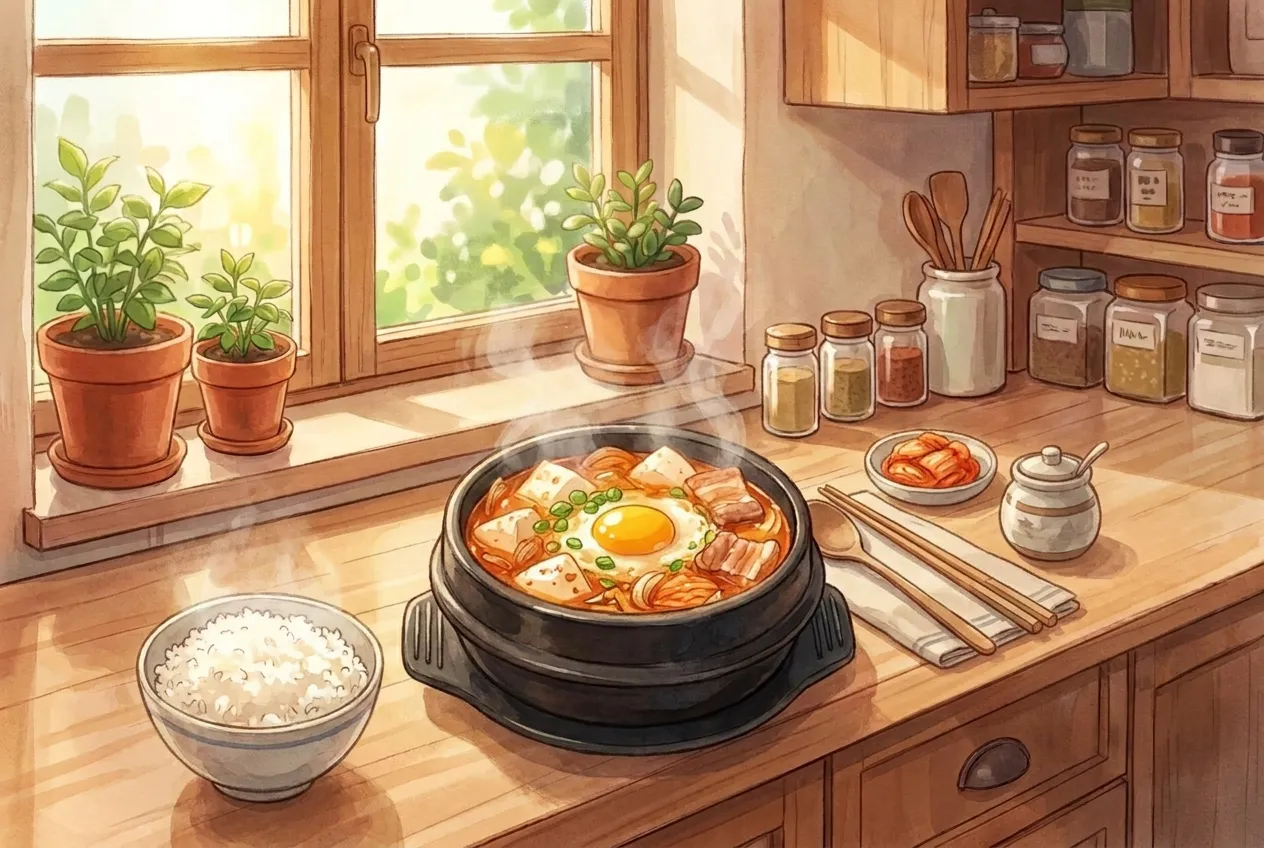
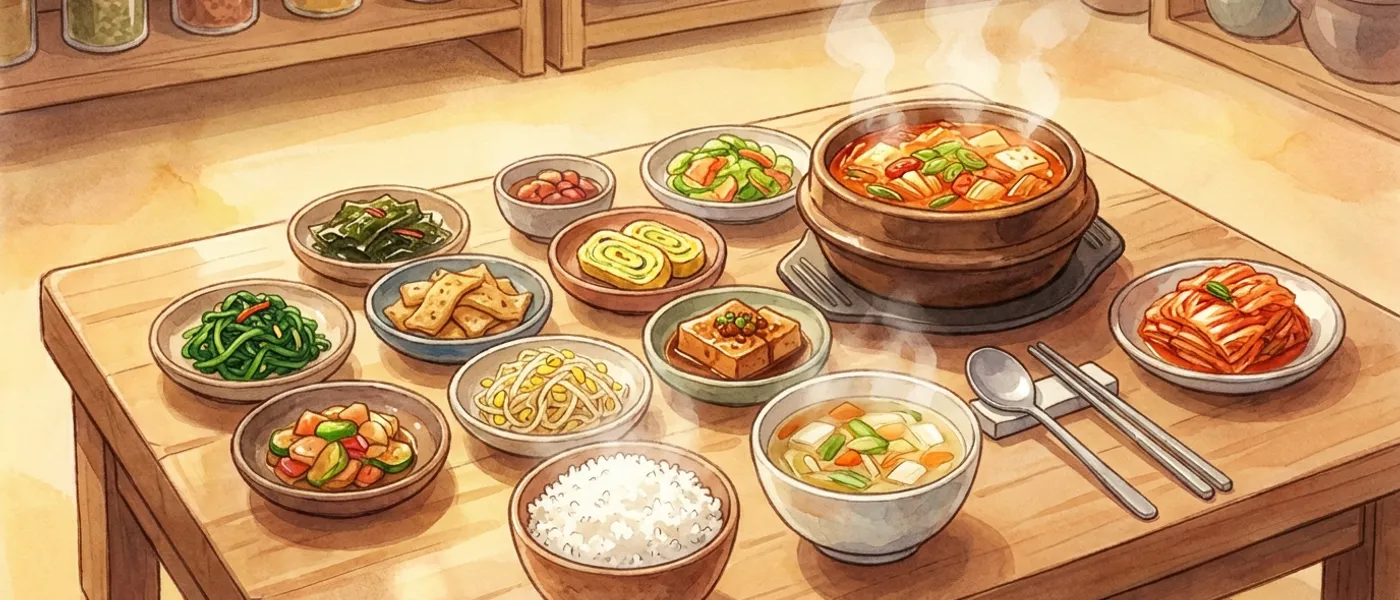
A standard Korean meal is built around bap (cooked rice) and guk or tang (soup), often with a jjigae (stew), and banchan, the small side dishes shared in the middle of the table. Sauces such as gochujang or ganjang, and kimchi, are almost always there too.
Counting side dishes: the cheop
Traditionally, the number of banchan decides what the table is called: a 3-cheop, 5-cheop, 7-cheop, 9-cheop or 12-cheop table (bansang). Kimchi is not included in the count.
The more side dishes, the grander the table. Historically a king would have 12, while most people had fewer. In the royal court the meal (surasang) also included two kinds of rice, two soups and two stews, plus several kinds of kimchi and sauces.
You do not need twelve
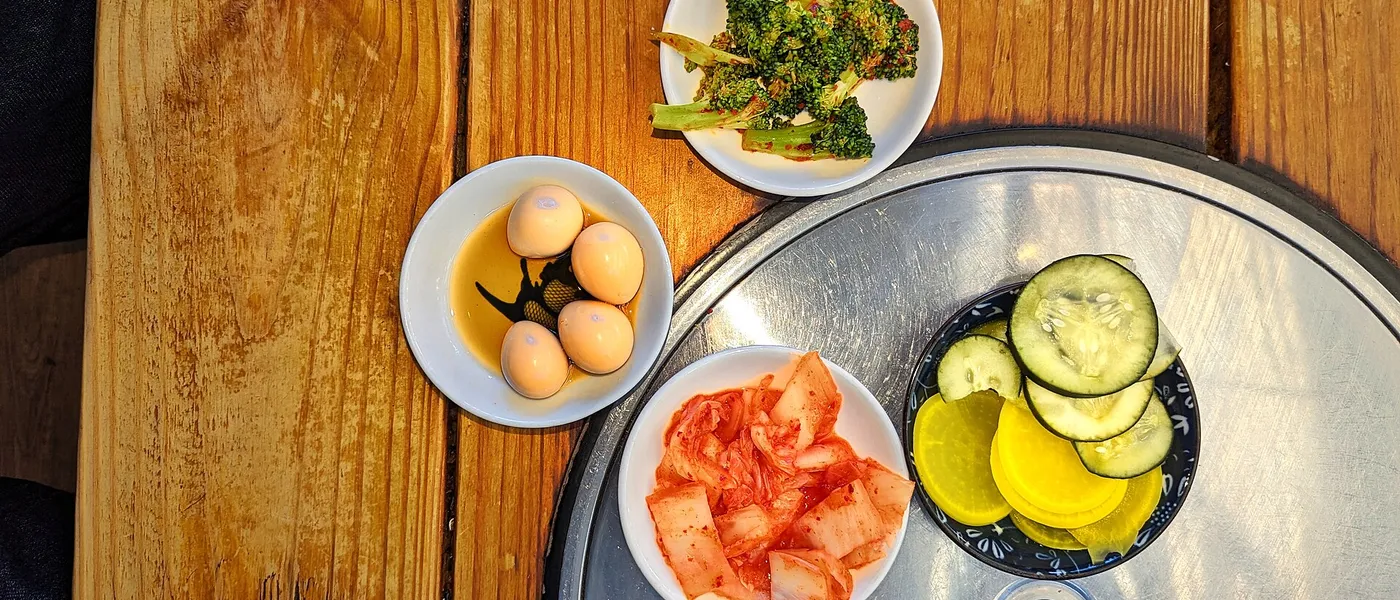
Cooking Korean at home does not mean setting a royal table. A pot of stew, a bowl of rice, kimchi and one or two quick sides already make a Korean meal. Many home cooks make one more side dish than they planned, simply because it is easy to add one.
Try it tonight
Make a stew, cook some rice, open a jar of kimchi, and put everything in the middle so people can reach. That is the whole idea.