Korean Food Stories · Ingredients
Doenjang: The Soybean Paste Koreans Have Brewed for Well Over a Thousand Years
It smells strong, tastes deep, and is the base of the stew Koreans make most often. Here is how a brick of soybeans becomes a pot of paste.
A paste older than the written recipes
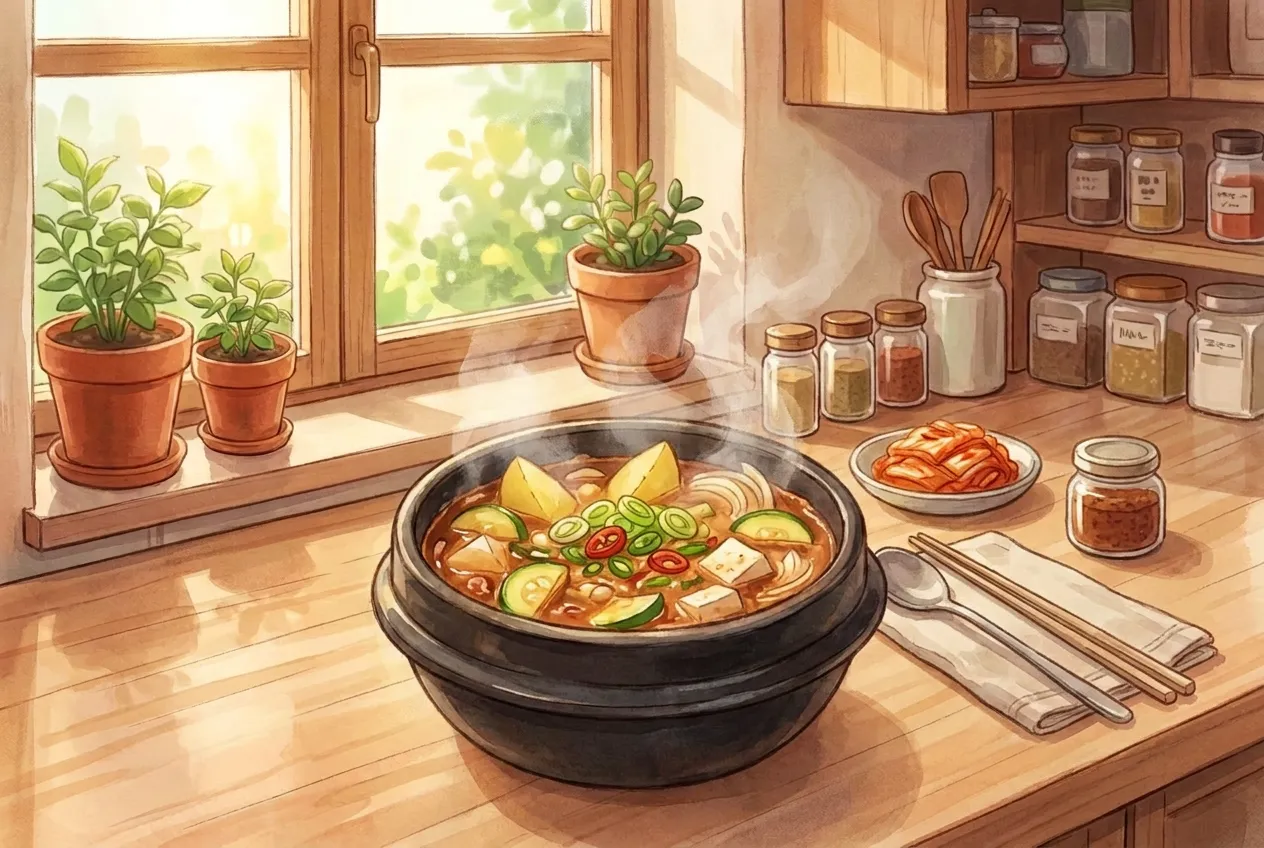
Doenjang (된장) means "thick sauce", and it is Korea's fermented soybean paste. It is a salty, savory, slightly funky paste, and it is the soul of doenjang-jjigae, the everyday stew Koreans make with tofu, zucchini and whatever vegetables are in the fridge.
It is also one of the oldest foods in the Korean kitchen. A Chinese history written in the third century says the people of Goguryeo, an early Korean kingdom, were good at brewing fermented soybeans. Earthenware jars for making these sauces even appear in a fourth-century tomb mural. Korean records from 683 list doenjang and soy sauce among the foods prepared for a royal wedding.
From brick to paste
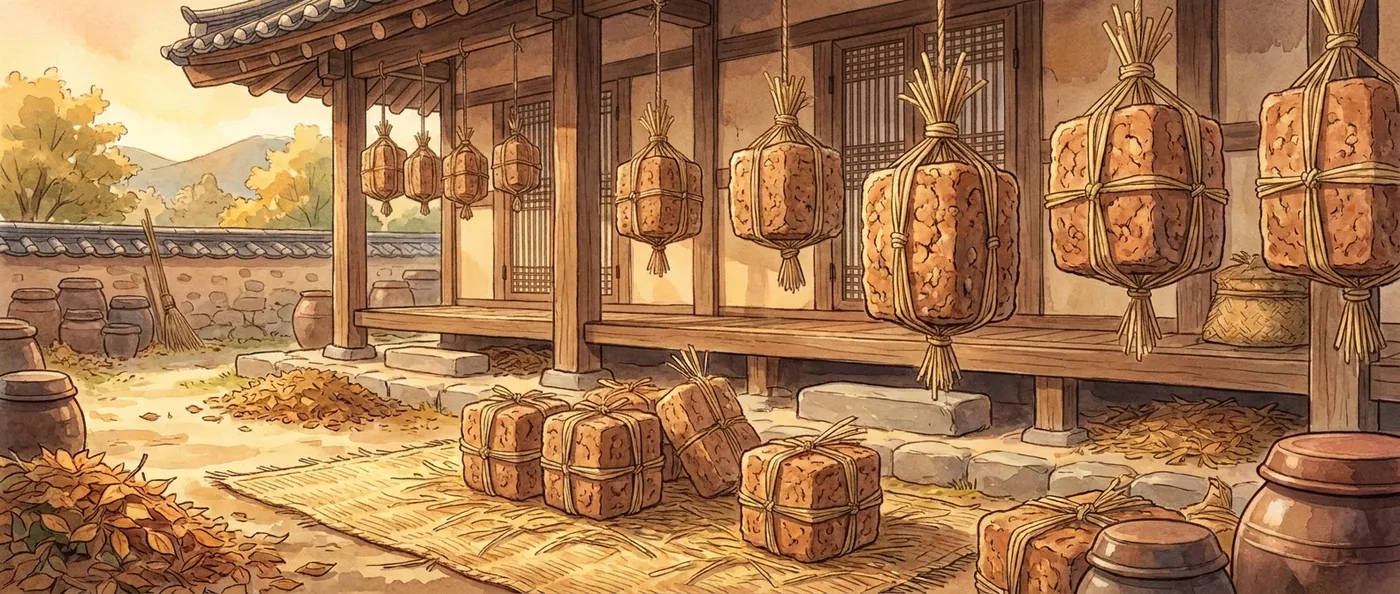
Traditional doenjang starts with meju, a brick of soybeans. Around early November, soybeans are soaked, boiled in salted water, pounded, and pressed into blocks. The blocks dry in a cool, shaded place until firm, then hang from the eaves or rest on straw in a warm room to ferment.
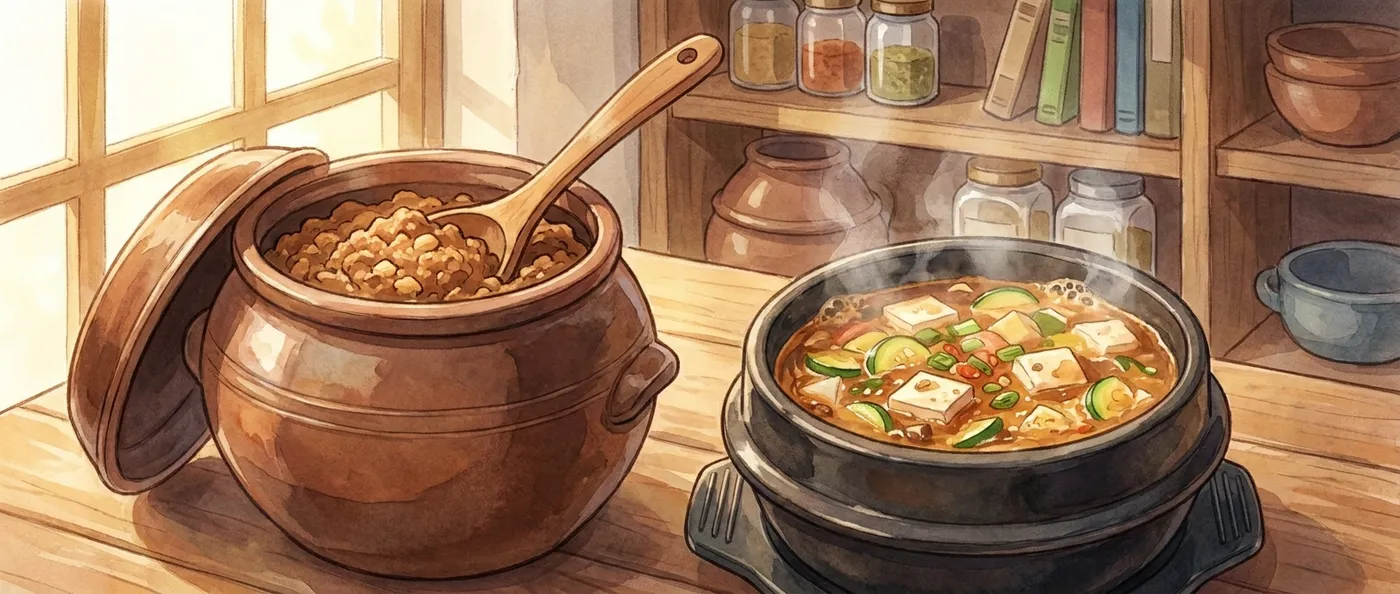
After they are washed and dried in the sun, the meju blocks go into an earthenware jar called an onggi, covered with salty water. Charcoal and dried chili are added to the jar, partly for their absorbing and antibacterial properties and partly because folk belief says they keep evil spirits away.
One jar, two sauces
Here is the clever part. When the jar has aged, the liquid is drained off and boiled. That liquid becomes ganjang, Korean soy sauce, including the light, salty soup soy sauce (guk-ganjang) used in clear soups. The soft soybean blocks left behind are mashed, and that is doenjang.
So the two sauces come from the same jar, which is why you will often see them mentioned together. It also explains why Korean cooks treat soup soy sauce and soybean paste as a pair when they season a pot of soup.
What to look for in a tub
Traditional doenjang is made only from soybeans and brine. Many factory versions also contain wheat flour, and some add ground, dried anchovies to deepen the savory flavor. Neither is wrong. They just taste a little different, so check the label if you are after a particular style.
Store the tub in the fridge. It is strong, but it keeps well, and a spoonful stirred into a stew goes a long way.
The night you run out
The closest stand-in is red or brown miso. For each tablespoon of doenjang, use 1 tablespoon of miso and a pinch of salt. It will taste a little sweeter, smoother and rounder, with less of the funk. If you only have white miso, use 1 tablespoon plus 1 teaspoon of soy sauce.
Either swap works well in a stew. See our doenjang guide for more, and try it in the doenjang-jjigae recipe.