Korean Food Stories · Noodles
Naengmyeon: Why Koreans Eat Icy Noodles in the Middle of Winter
A bowl of noodles in ice-cold broth sounds like a summer dish. In the north of Korea it was a winter one, eaten in a warm room with the snow outside.
A summer dish that began in winter
Ask anyone in Seoul when to eat naengmyeon and they will say summer, when the air is heavy and a bowl of icy noodles is the best thing in the world. The name itself means cold noodles. But the dish started somewhere much colder. In the north of the Korean peninsula, especially around Pyongyang, naengmyeon was a winter food, and an old book of seasonal customs from 1849, the Dongguk Sesigi, lists it among the foods of the cold months.
The picture people like to paint is of a heated floor, an ondol, and a bowl of cold noodles on it, with snow piling up outside the paper windows. Warm room, cold food: the contrast was the pleasure.
Two families of noodles
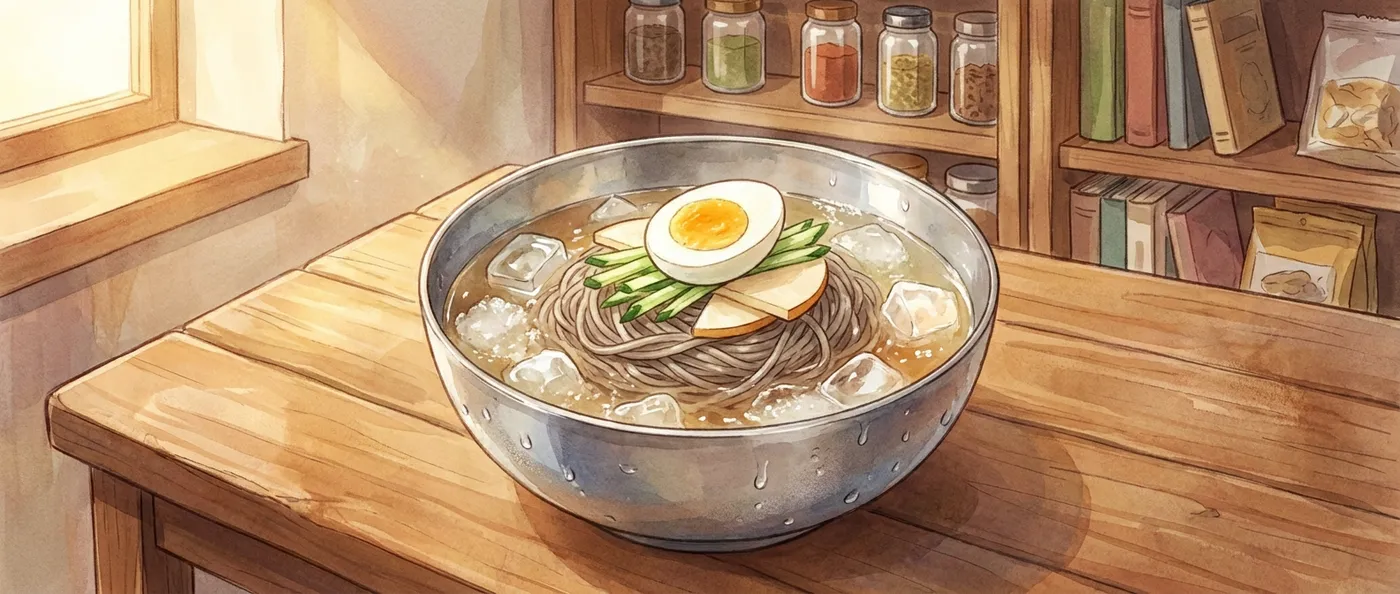
Naengmyeon comes in two main styles. The Pyongyang style is the quiet one. The noodles are made largely from buckwheat, they are pale grey-brown and not very chewy, and they sit in a clear, lightly savory broth made from beef and sometimes from dongchimi, the watery radish kimchi. It tastes of very little at first, and then of a great deal.
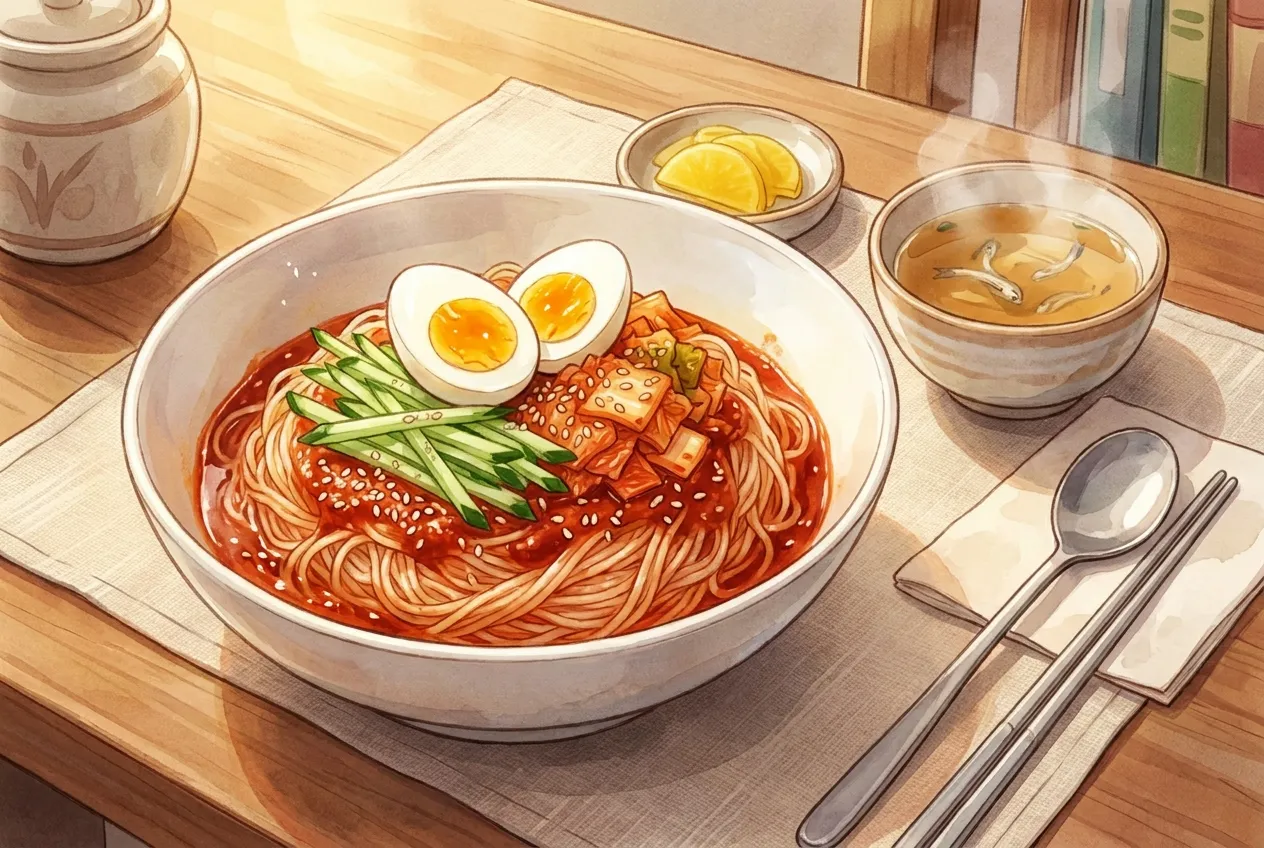
The Hamhung style, from the northeast, is the bold one. Its noodles are made from starch, such as potato or sweet potato, so they are thin, springy and famously chewy. They are usually tossed in a spicy, sweet red sauce rather than served in broth. That is bibim naengmyeon, the one with gochujang. The broth version is mul naengmyeon, and its noodles are the ones you will find in most shops abroad.
Scissors, vinegar and mustard
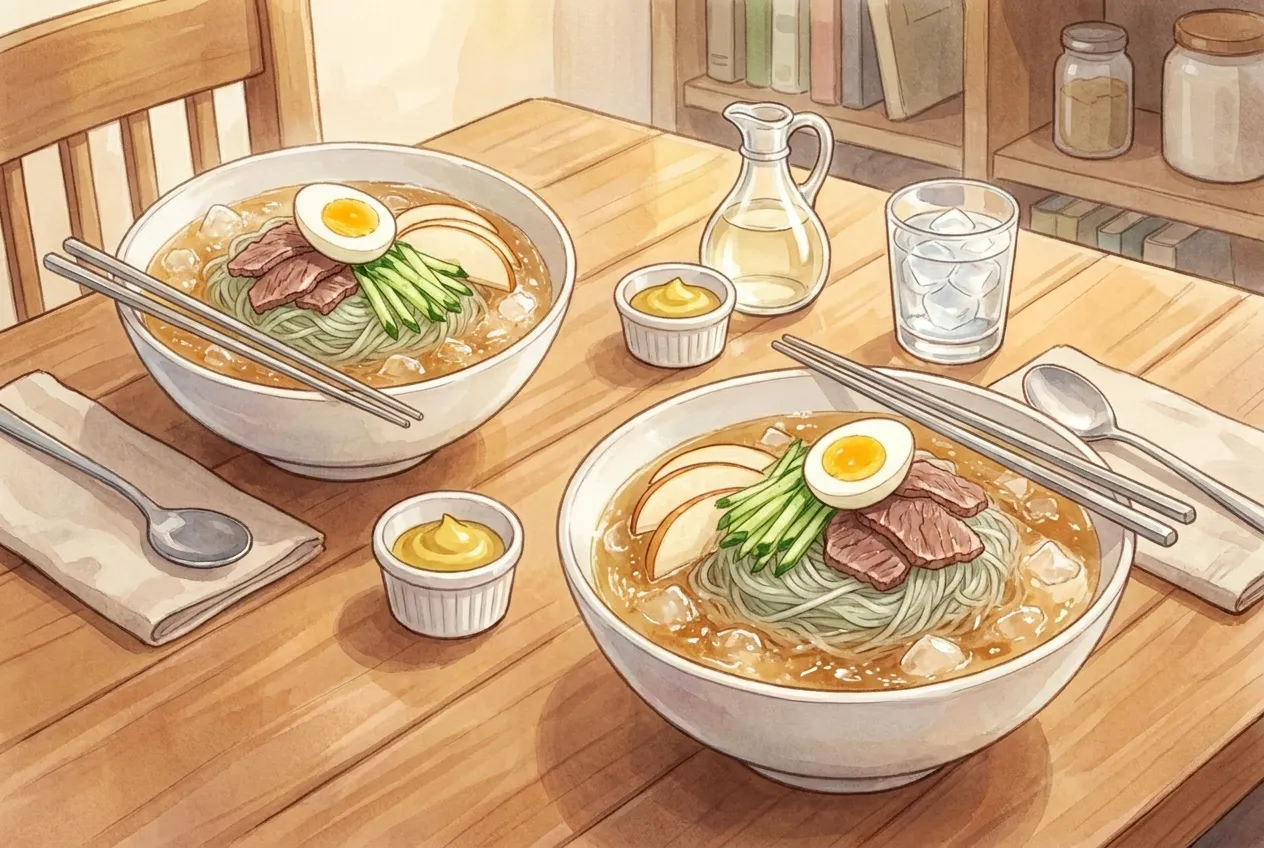
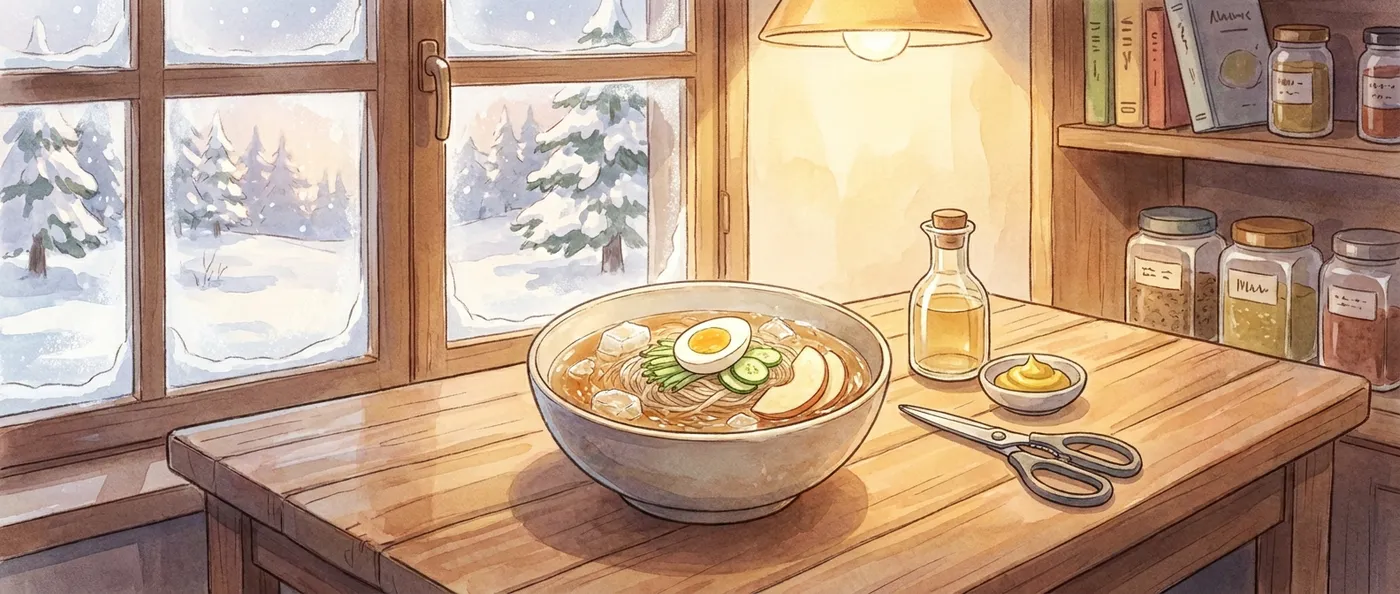
The way naengmyeon reaches the table has its own rules. Because the noodles are long and tough, restaurants often bring a pair of scissors so that you can cut them once or twice in the bowl. Next to the bowl you will find a small bottle of vinegar and a pot of hot mustard, and you are expected to use both. Vinegar sharpens the broth and mustard wakes it up.
Many places also serve the broth partly frozen into a slush, so the bowl stays icy until the last noodle. A boiled egg half, slices of cucumber and a few slices of Korean pear sit on top, and the pear and the vinegar balance the saltiness.
Finding the noodles, and what to do if you cannot
Dried naengmyeon noodles are sold in Korean groceries in packs, often with a small packet of broth or sauce. Check the ingredient list: the starch and buckwheat ratio changes the texture. Cook them briefly, then rinse them hard under cold running water and rub them gently. That cold rinse is what makes them springy.
If you cannot find them, thin buckwheat noodles, such as the ones sold for soba, cooked and rinsed the same way, are a workable stand-in. They will be softer and less chewy, and the dish will be a little closer to the Pyongyang style. The icy broth and the vinegar and mustard at the table matter more than the exact noodle.